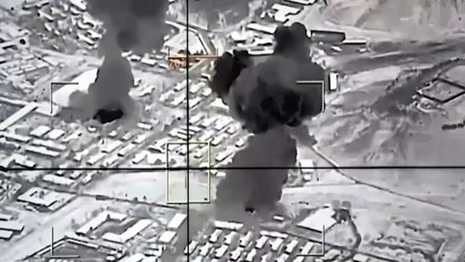
Washington, D.C. – As the US and Israeli militaries expand their attacks on Iran, US President Donald Trump’s administration has alternated its justification for war between preventing immediate attacks and countering the long-term existential threat of a nuclear Tehran.
This was fully demonstrated on Monday, when Trump and Pentagon chief Pete Hegseth appeared to argue that the culmination of Iran’s regional policies in the 47 years since the Islamic revolution, along with the future of its ballistic and nuclear programs, posed an immediate threat to the United States.
Recommended stories
list of 3 itemsend of list
Meanwhile, US Secretary of State Marco Rubio argued that Israel, a close ally of Washington, was planning to attack Iran. In which case, the administration expected Iran to attack American assets, justifying launching a preemptive strike, he said.
To date, the administration has offered little clear evidence to support any of its claims, according to advocates and analysts, as well as Democratic lawmakers who recently attended classified briefings.
“The reality is that they have presented very little evidence, and that is a big problem,” Emma Belcher, president of Plowshares, a group that advocates for denuclearization, told Al Jazeera.
“It says one thing: They don’t believe they need to defend the war; that they won’t necessarily be held accountable for it,” Belcher said. “But it also tells me that the evidence may very well not be there and that they want to avoid particular scrutiny.”
Republicans have largely rallied around the administration’s message, even as Democrats have vowed to force votes on war powers legislation to assert constitutional authority over the president’s military action.
Still, the administration remains in a fragile political position as Trump’s Republican Party looks ahead to the midterm elections in November. Early public polls indicate little direct support from the American public, even as Trump’s Make America Great Again (MAGA) base has been serious in its response.
But the more days that pass and the more American service members die, the more likely it will be that Trump will face contradictions to his past anti-interventionist promises.
“The harder it is and the more costly it is in terms of lives… the more the lack of evidence becomes an albatross around the neck of the administration, something that will be held accountable in November,” according to Benjamin Radd, a senior fellow in the department of international relations at the UCLA Burkle Center.
A kaleidoscope of complaints
Speaking from the White House on Monday, Trump praised the “elimination of Iran’s nuclear program” in the US attacks last June. But moments later, he claimed that efforts to rebuild that program, along with Iran’s ballistic missile program, posed a threat to the United States.
“An Iranian regime armed with long-range missiles and nuclear weapons would be an intolerable threat to the Middle East, but also to the American people,” Trump said. “Our own country would be threatened, and it was almost threatened.”
Trump also said that if it were not for the attacks by the United States and Israel, Iran “would soon have had missiles capable of reaching our beautiful America.”
Daryl Kimball, executive director of the Washington, DC-based Arms Control Association (ACA), said any claims of immediate or medium-term threats posed by Iran in terms of its ballistic and nuclear power are not supported by available evidence.
This is significant, since such “imminent threats” are necessary for a president to justify attacks on foreign countries both under US domestic law and against international law, barring congressional approval.
“Iran did not possess, before this attack, the ability to rapidly enrich its highest uranium into a bomb and then convert it into metal to build a bomb,” Kimball told Al Jazeera.
“At the earliest, it could have taken many, many months to do that, but Iran does not have access to its 60 percent highly enriched uranium. Its conversion facility is damaged and idle. Its main uranium enrichment facilities have been severely damaged by the US attacks in 2025.”
He explained that despite having “significant short- and medium-range conventional ballistic missile capabilities,” Iran has said it has imposed 2,000-kilometer (1,200-mile) limits on its ballistic missile range, and is nowhere near having an ICBM capability.
The “latest assessment (from U.S. intelligence) is that Iran could, if a decision is made, have ICBM capability by 2035. So Iran is nowhere near having an ICBM threat that could be considered imminent,” he said, referring to ICBMs, which have a range of at least 5,000 kilometers (3,400 miles).
Democrats say there is no new intelligence
Secretary of State Rubio said Monday that “there was absolutely an imminent threat” posed by Iran.
“We knew there was going to be Israeli action,” he said. “We knew that would precipitate an attack on American forces, and we knew that if we didn’t preemptively pursue them before they launched those attacks, we would suffer more casualties.”
But top Democrats who received classified intelligence briefings in recent days said they had not been provided with evidence to justify the attack.
“I’m on two committees that give me access to a lot of classified information; there was no imminent threat from Iran to the United States that would justify sending our sons and daughters to another war in the Middle East,” Sen. Tim Kaine, who sits on both the Armed Services Committee and the Foreign Relations Committee, told CNN on Saturday.
Senator Mark Warner, who was briefed last week on classified intelligence related to Iran as part of the “gang of eight,” a group of top lawmakers from both parties in Congress, told the network: “I did not see any intelligence that Iran was about to launch any type of preemptive strike against the United States of America.”
Multiple sources who spoke to both the Reuters news agency and the Associated Press following a closed-door congressional staff briefing on Sunday said the administration had presented no evidence that Iran was planning a pre-emptive strike and had instead focused on a more generalized threat posed by Iran and its allies to U.S. troops and assets in the region.
Trump seeks quick success
In all, the Trump administration appears to be arguing that “Iran has been a threat to the national security of the United States since 1979… that Iran was responsible for the deaths of more American lives than any other state or non-state actor; that Iran has never been held accountable for this,” according to the Burkle Center’s Radd.
Trump therefore appears to be taking the position that, given the totality of Iranian actions, including the recent indirect nuclear talks, the United States “has no choice but to perceive Iran as an imminent threat.”
Oman’s foreign minister, who mediated the talks, had rejected the administration’s characterization, maintaining that “significant progress” had been made before the US and Israeli attacks.
Radd noted that under the War Powers Act of 1973, a U.S. president has 60 to 90 days to withdraw deployed forces without congressional approval. So Trump seems to be saying, “We’re not required to prove any of that to Congress if we can carry out and execute this operation within the 60 to 90 day time frame,” he said.
Meanwhile, Plowshare’s Belcher said the administration’s own actions led to the current situation with Iran.
He pointed to Trump’s withdrawal from the Joint Comprehensive Plan of Action (JCPOA) in 2018, in which the United States imposed maximum sanctions on Iran, and Iran, in turn, began enriching uranium beyond the levels set out in the deal. Trump also derailed nuclear talks last year by launching attacks on Iran.
“We are in this situation precisely because President Trump walked away from an agreement negotiated by his predecessor,” Belcher said. “He gave up diplomacy.”
The ‘America First’ War?
In his speech on Monday, Hegseth, in particular, appeared to try to frame the war within Trump’s political worldview, promising to “end this on America First terms.”
He drew a contrast with the US invasion of Iraq and described the attacks on Iran as a “clear, devastating and decisive mission.”
“Destroy the missile threat, destroy the navy, no nuclear weapons,” he said.
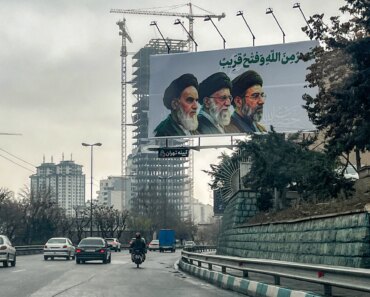
He also tried to draw a distinction between the “so-called war of regime change” and the US attacks that resulted in regime change. As of Monday, US strikes had killed Iran’s supreme leader, Ayatollah Ali Khamenei, and several senior officials, but the ruling government has remained intact.
Hegseth said the United States is unleashing attacks “all on our terms, with highest authorities, no stupid rules of engagement, no nation-building quagmires, no democracy-building exercises, no politically correct wars.”
It is not yet clear how the message will resonate with the American public.
A Reuters-Ipsos poll released on Sunday suggested disappointing approval of Trump’s attacks, but also indicated that large swaths of Americans were unsure about the conflict.
That could create opportunities for those who question Trump’s actions and his justification for them.
“I think it seems like the narrative is still in play,” Belcher said.