There is a moment in Michael Morpurgo’s “Pinocchio” at the Watermill Theater in Newbury when a performer holds up a clear umbrella dripping with cherry blossoms and bathing it in pink neon. It’s an image that turns away viewers. It would not exist without the work of Yoav Segal. He is a multi-disciplinary creative whose recent theater projects demonstrate what can happen when visual storytelling is given real creative ambition.
Yoav’s set and costume design for Pinocchio, directed by Elle While and Indiana Lown-Collins, was nominated for Best Design at the 2025 British Theater Awards, and the production was also included in The Guardian’s Top 10 Shows of 2024. Their reviews described every aspect of the stagecraft as excellent. I’m not surprised.
It’s a bold, maximalist design (trees, lanterns, cascading flowers, neon strips) that somehow coalesces into an atmosphere without being cluttered. The stage becomes the living environment in which the story inhabits, not just the stage on which the story takes place.
Different palette, same instinct
Yoav’s design for The Wizard of Oz at TBTL in Keswick, directed by Sarah Punshon, shifts everything into a completely different format. A wall of mismatched screens glows emerald green, faces flickering across the monitors like digital ghosts. Where Pinocchio was organic and lush, here is industrial and weird. But the underlying instinct is the same: to create an environment that makes a dramatic difference, not just a decorative job. The screens aren’t there because they look good. They transformed the world of The Witcher into a surveilled and unsettling world; an Oz that feels modern and slightly sinister.
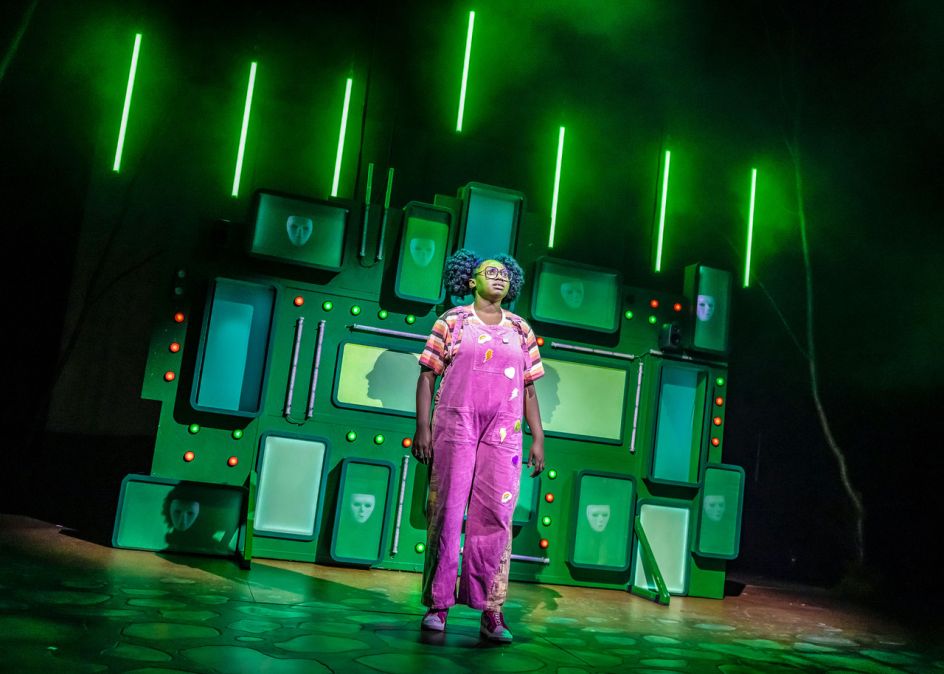
The Wizard of Oz – Pamela Leith
The more of these sets you see, the clearer it becomes: Yoav is willing to commit completely to a design concept and trust in audience participation. No hedging, no half measures. Each piece has a unique visual identity that you can identify from a photo.
Family stories on stage
Take Cable Street, for example, a musical about the events of October 1936, when a hundred thousand East Londoners (Jewish community, Irish workers, communists) blocked the streets against Oswald Mosley’s fascist marchers. For Yoav, this is not abstract history. His grandfather was one of the organizers of that demonstration. This is a family story.
The production ran two sold-out runs at Southwark Playhouse in 2024 and was selected as one of The Stage’s top shows of the year. The play currently runs at the Marylebone Theater until February 28 before making its international off-Broadway premiere this spring at New York’s 59E59 Theatre. But every venue needs to be rethought.
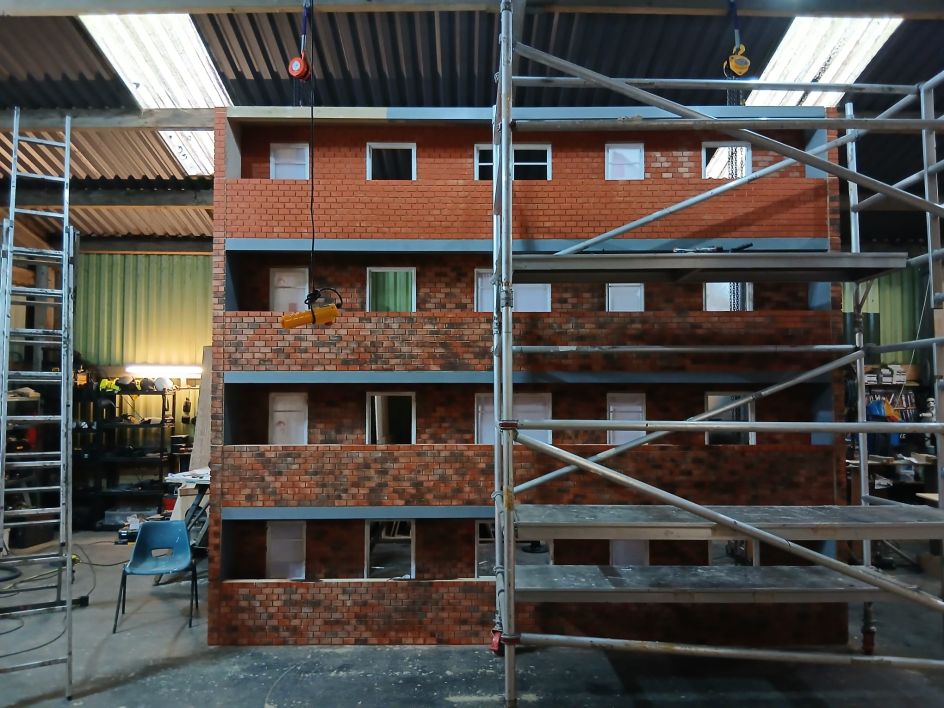
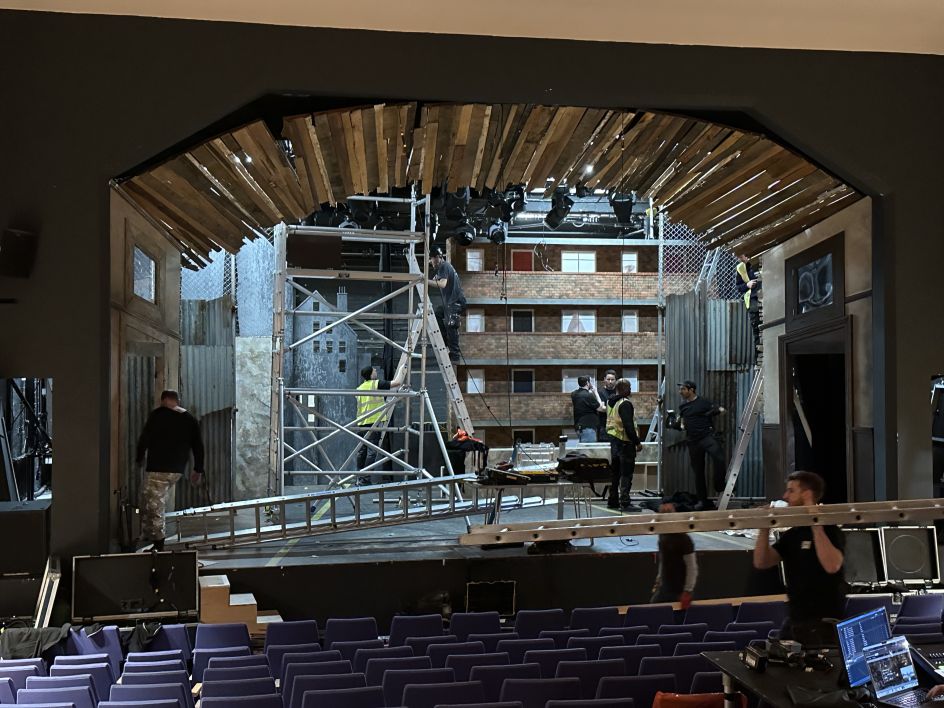
Moving from a thrust stage in Marylebone to an end-of-stage configuration meant Yoav had to completely reimagine the spatial dynamics. His solution was to open up the world with crumbling wooden arches and metal portals, placing the East London apartment block from which the characters were evicted directly on the stage.
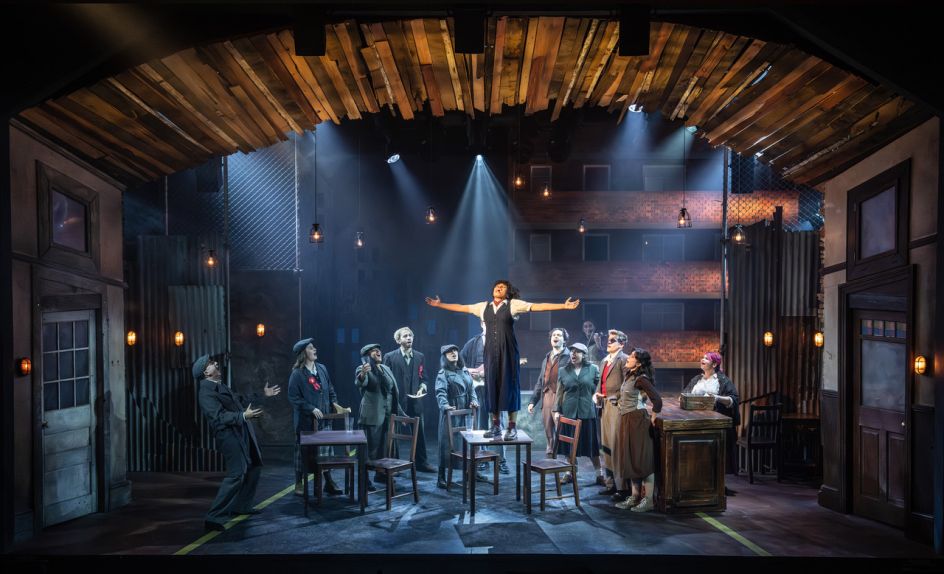
Cable Street – John Persson
The front of the stage thus becomes a domestic interior, open to the outside world as politics and ideologies hit. To take full advantage of the depth and width of the stage, Yoav used the old-school technique of forced perspective; this optical trick predates digital projection by centuries but remains effective because it inspires the audience’s imagination rather than imagining it for them. He described it as feeling like “an adventurous roll of the dice” while it was still in the drawing and construction stages.
It’s important to be honest about the gap between design intent and achieved production. Because after all, the design of that theater was a speculative endeavor. Under the stage lights, with the performers moving among them, you put your ideas into action months before you even see them. It’s all part of the trick to maintain the confidence to move forward with a concept even when you know it probably won’t land.
A broader perspective
Yoav’s background helps explain the scope. He is an Arts Foundation Award-winning theater designer, as well as a BAFTA shortlisted filmmaker and D&AD nominated creative director. His animated title sequence for the Sky Originals documentary Once Upon a Time in London was shortlisted by the British Academy of Film and Television Arts (BAFTA). He has done stop-motion animation work for the BBC and projection design for shows at Sadler’s Well and the National Theatre. He is the founding creative director of RightsInfo, a human rights communications project, and has produced films in partnership with the charity Hope Not Hate.
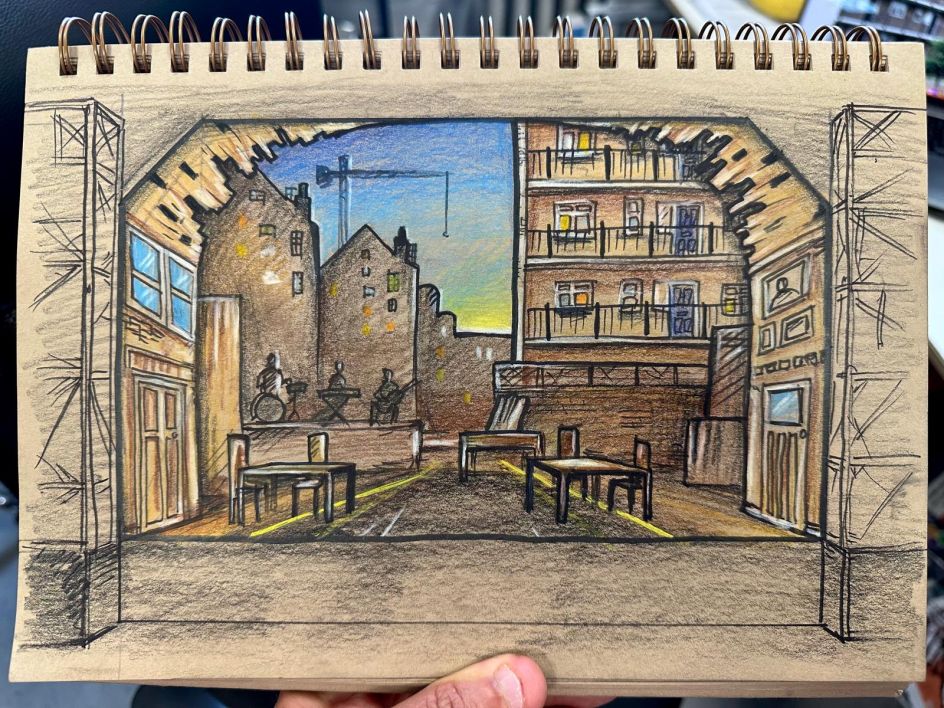
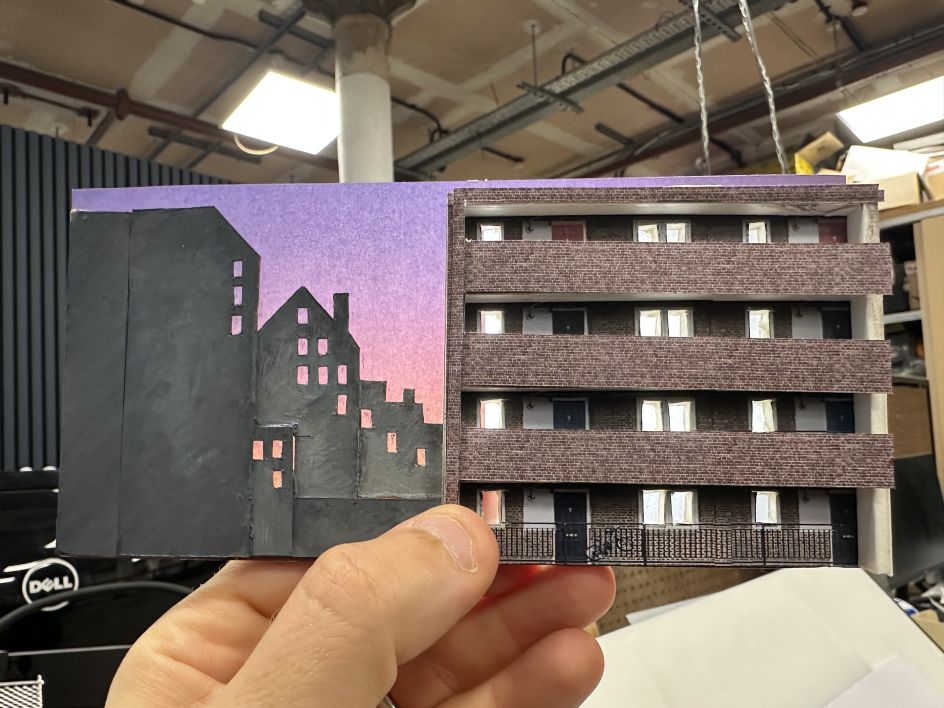
Well, this is not a designer arriving at the theater through a single pipeline. Cross-pollination between different disciplines (film, animation, digital and campaigning) is integrated into staged works that think in terms of images and environments, not just apartments and furniture. When you see the wall of screens in Oz or the neon-lit forest in Pinocchio, you see someone who knows how images work in multiple media and brings that idea to the stage.
For any interdisciplinary creative endeavor, Joffe’s trajectory is a useful reminder that the most interesting theater design often comes from those who don’t only Do theater design.
Skill transfer. Visual thinking also transfers. And it’s the willingness to take risks—the willingness to take a forced perspective when it feels like a gamble, to fill the stage with cherry blossoms and neon lights, and bring your grandfather’s story to life—that transfers the most.