Key considerations:
-
Bitcoin is showing stability despite the increasing strength of the US dollar by separating traditional stocks and gold.
-
Institutional demand for Bitcoin remains strong, as evidenced by the $1.5 billion in net ETF inflows in the last 7 days.
Bitcoin (BTC) successfully defended the $68,000 level on Tuesday despite a 1% drop in the Nasdaq 100 Index and a 3.6% drop in gold prices. Although Bitcoin was initially isolated from traditional markets, traders are concerned as the US dollar has strengthened against other major fiat currencies, even as the United States risks a protracted war with Iran.

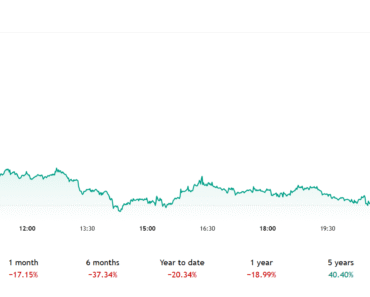
The US dollar index (DXY) hit 99.4 on Tuesday, up from 96.6 just three weeks ago. This strength in the U.S. dollar is attributed to investors seeking safety in cash and government bonds, signals typically associated with a risk-on environment. Conversely, periods of DXY weakness tend to coincide with positive Bitcoin reversals, such as the bull run seen from March 2025 to August 2025.
However, a broader analysis shows that the US Dollar Index remains well below the 105-110 range that was maintained from November 2024 to March 2025. In the last 12 months, it reflects consolidation rather than sustained strength. Bitcoin’s recent divergence from tech stocks seems more significant, as the ratio previously rose even with the Nasdaq 100 trading just 6% below its all-time high.

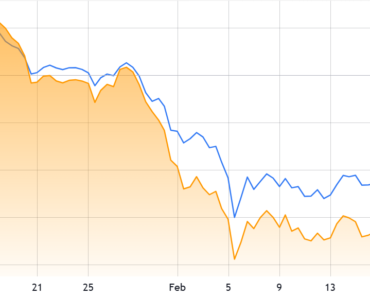
The 30-day volatility ratio between Bitcoin and the Nasdaq 100 fell to 69% after reaching 92% a week ago. The identity of the Bitcoin market has changed many times over time and is variously viewed as an independent monetary system, digital gold, an irreversible on-chain database, or a speculative tool. Therefore, predicting the fall of Bitcoin based only on the strength of the US dollar seems unreasonable.
There remains an undeniable lack of bullish momentum, likely driven by factors such as the October 10, 2025, flash crash, quantum computing concerns, disappointment over the progress of the US strategic bitcoin reserve, and a shift in investor focus towards AI. Traders are also still looking for a concrete catalyst for a decline to $60,000, fueling the prevailing fear and uncertainty.
Bitcoin’s bear market increases the impact of negative news
Recently, the US Securities and Exchange Commission (SEC) of MARA Holdings (MARA US) led market participants to misinterpret the company’s Bitcoin stock strategy. Traders expressed concern that MARA could repeat the actions of other well-known miners such as Cango (CANG US), Bitdeer (BTDR UR) and Core Scientific (CORZ US), which recently liquidated all their Bitcoin holdings.

MARA’s vice president of investor relations, Robert Samuels, denied the rumors, explaining that the company “may buy or sell from time to time,” which does not mean that there is any intention to liquidate the majority of their stock. Market participants may have acted unconcerned ahead of the announcement, as Bitcoin has been in a bear market while competitors have shifted their core business models to AI data centers.
related to: Bitcoin’s ‘death cross’ price chart has returned and revived late-term fears
Relative strength in the US Dollar Index should not be viewed as an automatic sell signal for Bitcoin. This is especially true as the cryptocurrency shows resilience while gold shows signs of fatigue and retests the $5,000 support after a 25% rally in 2026. Bitcoin holders still face a tough road to regain full confidence after a 52% drop from all-time highs, although general sentiment is starting to pick up.
The $1.5 billion in net inflows to Bitcoin exchange-traded funds since February 24 serves as a clear indicator of accelerating institutional demand. However, traders are likely to wait for a decisive break above $75,000 before the bear market ends. Until this threshold is met, data points like the US Dollar Index will likely continue to put negative pressure on Bitcoin, regardless of the current weak correlation.
This article does not contain investment advice or recommendations. Every investment and business move involves risk, and readers should do their own research when making a decision. While we strive to provide accurate and timely information, Cointelegraph does not guarantee the accuracy, completeness or reliability of any information in this article. This article may contain forward-looking statements that are subject to risks and uncertainties. Cointelegraph shall not be liable for any loss or damage arising from your reliance on this information.