This article is part of the “Innovations in: Kidney disease,” an editorially independent special report that was produced with financial support from Vertex.
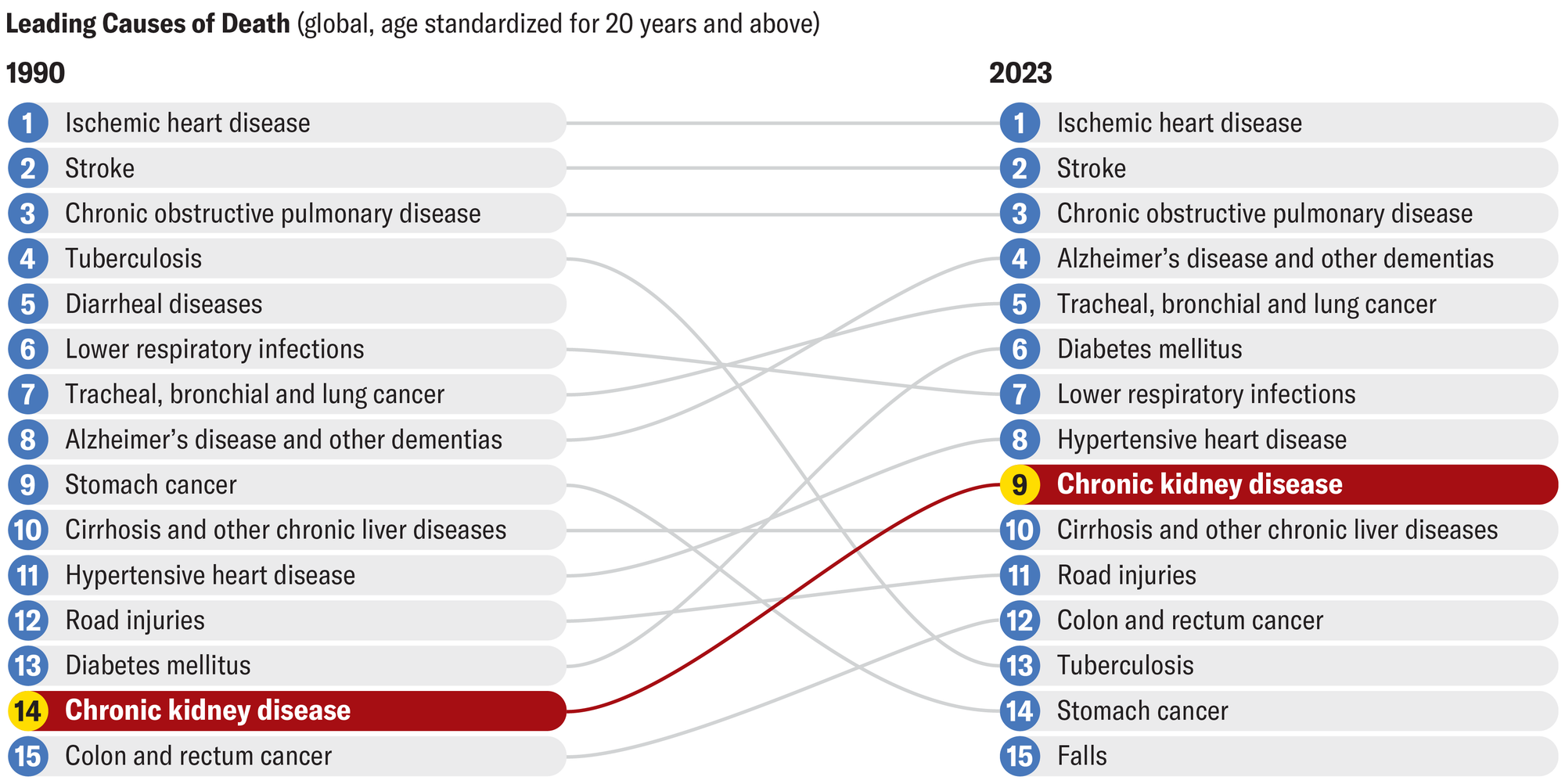
TThe global burden of chronic kidney disease (CKD) is high and increasing. In 2023, it was the ninth leading cause of death for adults and the 12th leading cause of healthy years lost to disease, disability or premature death. In the United States, researchers estimate that more than one in seven adults has CKD. Nine out of 10 of these people don’t realize they have it, but their kidneys will struggle to filter waste and extra water from the blood as they deteriorate.
CKD has many different triggers and is intertwined with a number of other diseases, including cardiovascular disease and hypertension. An analysis published in 2025 showed that CKD is more common in regions with high diabetes prevalence, such as Oceania and the Middle East. In other areas with high rates, the cause is attributed to genetic variants within regional populations, such as in West Africa and Central America. Variation across communities underscores the complex nature of this noncommunicable disease.
On supporting science journalism
If you like this article, please consider supporting our award-winning journalism by subscribes. By purchasing a subscription, you help secure the future of impactful stories about the discoveries and ideas that shape our world today.
COUNTRIES FIGHTING KIDNEY DISEASE
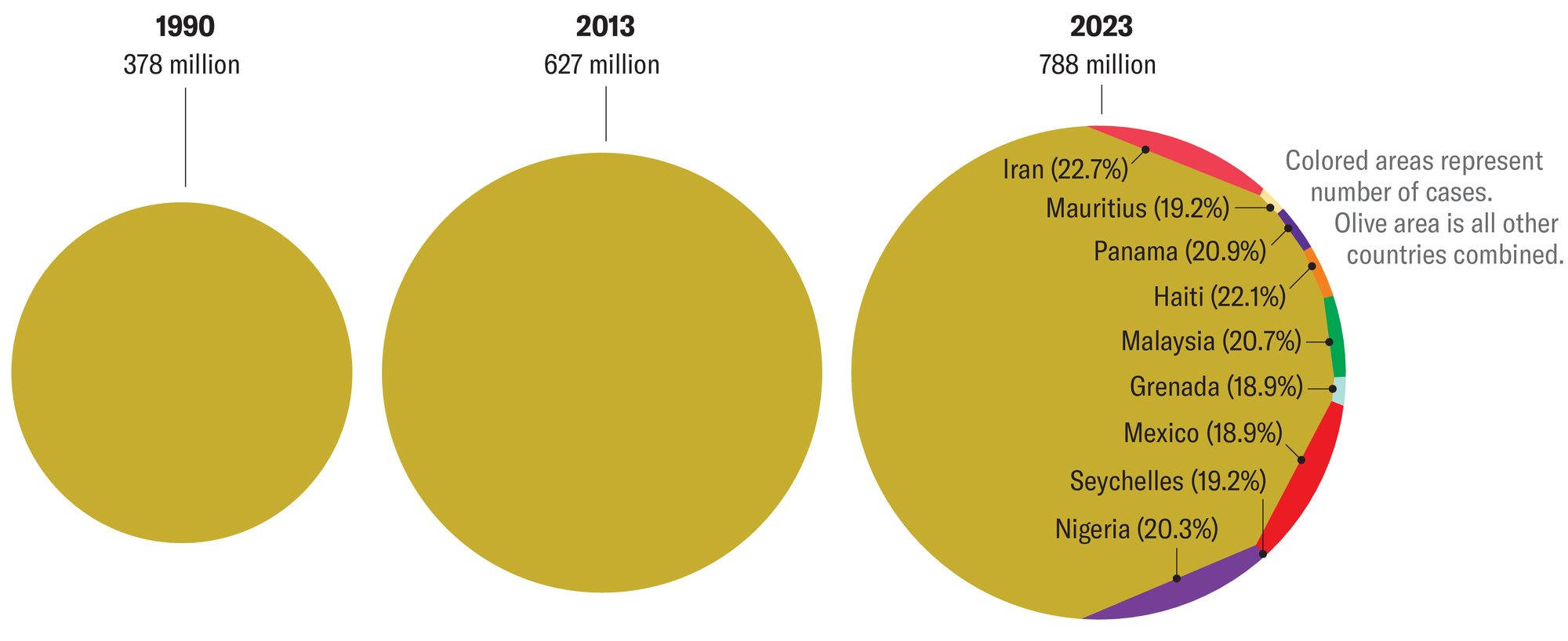
In 1990, an estimated 378 million people aged 20 years and older were living with chronic kidney disease (CKD). By 2023, the figure had increased to 788 million worldwide.
The total number of people over 20 with CKD in the United States, standardized for age, has increased by 5 percent since 1990, reaching 11.7 percent in 2023. The global average in 2023 was even higher, at 14.2 percent. Countries with large populations, such as China, have high numbers of cases, but often their rates are actually below the world average. Countries with the highest rates in 2023 are marked.
Part of this increase can be attributed to a population that is increasing in both numbers and age. But CKD’s upward trend exceeds that of several other leading causes of death.
Jen Christiansen; Source: “Global, Regional, and National Burden of Chronic Kidney Disease in Adults, 1990–2023, and Its Attributable Risk Factors: A Systematic Analysis for the Global Burden of Disease Study 2023,” by Patrick B. Mark et al., in LancetVol. 406; 22 November 2025 (data)
WHAT IS KIDNEY DISEASE?
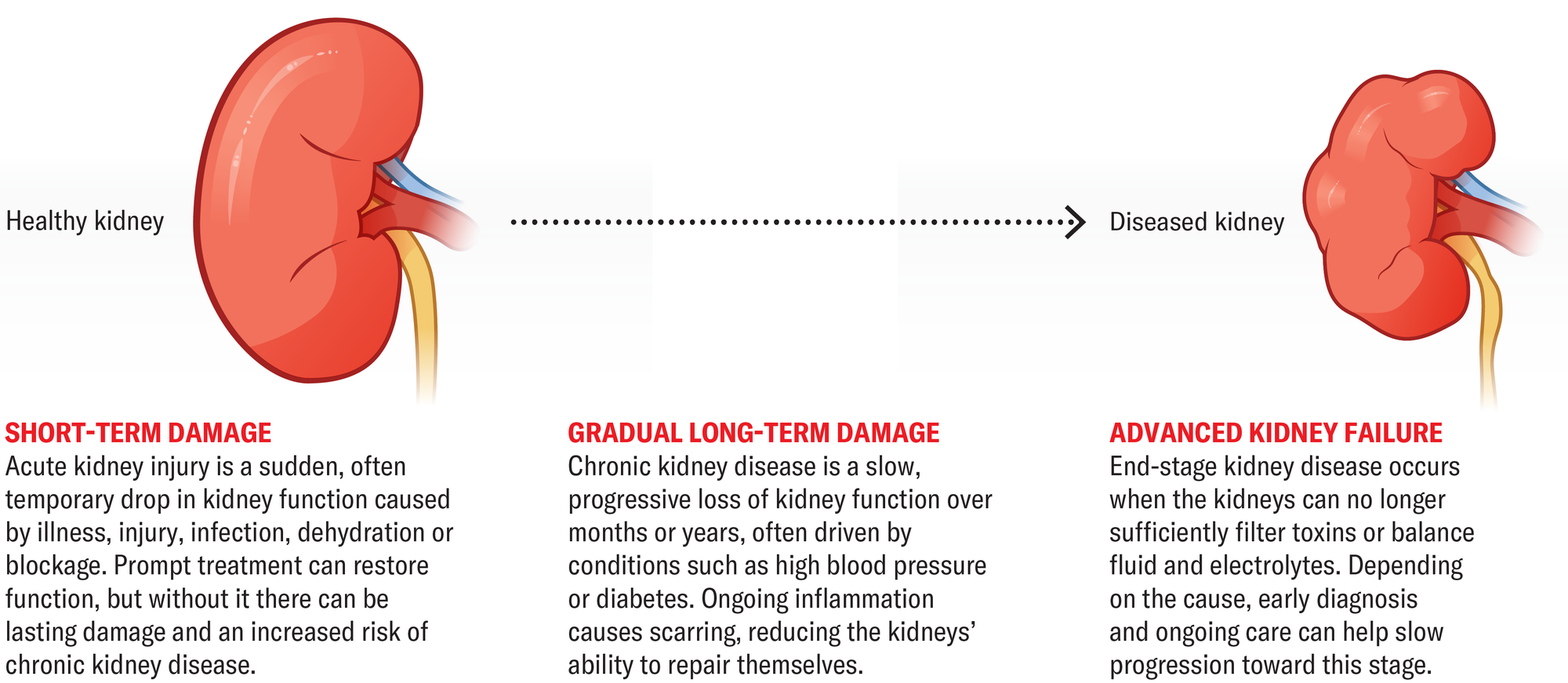
Kidney disease is an umbrella term that includes a wide variety of causes, but in all cases the condition interferes with the kidneys’ ability to filter waste and maintain balance in the body. It is classified based on the amount of damage and residual kidney function.
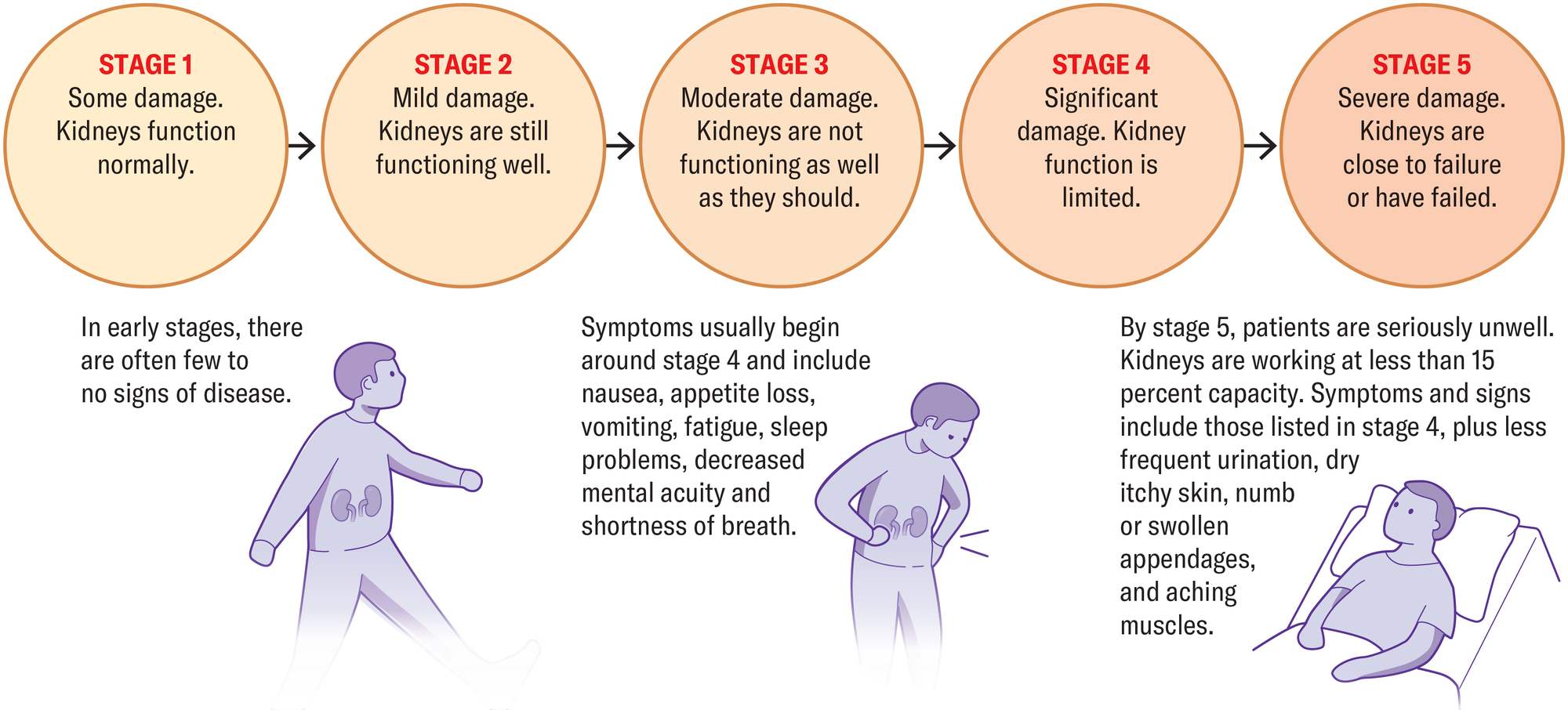
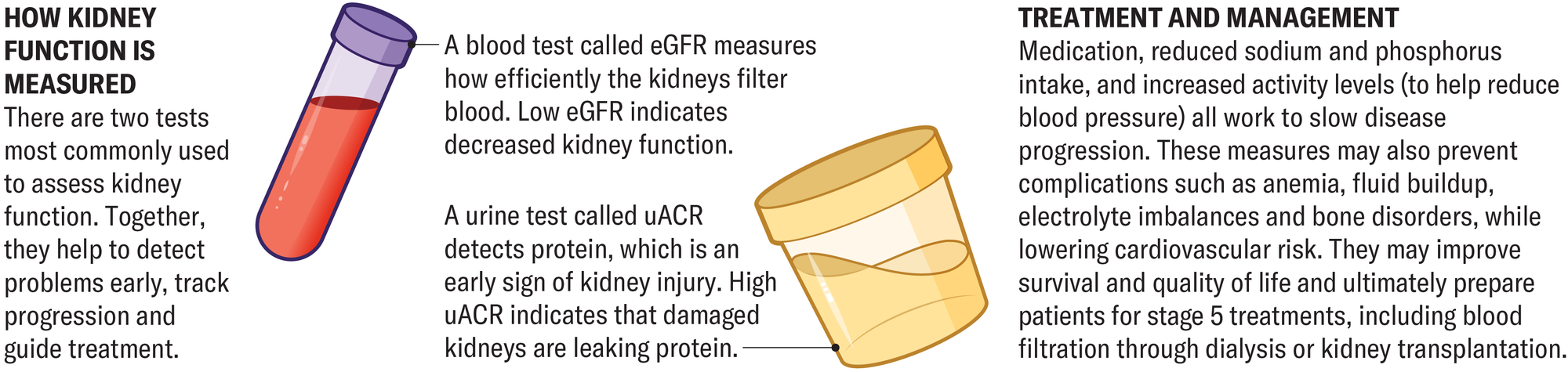
How is kidney health tracked?
Doctors divide chronic kidney disease (CKD) into five stages depending on how well the kidneys are working, which helps guide care. Because CKD usually develops gradually, stage-specific treatment can reduce damage and keep the kidneys working as well as possible.
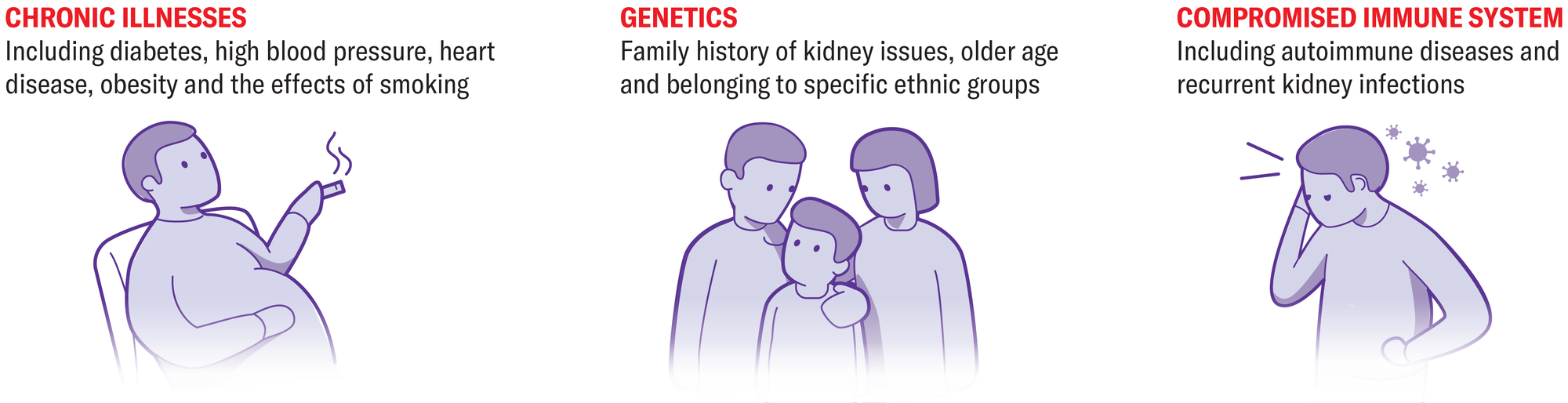
What puts your kidneys at risk?
Kidney damage is often triggered by certain medications or another medical condition, such as severe dehydration, blockage of the urinary tract, or infection. Factors that fall within the following three categories can also increase the risk of developing the disease.
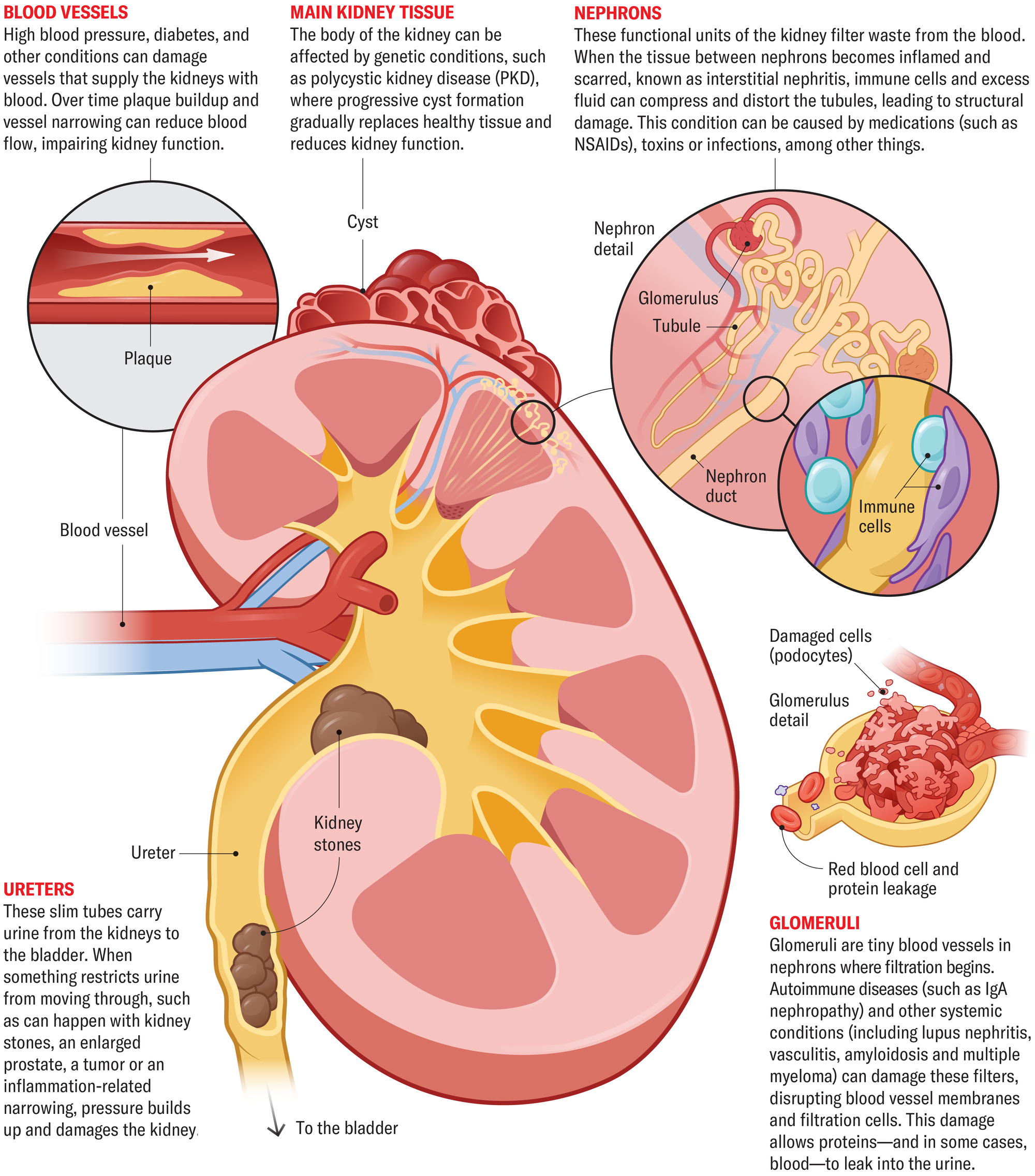
Where can damage occur in the kidneys?
The kidneys are made up of different structures, and damage to any of them can interfere with how waste is filtered from the blood and removed from the body. Here are some examples of where and how the damage can occur.
It’s time to stand up for science
If you liked this article, I would like to ask for your support. Scientific American has served as an advocate for science and industry for 180 years, and right now may be the most critical moment in its two-century history.
I have been one Scientific American subscriber since I was 12 years old, and it helped shape the way I see the world. SciAm always educates and delights me, and inspires a sense of awe for our vast, beautiful universe. I hope it does for you too.
If you subscribe to Scientific Americanyou help ensure our coverage is centered on meaningful research and discovery; that we have the resources to report on the decisions that threaten laboratories across the United States; and that we support both budding and working scientists at a time when the value of science itself is too often not recognised.
In return, you receive important news, captivating podcasts, brilliant infographics, can’t-miss newsletters, must-see videos, challenging games, and the world of science’s best writing and reporting. You can even give someone a subscription.
There has never been a more important time for us to stand up and show why science is important. I hope you will support us in that mission.