It’s easy to be defeatist about the fate of our planet. There is an ongoing climate crisis, extinctions are in overdrive, forests are disappearing, water cycles are collapsing and pollution is choking cities and creating dead zones in the oceans. And there is also US President Donald Trump, who believes that the science behind climate change is a “hoax”.
But I refuse to be too discouraged. Green energy technologies have already advanced so far and become so cheap that even Trump will not hold them back, especially when China is determined to conquer the world with low-carbon technology.
Call me a prisoner of hope, but pessimism is the enemy of action. So, in that spirit, here are five reasons to be at least a little hopeful about our planet’s future.
Reason one: nature is making a comeback in many places. Even in the most toxic landscapes, it adapts, evolves and reclaims its own territory. Wolves roam Europe and tigers roam India. I am not saying that we should stop worrying about losing biodiversity, but the good news is that nature is not so fragile. And in many parts of the world we give it more room to do its thing. For example, farmers leave land to nature in some regions.
Reason two: the population bomb is defused. We used to think that a sustained baby boom was the ultimate threat to the planet. Almost any action to stop it was justified. In 1983, the United Nations awarded its Population Prize to the architect of China’s viciously enforced one-child policy. But today, couples have half as many children as half a century ago – by choice. It turns out that trusting people works better than coercion. Today, the fear in large parts of the world is ultra-low fertility and declining population.
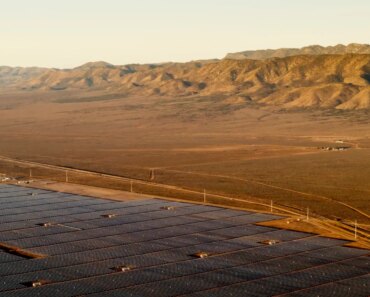
Reason three: technical fixes for environmental hazards can and do work. When the climate convention was adopted in 1992, there were only a handful of tiny wind turbines on a hill in California, solar panels were impossibly expensive devices developed for space travel, and no one had yet envisioned the rise of electric cars. Thirty years later, more than 40 percent of the world’s electricity is generated by cheap low-carbon technologies. Change is still not fast enough, but our global dependence on fossil fuels is coming to an end.
Reason four: “peak things” happen. Our modern world is becoming less material-intensive. This century, Britain’s consumption of materials – in food, metals, fossil fuels and so on – has fallen from 16 tonnes a year per head to 11 tonnes.
Why? Modern manufacturing does much more with less. And today’s wealthy consumers are spending less of their income on stuff and more on lifestyle experiences: dining out, gyms, gigs. Of course, much of the world still needs the basics – but the “consumption bomb” is also being defused.
Reason five: local wisdom is a shining light. One of the great environmental revelations of recent years is that rural communities are not always the enemies of their environment, such as deforestation, but their saviors. Tropical deforestation occurs less inside indigenous reserves than outside them, and in many African countries most wildlife now occurs outside national parks.
The idea that our greed means we are doomed to trash the planet – the so-called tragedy of the commons – is completely wrong. My hope is that if communities can act collectively to share nature locally, then this can also work for the planet’s great global community: the atmosphere, climate systems and oceans. Finding ways to achieve that is our biggest challenge.
I admit that the worst can still happen. To avoid it, we have no choice but to act. And that means embracing optimism.
Fred Pearce is the author of In spite of everything: A handbook for climate hope and an earlier one New Scientist environmental consultant
Topics: