Featured, Global, Global governance, Headlines, IPS UN: Inside the greenhouse, TerraViva United Nations
Opinion

In the latest Elders newsletter, Helen Clark reflects on Davos, President Trump’s Peace Board, and the urgency of fighting “might is right.”
– The year 2026 has begun on a deeply worrying note. International law, long considered the backbone of global peace and security, is being challenged in increasingly brazen ways. The fundamental principles of sovereignty and moderation are being flagrantly violated.
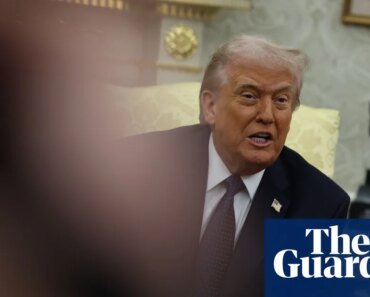
I recently returned from the World Economic Forum in Davos, where President Trump unveiled his new Peace Board. The UN Security Council had originally backed such a board to oversee the administration of Gaza on an interim basis. There, despite the declared ceasefire, the humanitarian situation remains critical and the occupying military continues to kill Palestinian civilians almost daily.
But what was revealed in Davos suggests something more worrying. There is not a single mention of Gaza in the bylaws of the announced board. It seemed to position itself as an alternative to the UN Security Council.
Among the invited members of the Peace Board are two indicted by the International Criminal Court. There is a billion dollar price tag to be a permanent member of the Board. This is not an appropriate way to manage international affairs. A Peace Board must remain fully and urgently focused on the continuing crisis in Gaza, as provided for in the Security Council’s time-limited mandate.
The formulation of the Peace Board is just one more challenge to a multilateral system whose legitimacy was already being questioned for many reasons.
The Charter of the United Nations turns 81 years old. The structures it established, particularly the Security Council, still reflect the world of 1945 rather than 2026. The abuse of the veto by permanent members – particularly when this protects violations of international law – has also been deeply damaging to its credibility.
This has been evident, for example, in the repeated use of the veto by Russia to block resolutions on Ukraine and by the United States to block resolutions on Israel-Palestine. Reform of the Security Council is necessary and overdue. It has been achieved before, with a significant change in 1965, and it must be achieved again.
At the Munich Security Conference last week, we dialogued with decision-makers about how best to navigate a changing world order. I agree with Prime Minister Mark Carney of Canada that recent events signal a serious breakdown in the international order as we know it. Countries of all sizes must act together to reject a world ruled by pure power and safeguard a future based on international law.
The Elders will speak out against any attempt to override international law with a “might is right” doctrine. We will reaffirm and defend an international order rooted in shared values and principles.
This is a moment of choice. Either the international community allows the values that have long underpinned global cooperation to erode through division and sabotage, or it comes together to defend and renew them.
Helen Clark is a New Zealand politician who served as the 37th Prime Minister of New Zealand from 1999 to 2008 and was administrator of the United Nations Development Program (UNDP) from 2009 to 2017.
Fountain: The Elders monthly newsletter.
The Elders is an international non-governmental organization of prominent public figures such as statesmen, peace activists and human rights defenders, who were brought together by former South African President Nelson Mandela in 2007.
IPS UN Office
$images_for_story = ips_images_for_story(); echo $images_for_story; // story photos to display in sidebar ?>