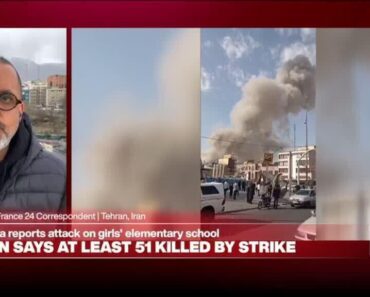
As the conflict with Iran widens across the Middle East, the US Senate is preparing for a key vote on President Donald Trump’s decision to launch military action — a rare congressional showdown on a war that unfolds without a clear American exit strategy.
Read moreWar in Middle East Live: Iran Claims ‘Full Control’ of Strait of Hormuz
The legislation, known as the War Powers Resolution, gives lawmakers a chance to push for congressional approval before any further attacks can be carried out. The Senate resolution and a similar bill to be voted on in the House later this week face unlikely paths through the Republican-controlled Congress, and even if they do pass, they will likely be vetoed by Trump.
Nevertheless, the vote marked a significant moment for lawmakers. His decisions on the five-day-old war — which Trump entered without congressional approval — could determine the future of US military members, countless other lives and the region.
“Wars without clear objectives don’t stay small. They get bigger, bloodier, longer and more expensive,” Senate Democratic Leader Chuck Schumer said at a news conference on Tuesday. “This is not a war of necessity, it is a war of choice.”
After launching a surprise attack against Iran on Saturday, Trump has scrambled to drum up support for a conflict Americans of all political persuasions were already wary of entering. Trump administration officials have been a frequent presence on Capitol Hill this week as they try to reassure lawmakers that the situation is under control.
“We’re not going to put American troops in harm’s way,” Secretary of State Marco Rubio told reporters at a tense news conference at the Capitol on Tuesday.
But six US military members were killed in a drone strike in Kuwait over the weekend.
It looks like one of your browser extensions is blocking the video player from loading. To view this content, you may need to disable it on this site.

Trump has not ruled out deploying US ground troops. He has said he hopes to end the bombing campaign within weeks, but his goals for the war have shifted from regime change to halting Iran’s development of nuclear capabilities to crippling its navy and missile programs.
“I think they’re having great success with what they’ve done so far,” Senate Majority Leader John Thune said Tuesday, adding that what’s next for the country will be “mostly for the Iranian people.”
Almost all Republican senators were prepared to vote Wednesday against a war powers resolution that would halt military operations, but many still expressed reluctance to the idea of deploying troops on the ground in Iran.
“I don’t think the American people want to see troops on the ground,” Sen. Bill Cassidy, R-La. Trump administration officials are “open to that possibility,” he said, but it’s not an option they’re emphasizing.
Votes in Congress this week represent potential fallout markers of where lawmakers stand on the war as they look ahead to midterm elections and the fallout from the conflict.
“No one can hide and give the president an easy pass or an end run around the Constitution,” Sen. said Tim Kaine, the Virginia Democrat who led the war powers resolution. “Everyone must declare whether they are for this war or against it.”
Republican leaders have successfully defeated, albeit narrowly, a series of war powers resolutions related to several other conflicts that Trump has entered or threatened to enter. However, this is different.
Unlike Trump’s military operations against alleged drug boats or Venezuelan leader Nicolás Maduro, the attack on Iran represents an open conflict that is already spreading across the region. For Republicans used to operating in a political party dominated by Trump and his promises to distance the US from foreign entanglements, the moment represents a bit of a whiplash.
“War is ugly, it’s always ugly, but we’ve been taking on an administration that’s been trying to attack us for a while,” Oklahoma Republican Sen. Markwayne Mullin said.
Meanwhile, South Carolina Republican Sen. Lindsey Graham, who has long dismissed Trump’s involvement overseas, argued that the wider conflict represented an opportunity for Arab and European countries to join forces in the fight against Iran and the extremist groups it supports.
“I don’t mind people being on the record as to whether they think it’s a good idea or not,” he told reporters, but argued that more authority over the military was ceded to Congress in the War Powers Act, which requires the president to withdraw troops from a conflict within 90 days.
On the other side of the Capitol, House leaders prepared for intense debate on the war and then a vote on Thursday.
“I believe we have the votes to defeat it, I certainly think we will,” House Speaker Mike Johnson said after a briefing of all members Tuesday night.
Meanwhile, House Democratic Leader Hakeem Jeffries said he expected a strong showing from Democrats in favor of the war powers resolution.
As lawmakers emerged from a closed-door briefing Tuesday night, the top Democrat on the House Foreign Affairs Committee, Rep. Gregory Meeks urged the Trump administration to “come to Congress” and speak directly to the American people about the rationale for war.
His voice was full of emotion when he said, ‘Our young men have left the lives of young women.’
(AP with France 24)
(tags to translate)Americas