From darkroom origins to the evolving image
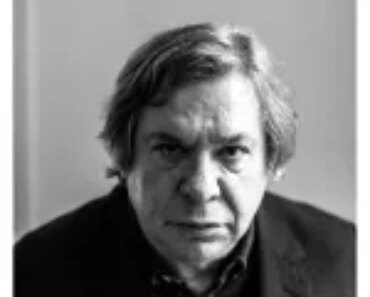
Vito Carta’s artistic path began in the strictly disciplined environment of the photographic establishment in Milan, where he was born, both as a photographer and as a printer. Immersed in the rigorous techniques of image making, he developed a profound sensitivity to light, contrast and composition. At the same time, his curiosity moved beyond commercial practices to the transformative possibilities of darkroom processing. The laboratory becomes a place of experimentation, where chemical reactions and exposure times are not just technical procedures but expressive decisions. This early foundation established the dialogue between precision and imagination that would later define his visual language. When digital technology emerged, Carta didn’t abandon his analog roots. Instead, he adopts new tools as an extension of his ongoing research, integrating them into his evolving concept of the image as a living, mutable entity.
The transition to digital methods marks an important expansion rather than a rupture. Carta saw technological change as an opportunity to refine his exploration of the evolution of imagery. Digital intervention allows him to rework surfaces, recombine fragments and layer impressions in ways that deepen the psychological resonance of the photographs. Yet even as he adopted new processes, the discipline learned in the darkroom remained at the core of his approach. The interplay between tradition and modern technology became a defining feature of his practice, allowing him to move fluidly between material presence and constructed illusions. This synthesis embodies a commitment to photography not as a static record but as a medium capable of transformation, capable of carrying the weight of memory, perception and imagination within a single frame.
In 1999, Katta ended her collaboration with photography institutions and shifted her focus towards independent exhibitions. His first steps on this path were in Tunisia, where he held a series of solo exhibitions featuring works shaped by darkroom experiments. This moment marks a decisive shift from commissioned production to personal inquiry. By choosing to exhibit independently, he asserts his visual autonomy and situates his work within a broader cultural conversation. The move to Tunisia also underscored his readiness to test his ideas in new contexts, allowing viewers to encounter images that blur the lines between tangible reality and visceral experience. Through these early exhibitions, the foundations of his unique aesthetic began to become clearer.
Vito Calta: The Poetics of Memory and Illusion
Maintaining a close relationship with the photographic image has always been at the core of Carta’s philosophy. Rather than distance himself from the media’s documentary legacy, he engages directly with it, questioning its reliability and authority. His attention focuses on the perception of memory, particularly its imprecision and deceptiveness. The images in his work often appear to be filtered through memory, suspended between clarity and distortion. Reality becomes subtly deformed, acquiring the atmosphere of a dream frame. In this state of suspension, familiar elements lose their stability and take on an ambiguous quality. The viewer encounters scenes that seem recognizable yet elusive, as if pulled from a memory that cannot be fully grasped. Through this strategy, Katta transforms photography into a meditation on how we remember and misremember.
Image plays a decisive role in this exploration. Kata expresses a clear preference for figurative imagery, often placing the protagonist at the center of the composition. This almost constant presence acts as a narrative fulcrum, anchoring the viewer in an ever-changing visual environment. Human figures are both witnesses and participants in a world that seems slightly different from ordinary perception. By emphasizing the protagonist, he creates a focal point through which themes of identity, memory, and illusion unfold. Characters not only exist in the scene but carry the emotional and conceptual weight of the image. Through posture, gesture and position, the protagonist embodies the fragile bridge between what is seen and what is remembered, reinforcing the tension between physical presence and psychological distance.
The dreamlike quality that permeates his work comes not from spectacle but from subtle displacement. “Kata” doesn’t overwhelm its audience with overt fantasy. Instead, he introduced quiet shifts that disrupted expectations. Color, impression and compositional elements combine to create an atmosphere as if suspended in time. This approach reflects his interest in how memory reshapes experience, smoothing out some details while intensifying others. By constructing images that resemble dream fragments, he encourages contemplation rather than direct interpretation. The result is a visual language in which illusion does not deny reality but rather reconstructs it. In this ambiguous space, viewers are invited to confront their own processes of recollection, recognizing how easily certainty can blend into suggestion.
Literary echoes and surreal influences
The intellectual framework surrounding Kata’s work reveals a rich network of artistic and literary references. Among the most important influences was Rene Magritte, whose exploration of paradox and visual ambiguity resonated strongly with Katta’s sensibility. Magritte’s ability to present ordinary objects in unexpected contexts has parallels with Katta’s reconfiguration of photographic reality. Rather than imitating a specific subject, he imbibed a spirit of inquiry that questioned what images could represent. This affinity extends beyond painting to the written word, especially the concise and evocative language of twentieth-century hermit poets. Their ability to condense complex emotions into a few well-chosen words reflects Kata’s efforts to synthesize emotion and meaning within a single framework.
His imagination was also enriched by brilliant narratives from writers such as Jorge Luis Borges and Alejandro Jodorowsky. Borges’ intricate story, with its labyrinthine ideas unfolding in precise structures, echoes Kata’s layered composition. Jodorowsky’s combination of mysticism and symbolism provides another point of contact, reinforcing people’s attraction to the magical and inexplicable. These literary trends nourished his visual thinking and encouraged him to view photography as a place where logic and fantasy intersect. The influence of these authors was not illustrative but conceptual, shaping an approach that valued advice over explanation. Through these references, Carta situates his practice within a wider cultural lineage, celebrating the transformative power of ambiguity and imagination.
Fantasy ideas have long been a powerful impetus for his creative direction. This attraction manifests itself not in overt spectacle but in subtle changes that undermine certainty. By drawing on visual art and literature, Carta constructs images that function like visual poetry. They invite reflection rather than provide direct answers, echoing the hermetic tradition’s emphasis on synthesis and resonance. The magical element in his work often appears as a quiet undercurrent, suggesting that reality contains dimensions that are not immediately visible. In this way, his artistic influences came together to support a vision for photography to transcend simple representation and become a medium for philosophical and poetic inquiry.
Vito Carta: between fragments and visions of the future
“Alice” is an image that encapsulates the conceptual focus of kata. This work particularly clearly articulates the duality between the tangible and the elusive. In “Alice,” real hands contrast with fleeting and unrecognizable portraits. The hands appear solid and concrete, while the face seems blurred. This juxtaposition creates a thread that connects two different worlds, suggesting both continuity and discontinuity. The image embodies the deceptions of memory, showing how some details remain clear while others fade into uncertainty. Through this composition, Carta gives visual form to the fragile interplay between presence and disappearance, inviting the viewer to consider how memory can both reveal and conceal.
The process behind these works highlights his commitment to construction and transformation. Katta develops his compositions through a series of photographic shots that capture subject, impression and colour. These elements serve as supports for new panels, which are assembled and reconfigured in pursuit of future combinations. The collection of materials becomes an experimental laboratory where fragments are selected, combined and reshaped. This approach reflects his belief in the evolving nature of images. He does not rely on a single decisive moment, but rather builds his photographs through accumulation and recombination. Each component contributes to the final structure, which bears traces of its origins while pointing towards new visual possibilities.
Currently, Carta’s growth trajectory continues to expand through significant exhibition opportunities. His participation in group exhibitions at Fringe Gallery marks his ongoing engagement with the dialogue of contemporary art. Additionally, a video projection planned for June at New York’s MoMA is an important milestone, bringing his work into an internationally recognized context. These developments demonstrate that the practice remains dynamic and forward-thinking. While rooted in a deep understanding of photographic traditions, Katta always seeks new platforms and formats to express his vision. The fusion of past experiments and future projections emphasizes the continuity of his artistic research, confirming his commitment to exploring memory, illusion, and transformation through ever-evolving forms.