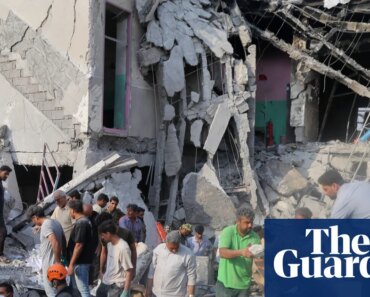
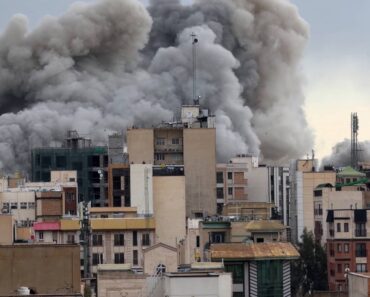
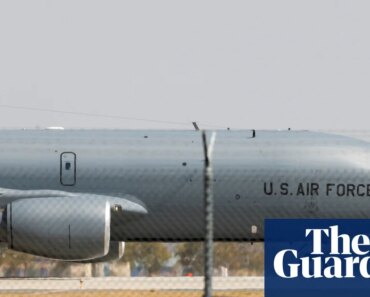
As the conflict between the United States, Israel and Iran enters its fourth day, the Middle East remains on edge and tensions rise across the region. The UAE Defense Ministry confirmed it intercepted a “third wave” of Iranian missiles targeting civilian and military sites, underscoring the growing arc of risk. The United Arab Emirates has since closed its embassy in Tehran and withdrawn its diplomatic staff, calling the attacks a “dangerous escalation.”
US Secretary of State Marco Rubio has also advised US citizens to immediately leave 13 Middle Eastern countries, citing escalating regional tensions and serious security risks. The countries included in the advisory are Bahrain, Egypt, Iran, Iraq, Israel (including the West Bank and Gaza), Jordan, Kuwait, Lebanon, Oman, Qatar, Saudi Arabia, Syria, the United Arab Emirates and Yemen.

The United Arab Emirates said it is working to intercept a major missile attack launched by Iran. “The Emirates air defenses are currently facing a barrage of ballistic missiles from Iran,” the UAE Defense Ministry said in a statement. The ministry affirms its full readiness to confront all threats to ensure the protection of the country’s territory and the safety of citizens and residents, he added.
Attack on airspace
Iranian drones attacked an air base near Dubai used by Australia, Australia’s Defense Minister confirmed. No one was injured in the weekend attack on Al Minhad air base, which the Australians have long used as a center for military operations in the Middle East. cnn reported.
The UAE Ministry of Defense said it intercepted a large-scale Iranian attack involving 9 ballistic missiles, 6 cruise missiles and 148 drones. Since the escalation began, 174 ballistic missiles and 689 drones have been detected, of which the vast majority have been successfully destroyed. Some projectiles caused limited damage to civilian facilities, causing 3 deaths and 68 minor injuries.
Authorities claimed that the sounds heard across the country were due to interception operations by air defense systems and fighter jets. The United Arab Emirates condemned the attacks as a violation of sovereignty and international law and warned that it reserves the right to respond. The ministry added that it remains on high alert and urged the public to trust only official information and avoid spreading rumors.
Aviation crisis
Air travel across the Middle East has been severely disrupted. Dubai International (DXB) and Dubai World Central (DWC) remained closed until further notice, and the UAE General Civil Aviation Authority implemented a temporary partial closure of airspace.
Story continues below this ad.
Major airlines including Emirates, Etihad Airways, FlyDubai and Qatar Airways suspended flights, while European airlines such as Lufthansa, Air France, KLM and British Airways, along with Asian airlines such as Singapore Airlines, Cathay Pacific and Japan Airlines, adjusted or canceled services to the region. Indian airlines Air India and IndiGo also suspended flights to the United Arab Emirates, Saudi Arabia, Israel and Qatar, while EL AL suspended services to Israel until March 4.
More than 6,000 flights were canceled worldwide: Emirates alone canceled 485 flights, followed by Etihad (190), FlyDubai (181) and Qatar Airways (106).
However, a limited resumption of flights at UAE airports began on Monday, prioritizing evacuation operations for stranded passengers. Authorities urged travelers not to head to airports unless airlines contact them with confirmed flight details.
Diplomatic tension
The United Arab Emirates officially closed its embassy in Tehran and withdrew its diplomatic staff, condemning the attacks as a “dangerous escalation” and a violation of international law.
Story continues below this ad.
Impact throughout the region
The BAPS Hindu Mandir Abu Dhabi announced that it will remain closed to visitors until March 9, 2026 as a precautionary measure.
Truck restriction regulation in Dubai will resume on March 5. Reuters reported.
The President of the United Arab Emirates, Sheikh Mohamed bin Zayed Al Nahyan, and the Crown Prince of Dubai, Sheikh Hamdan bin Mohammed bin Rashid Al Maktoum, visited the Dubai Mall amid the conflict with Iran, which claimed the lives of three people.
Global reaction
Prime Minister Narendra Modi expressed his “solidarity” with UAE President Sheikh Mohamed bin Zayed Al Nahyan and condemned the attacks that tragically led to the deaths of three expatriates.
Story continues below this ad.
Russian President Vladimir Putin, in a phone call with Mohammed bin Zayed Al Nahyan, said he is willing to convey to Tehran the UAE’s concerns about Iranian attacks and help stabilize the region. The leader of the United Arab Emirates said his country is not a base for attacks on Iran and called the attacks unjustified. Both sides agreed on the need for an immediate ceasefire and renewed diplomacy, while Putin criticized the actions of the United States and Israel for derailing nuclear negotiations. He also thanked the United Arab Emirates for helping Russian citizens.
Stay up to date with the latest – click here to follow us on Instagram
© IE Online Media Services Pvt Ltd