In one of the most consequential moments of his two terms in office, wartime President Donald Trump on Monday delivered a vague and contradictory forecast for how long the United States will continue fighting in Iran and what the ultimate goal of its military campaign there will be.
With oil hovering around $100 a barrel for much of Monday and Middle East allies fearing a new slide into a regional conflict, Trump appeared in Doral, Florida, with a mission to calm global markets and assure his skittish allies that he has a clear vision for how to end the biggest U.S. intervention in the Middle East since the Iraq War.
If there is, it was not pronounced at this press conference.
In a 35-minute appearance, the American president avoided details to emphasize how thoroughly the United States has destroyed Iran’s military and reinforce suspicions that there has been little planning for what comes next. After telling a CBS News reporter in a phone call that the war was “very complete, practically,” he dodged a reporter’s question about whether that meant the war could end this week. “No, but soon. I think soon. Very soon.”
The journalists tried again. “You said the war is ‘very complete,’ but your defense secretary says ‘this is just the beginning.’ So what is it?
“I think you could say both,” Trump responded. He immediately added: “It is the beginning of the construction of a new country.” It didn’t matter that Trump and his top advisers had ruled out managing a nation-building effort in Iran; Hours have passed, and indeed, Trump’s own view on Iran seems to change with every phone call he has received from a journalist in the last ten days.
Thanks to his call to CBS, there was a sense that he might be preparing to announce a reduction. But here he did not reach a moment of mission accomplished and instead said that the war would continue.
“We could consider it a tremendous success at this point or we could go further,” he said. “And we are going to go further.”
“We have won in many ways,” he said in a characteristic moment during a speech to Republican allies before the news conference. “But we haven’t won enough.”
It was a scratch, and Democrats quickly seized on those comments to say that Trump’s goals for the Iran conflict were incoherent or simply absent.
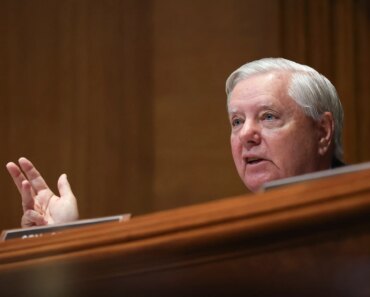
“One word to sum up Trump’s press conference: clueless,” wrote Chuck Schumer, Senate Democratic leader from New York. “You can’t articulate a plan or a vision because you have no plan or vision. You can’t even decide whether or not the country is at war. You are risking the global economy and the lives of millions on whims and vibes.”
There were other reminders of how American foreign policy has now completely passed through the looking glass. Trump said on Monday he would relax sanctions on oil sales from certain countries to help calm markets, reversing his own policy of increasing economic pressure on Russian oil sales to help end the conflict in Ukraine. He then added that the United States may not ultimately return those sanctions once global markets return to normal. “Who knows… maybe we won’t have to put them on, there will be a lot of peace.”
But in the most surprising moment, Trump suggested that Iran had covertly obtained a Tomahawk missile and then used it to attack a girls’ school in the city of Minab, killing more than 168 people, most of them children.
When asked if the United States would accept any responsibility for the attack, which occurred shortly before the United States attacked a nearby naval base, Trump suggested: “Many countries use Tomahawks” and that “Iran has some Tomahawks.”
That was more than many journalists in the room could bear.
“You just suggested that Iran somehow got a hatchet and bombed its own primary school on the first day of the war,” said one journalist, before asking why “you are the only person in your government saying this.”
“Because I just don’t know enough about it,” Trump responded. “I think it’s something I’m told is under investigation.”