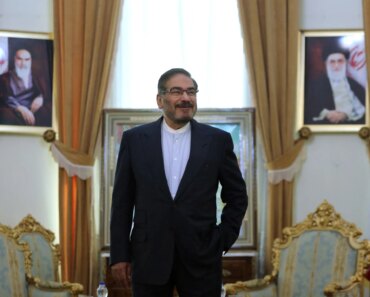
Donald Trump said Sunday he was prepared to speak to what remained of the Iranian leadership after the assassination of the country’s supreme leader by US-Israeli airstrikes aimed at toppling the regime.
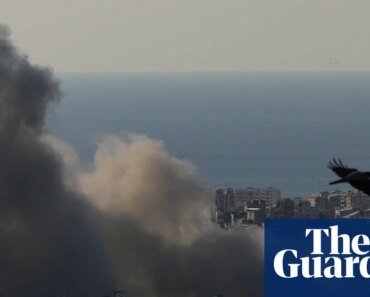
Trump spoke on a second day of intense bombing of Iranian cities and Tehran’s missile counterattacks sent tremors across the region and the global economy. On Monday, the conflict spread to Lebanon when Israel began attacking Hezbollah targets, after the group launched missiles and drones into northern Israel in retaliation for the assassination of Ayatollah Ali Khamenei.
Iran’s top security official, Ali Larijani, who was also an adviser to the country’s former supreme leader, said on Monday that Tehran would not negotiate with the United States and denied reports that officials had attempted to open talks with the Trump administration.
Amir-Saeid Iravani, the Iranian ambassador to the UN, told an emergency security council meeting on Saturday that hundreds of civilians had been killed or wounded in attacks between the United States and Israel. He said they had deliberately attacked civilian neighborhoods in several cities.
The death toll is expected to rise after a second day of bombing. Iranian state media said 165 people were confirmed dead in a bomb attack on a girls’ primary school in the southern city of Minab on Saturday.
Among the dead was Khamenei, who had ruled as Iran’s supreme leader since 1989 and was the main target of an initial Israeli attack on Saturday morning. According to several American reports, the CIA had been following Khamenei for months. The New York Times reported that the CIA tipped off Israel when the leader convened a meeting of top defense advisers at his compound in Tehran, prompting the decision to strike.
Israel’s Channel 12 reported that the Israeli military used a ruse to take Iranian leaders by surprise. On the morning of the operation, army officers were asked not to park their cars in their usual spaces to avoid detection by Iranian spies. Misinformation was also leaked suggesting that Chief of Staff Lieutenant General Eyal Zamir had stayed home.
The channel quoted officials as saying that the Israeli air force killed 30 high-ranking Iranian officials in the first 30 seconds of the attack.
Trump told Fox News that 48 Iranian leaders had been killed in the first two days of the bombing and claimed in a social media post that nine Iranian warships had been sunk and the naval headquarters destroyed.
ABC News correspondent Jonathan Karl reported that the United States had identified potential candidates to take over Iran “but they were killed in the initial attack.”
“The attack was so successful that it took out most of the candidates… It won’t be anyone we were thinking of because they’re all dead,” Trump said, according to Karl.
So far nine Israelis have been killed in counterattacks with Iranian missiles, and US forces confirmed their first casualties of the war: three dead and five wounded by shrapnel. The official announcement did not give details about where and how the victims occurred.
Iran has also attacked Gulf countries that host US military bases. Airports in Kuwait, Abu Dhabi and Dubai were damaged by missiles and remained closed on Sunday, causing one of the most serious disruptions to global aviation in years.
Meanwhile, Benjamin Netanyahu vowed to step up airstrikes against Iran, while Trump said he was open to talks with Iran’s surviving and newly appointed leaders.
“They want to talk and I’ve agreed to talk, so I’ll talk to them,” he told Atlantic magazine, without revealing when those talks might begin. “They should have done it sooner. They should have given earlier what was very practical and easy to do. They waited too long.”
Speaking to the Daily Mail, Trump suggested that the conflict with Iran could continue for the next four weeks. He also said there could be more American casualties and vowed to avenge American deaths.
He was speaking when the global effects of the war began to be felt. The price of oil rose after two reported attacks on oil tankers in or near the Strait of Hormuz.
About 150 oil tankers were reported to have dropped anchor rather than use the waterway, a route for about a fifth of the world’s traded oil. Major container shipping companies, including MSC and Maersk, have suspended shipping in the region.
The attacks on ships were a reminder of the conflict’s potential to trigger an environmental catastrophe.
By launching the war, Trump said it would provide an opportunity for the Iranian people to rise up and overthrow the 47-year-old Islamic regime. Nationwide protests earlier this year were brutally suppressed by security forces and some estimates say tens of thousands of civilians were killed.
Iranian authorities said 22 border guards in Mehran, on the Iranian-Iraqi border, had been killed, a sign that the United States and Israel were trying to weaken the regime’s control over Iran’s borders in support of anti-government separatists.
Across the country, Iranians said they felt a mix of terror and optimism as the bombing continued. Some expressed relief that the long-awaited attacks had arrived and opponents of the regime spoke of hope that they might lead to political change, but both were tempered by fear that the attacks would lead to more civilian deaths in a country already reeling from recent bloodshed.
Larijani accused the United States and Israel of trying to loot and fragment Iran and warned “secessionist groups” of a harsh response if they tried to intervene, state television said.
The Tehran regime insisted that Khamenei’s assassination would not weaken its resolve. Iranian parliament speaker Mohammad Bagher Ghalibaf said Netanyahu and Trump had “crossed a red line” and “will pay for it,” according to state media.
Iran’s President Masoud Pezeshkian said a leadership council consisting of himself, the head of the judiciary and a member of the powerful Guardian Council had temporarily assumed the duties of supreme leader until a replacement was chosen. Khamenei had not named a successor.
Esmaeil Baghaei, a spokesman for Iran’s Foreign Ministry, said he expected the process of selecting a new supreme leader to be relatively quick.
“Of course, there is no fixed schedule,” Baghaei told MS Now Velshi. “They can decide as quickly as possible. I don’t think it will take that long because we are in this critical situation of a war of aggression imposed by the United States and Israel. So I guess the process would be accelerated.”
In his interview with the Atlantic, Trump downplayed the suggestion that the economic fallout from the war could hurt the Republican Party’s prospects in November’s congressional elections.
“We have the greatest economy we’ve ever had,” the president said. However, according to a Reuters-Ipsos poll on Sunday, only one in four Americans approve of the attack on Iran, before any inflationary pressure from a war-driven oil price surge has begun to be felt in the United States.