In the dilapidated colonial buildings of Porto Real, agricultural worker Kimilson Lima, 43, signed the agreement and is happy. “With this money we can have adequate flooring in the house,” he said. “And an indoor bathroom.”
Lima is part of an innovative experiment on the West African island of Príncipe, where villagers who agree to follow an environmental protection code will earn a quarterly dividend. To date, nearly 3,000 people have joined the Faya Foundation project, more than 60% of the adult population. The first payment of 816 euros (£708) has just been delivered, a huge amount of money on the island. “This will be truly transformative, both for nature and for people,” said the president of the autonomous region, Felipe Nascimento.
The special nature of Príncipe’s flora and fauna has been known since Portuguese navigators found the 20-mile-long island in 1471. Uninhabited and separated from the African mainland by more than 160 miles of ocean, both Príncipe and its larger southern neighbor, São Tomé, had developed unique rainforests where giant land snails and crabs were among the top predators. Even now new species continue to be discovered, which has given rise to the nickname “African Galapagos”.
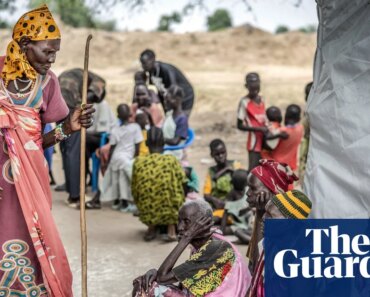
The Portuguese started a cocoa plantation economy, but after independence in 1975, that business collapsed. In Príncipe, descendants of slaves and workers from Angola and Cape Verde became tight-knit communities of subsistence farmers, camping out in increasingly decrepit colonial-era buildings. To the casual visitor, it was picturesque, but problems mounted for residents who were pushed into more unexplored parts of the island, cutting down trees and foraging for food.
Then, in 2010, along came South African billionaire Mark Shuttleworth looking for a place to build a house, an idea that was soon replaced by a philanthropic impulse to help. A former plantation house was converted into a hotel with retrained local staff, but Shuttleworth didn’t stop there. Its goal was to finance the kind of sustainable development that also protected and improved the environment. “The normal path to developing Principe would be to clear forests and grow ‘fair trade’ peppercorns,” Shuttleworth said. “But we want to reward them as stewards of their precious environment.”
That dream has now come true, much to the surprise of local skeptics. “They have been disappointed in the past,” says the general director of the Faya project, Jorge Alcobia. “They didn’t expect us to keep our promises.”
However, there is still a learning process on how to help the environment. “We have to explain that it is not free money,” says Alcobia, “the dividends are reduced, for example, if a tree is cut down without authorization.” Faya is funding school improvements, organizing the dying cocoa business and providing financial advice. “Many people here don’t have bank accounts and have little experience handling money.”
So far, however, all the money has come from the Shuttleworth fortune, a past and future commitment amounting to around £87m. Among the developments is a new town, home to Clara Gomes and her daughter. “My money is going towards a new kitchen and training in carpentry,” he said.
His neighbor, Edmundo, is selling cocoa to the project. “Before I didn’t have anyone to buy it,” he said. “I hope they have vanilla next.” He has committed to receiving the dividend, but others remain skeptical. “It’s a monopoly,” shouted a passerby, “Is that good? What if everyone buys motorcycles and chainsaws?”
For one man, years spent foraging in the forest have now turned into a career as a wildlife guide. Yodiney dos Santos now leads scientific expeditions to the forest, discovering several new species, including a previously unknown owl. He knows very well how fragile this environment is. “My ancestors came here from Angola,” he said. “And, for food, they brought the edible snail from West Africa, which then escaped. Now those snails are driving out the endemic Prince snails.”
This unique social experiment will be closely followed. “If successful,” Shuttleworth said, “I hope other irreplaceable ecosystems can benefit from the idea at scale.”