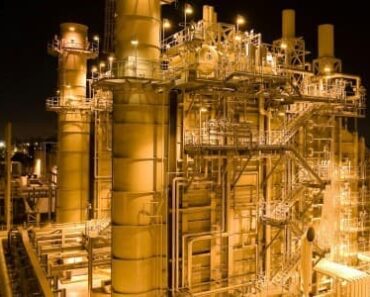
Oil fields in Texas, Alaska, and other regions throughout the United States make the country the world’s largest oil producer, pumping more than 13 million barrels per day.
That hasn’t stopped gas prices at the pumps from rising since the start of the Iran war last week. The national average for gasoline now sits at $3.32 per gallon, up from $2.98 a week ago, according to AAA — a nearly $0.38 premium.
The apparent contradiction reflects a fundamental reality of the global energy system: Although the United States has become a crude oil superpower, the price of gas is tied to a global market where supply disruptions thousands of miles away quickly trickle back to American consumers.
Oil is sold on the global market, meaning prices respond to changes in global supply and demand rather than the production of any one country. As traders worry that a major supply route like the Strait of Hormuz – which carries nearly a fifth of the world’s oil – could be disrupted, oil prices are rising everywhere, including in the United States.
Read more: How fuel prices are hitting your wallet, from gas to groceries
In the past week, Iran has essentially halted traffic through the strait and began targeting key energy infrastructure in the region, including Saudi Aramco’s ( 2222.SR ) Ras Tanura refinery and several oil tankers in the Persian Gulf.
Benchmark U.S. West Texas Intermediate crude ( CL=F ) surged 38% on the week to briefly touch $92 before paring gains on Friday, marking the biggest weekly rally for the commodity since at least 1985. Brent crude (BZ=F), the global price benchmark, rose to $28 to $28 on the week through a trading brief. A bit of a throwback.
“The effects are already spreading across multiple sectors, from data centers to consumers who will ultimately feel it at the gas pump,” said Aditya Saraswat, director of Middle East and North Africa research for Rystad Energy.
Gasoline is made by blending and refining different types of crude oil. As refiners’ costs to purchase crude rise, the prices they charge customers of their manufactured products, such as gasoline and diesel, rise in tandem and are then passed on to consumers at the pump.
Wholesale oil (RB=F) has risen since the Iran war, gaining more than 25%.
The United States produces a lot of crude oil, but the country’s refining system was largely built decades ago to process more sulfur-rich crude. Much of the increase in U.S. production over the past decade has come from shale fields that produce light, “sweet” crude.
As a result, US refiners still import millions of barrels of crude oil each day. Although the bulk of these imports come from Canada and Latin America, according to the US Energy Information Administration, the United States faces direct disruptions in supply from the Middle East.
“The United States is physically insulated from Middle East volatility, protected by oceans and less directly exposed to regional spillovers than Europe or Asia,” Capital analyst Daniela Hawthorne wrote in a recent client note.
Even the US oil market remains tightly linked to global trade flows. Crude oil and refined oil are bought and sold globally, and prices in all regions move together as cargo is moved to markets that pay the most.
This means that supply disruptions in one part of the world—even if they don’t directly affect U.S. imports—can still raise prices domestically.
Refined fuels such as petrol and diesel can react much faster than crude oil during geopolitical shocks. U.S. diesel futures, for example, rose nearly 12% after gains in the Middle East, offsetting gains in crude and gas markets. If shipping bottlenecks or higher insurance costs tighten the supply of refined products globally, US refiners may export more oil, which could also raise domestic gas prices.
A view through the fields at the largest oil refinery in the Arabian Peninsula, located at Ras Tanura on the east coast of Saudi Arabia, 1992. (Barry Iverson/Getty Images) ·Barry Iverson via Getty Images
The $0.119 bump in pump prices from March 1 to March 2 was the largest overnight increase since Hurricane Katrina in 2005, according to Robert Yauger, director of energy futures at Mizuho. He noted that geopolitical risks coincide with the shift from winter mixes to summer mixes, which are more expensive.
Analysts generally estimate that for every $10 increase in the original price of crude oil, gas pump prices in the United States rise by approximately $0.25. Given that Brent is currently trading at around $84 per barrel, a jump to prices above $100 per barrel could increase pump prices by $0.50 or more per gallon.
Stateside, Americans are likely already reflecting these higher crude oil prices at their local pumps, Patrick DeHaan, head of petroleum analysis at GasBuddy, told Yahoo Finance.
“It’s not something that just waits for a month,” DeHaan said. “That’s what’s going to affect gas prices, probably starting today.”
Jack Connelly is a breaking news reporter covering US equities for Yahoo Finance. Follow him on X at @byjakeconley or email him jake.conley@yahooinc.com.
Click here for an in-depth analysis of the latest stock market news and events moving stock prices
Read the latest financial and business news from Yahoo Finance