The president of the United Arab Emirates spoke for the first time about the widening war in the Middle East as Iran continues to attack Gulf countries hosting US military assets with drones and missiles.
“The United Arab Emirates has thick skin and bitter flesh; we are not easy prey,” Sheikh Mohamed bin Zayed Al Nahyan said in comments broadcast on Abu Dhabi TV on Saturday while visiting injured patients in a hospital.
Recommended stories
list of 4 itemsend of list
He added that the United Arab Emirates is in “a period of war” but that it “will emerge stronger.”
In a social media post, Sheikh Mohamed said the United Arab Emirates, which has suffered attacks that hit hubs such as airports, tourist attractions and the US consulate in Dubai, is prepared to face “threats” to the “security and safety of all citizens.”
A driver was killed when debris from an intercepted projectile hit his vehicle, the Dubai Media Office said, describing the victim as Asian but providing no further details.
Sheikh Mohamed’s comments were released as the region entered a second week of war sparked by a major US-Israeli attack on Iran.
Earlier, Iranian President Masoud Pezeshkian apologized to neighboring nations for launching attacks against their countries hosting US military bases. His comments were quickly refuted by the head of the Iranian judiciary, Gholamhossein Mohseni Ejei, also a member of the interim leadership council.
“Evidence from Iran’s armed forces shows that the geography of some countries in the region is overtly and covertly at the enemy’s disposal,” he said. “Strong attacks on these targets will continue.”
Pezeshkian himself walked back his comments that Gulf countries would not be attacked unless attacks originated from their territories, warning that while his country emphasized “the preservation and continuation of friendly relations,” Iran still has an “inherent right” to defend itself against US-Israeli aggression.
Iran’s Foreign Minister Abbas Araghchi also clarified the leader’s comments on
Iran retaliates after attack on water supplies
All Gulf Cooperation Council (GCC) nations – Saudi Arabia, Qatar, United Arab Emirates, Kuwait, Bahrain and Oman – have been attacked due to the presence of US assets in and around their borders.
In the Gulf, deadly attacks have caused significant flight disruptions, airspace closures and major impacts on oil and gas production that reverberate around the world.
On Saturday, Iranian state media reported that the country’s Islamic Revolutionary Guard Corps attacked US forces at Jufair air base in Bahrain in retaliation for an attack on a freshwater desalination plant on Qeshm island.
Araghchi called the US attack on the plant a “dangerous measure with serious consequences”, accusing the US of committing a “blatant and desperate crime”, which affected the water supply to 30 villages.
The speaker of the Iranian parliament, Mohammad Bagher Ghalibaf, later said that the attack was carried out with the support of one of the air bases in a neighboring country to the south, emphasizing that nations will not enjoy peace as long as the United States has bases in the region.
Harlan Ullman, senior adviser at the Atlantic Council, told Al Jazeera that attacks on water supplies could cause “further chaos” in the Gulf.
“About 95 percent of all Gulf water comes from desalination,” he said. “If Iran wants to attack desalination and water installation plants, it can stop the Gulf.”
Other attacks on the Gulf
The United Arab Emirates, a U.S. ally and home to U.S. military installations, has been the most targeted nation in the Gulf during the war.
The Emirates Defense Ministry said Saturday that it was attacked with 16 ballistic missiles and more than 120 drones.
Hours after Pezeshkian’s apology, the IRGC said its drones attacked a US air combat center at al-Dhafra air base near Abu Dhabi, capital of the United Arab Emirates.
Later, an unidentified object was intercepted near Dubai airport, the world’s busiest for international traffic, forcing it to briefly suspend operations.
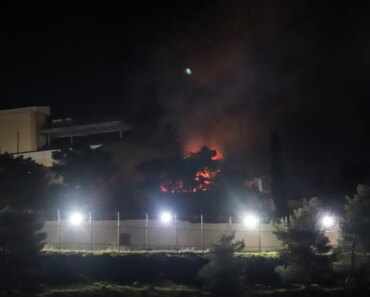
Iranian strikes also hit Abu Dhabi airport, the exclusive Palm Jumeirah resort and the Burj Al Arab luxury hotel over the past week, while drone debris caused a fire at the US consulate in Dubai.
Also on Saturday, Qatar’s armed forces intercepted a missile attack, according to the Defense Ministry. No immediate details about possible damage or casualties were released.
In Saudi Arabia, the Defense Ministry said a ballistic missile landed in an uninhabited area after being launched toward the Prince Sultan Air Base southeast of Riyadh, which houses U.S. troops.
Kuwait also reported intercepting a drone, while the country’s national oil company announced a “precautionary” cut to its crude production due to Iranian attacks and threats to the Strait of Hormuz, a key transit point for Gulf hydrocarbons.
Iran to elect new supreme leader
In a social media post on Saturday, US President Donald Trump warned that his country would hit Iran “very hard” and threatened to expand strikes to include new targets.
At an event featuring Latin American leaders in Miami, Florida, Trump said Saturday that his country’s forces sank 42 Iranian Navy ships in three days.
Israel launched what its military described as a new wave of attacks on Tehran and Isfahan. The military said Saturday that more than 80 fighter jets completed a wave of strikes against Iranian army facilities, missile launchers and other targets.
In a statement, the military said the targets hit in Iran included missile storage sites, ballistic missile launchers and military facilities linked to Iran’s security forces.
Among the attacks, it said they hit 16 aircraft at Tehran’s Mehrabad airport, which belonged to the Quds Force branch of Iran’s Revolutionary Guard that oversees its operations abroad.
The Israeli military reported that missiles were fired from Iran at Israel on eight different occasions on Saturday, setting off air raid sirens in parts of the country and activating air defenses.
Iranian state media reported on Saturday that the IRGC attacked a Marshall Islands-flagged oil tanker in Hormuz.
Iran’s Assembly of Experts will meet in the next 24 hours to elect a new supreme leader, according to assemblyman Ayatollah Mozafari.
Iran’s ambassador to the United Nations, Amir Saeid Iravani, rejected Trump’s demands to have a say in the election of Iran’s new supreme leader.