Economists hoping for a better understanding of the U.S. labor market are keeping their expectations in check.
The Bureau of Labor Statistics will announce February employment numbers on Friday, with the monthly data release expected to show tepid growth due in part to a major strike in the health care industry.
The American labor market remains confused. A surprisingly strong report in January offered some optimism that hiring had increased, but that data also showed that U.S. job growth in 2025 was much lower than previously thought.
“We don’t expect to learn much about the state of the labor market from February’s employment data,” Citigroup economists said.
The broader U.S. economy has remained mixed, in part due to a variety of headwinds that have included a government shutdown and a lack of clarity over the Trump administration’s tariff agenda.
On Wednesday, Treasury Secretary Scott Bessent said the administration’s tariff plans were about to change again. Bessent said Trump was expected to raise global tariffs to 15% this week, up from the 10% he recently introduced after the Supreme Court struck down most of the previous tariffs.
A disappointing economic growth report in February – the Commerce Department showed that production of goods and services (gross domestic product) grew at just a 1.4% annual rate in the final quarter of 2025 – has added to concerns.
And while unemployment has remained reasonably low (it hit 4.3% last month), hiring has been slow, forcing experts to use words like “frozen” and “stagnant” to describe the labor market.
February’s jobs report is expected to show more of the same. Consensus expectations are that the United States added 50,000 jobs last month.
Analysts at Bank of America expect 35,000 jobs to be added, a low number due in part to the 31,000 health care workers who went on strike at Kaiser Permanente. That strike has since ended, but it could still influence the overall numbers.
There are also some questions about whether January’s strong performance could have been due in part to favorable weather and how the Bureau of Labor Statistics modeled its data. Michael Feroli, JP Morgan’s chief U.S. economist, said Friday’s report could also show a downward revision to last month’s numbers.
Citigroup economists are also keeping expectations in check, writing in a recent note: “We continue to suspect that the recently stronger employment data reflects familiar seasonal patterns rather than a true stabilization or improvement in demand for workers.”
If jobless claims don’t rise in the coming weeks and employment reports through April or May don’t show a further slowdown, then “that would be a more significant sign that hiring has actually started to improve again,” they said.
However, that is not Citi’s base case. “We expect familiar patterns to result in the unemployment rate rising to around 4.7% later in the year,” they wrote.
Friday’s jobs report will also come just as consumers are hit by new economic uncertainty.
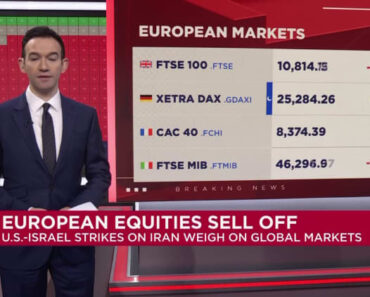
On Saturday, the United States and Israel began attacking Iran, causing serious disruptions to shipping in the Strait of Hormuz, through which more than 20% of the world’s oil supply must pass to reach the world market.
In the days since, U.S. oil prices have risen 20% and retail gasoline prices have risen more than 30 cents for consumers, raising fresh fears of new inflation.
“Rising oil prices have begun to bring back memories of 2022, when oil prices surpassed $100 a barrel amid rapidly accelerating inflation,” said Carsten Brzeski, global head of macroeconomics at ING Research.
“The global economy is once again witnessing a pivotal moment,” he said, “a moment that not only has significant near-term implications, but also has the potential to further aggravate ongoing seismic shifts in the broader geopolitical landscape.”
ING expects US inflation “to exceed 3% again this year, reducing consumer purchasing power.”