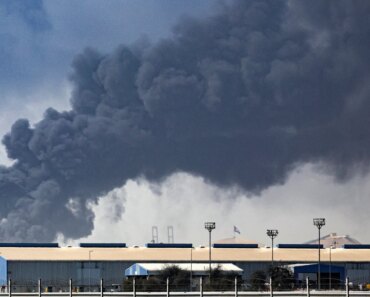
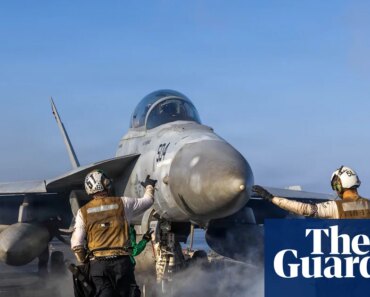
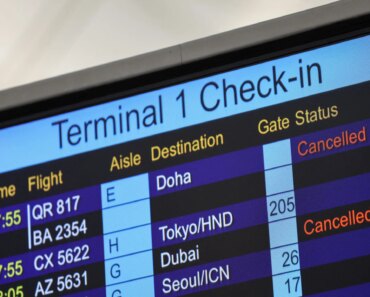
Tens of thousands of people are struggling to leave the Middle East after being stranded by the US-Israel war against Iran, with some wealthy travelers spending huge sums of money to charter private flights out of the region.
Much of the region’s airspace remains closed amid the conflict, with only a limited number of flights departing from a handful of regional gateways, including Dubai in the United Arab Emirates, Riyadh, the capital of Saudi Arabia, and Muscat in Oman.
Recommended stories
list of 4 itemsend of list
“People are panicking now,” said Kirti Arora, 37, who was stranded in Doha, the capital of Qatar, along with her husband as they headed from the Indian capital, New Delhi, to Madrid, Spain. “Many are desperate to leave.
“We don’t want to leave the hotel and plan our own trip or route as there is a lot of stress at the borders and blasts happen at odd hours,” Arora said.
According to analytics firm Cirium, more than 23,000 flights have been canceled since the United States and Israel launched attacks on Iran on Saturday.
Evacuations
Dozens of countries, including the United States, the United Kingdom, France and Germany, have organized charter flights to repatriate their citizens. But those efforts have been hampered by logistical challenges amid the near shutdown of commercial aviation in one of the world’s busiest regions for international travel.
The US State Department said on Thursday it would increase charter flights for its citizens, amid criticism of the Trump administration’s lack of assistance to stranded travelers. Nearly 20,000 American citizens have returned to their country since the conflict began, according to the State Department, which announced Wednesday the departure of its first charter flight.
On Thursday, French authorities, who are helping with the repatriation of 5,000 French citizens, said a government-chartered Air France flight was forced to return to the United Arab Emirates due to missile launches near Dubai.

More than 138,000 British citizens, most of them in the United Arab Emirates, have contacted UK authorities for help since the conflict broke out, according to the UK Foreign Office, although most of them are not expected to request evacuation from the region.
So far, British authorities have organized three charter flights, the first of which landed in London on Friday after taking off from Muscat almost 24 hours late.
Canadian Foreign Minister Anita Anand said Wednesday she expected charter flights for about 2,000 stranded citizens to leave the United Arab Emirates in the next 72 hours.
“The cost of traveling to Oman has become astronomical,” said British-Canadian citizen Dilini Reynold, who was stranded in Dubai while on vacation. “People are really taking advantage of the situation. Tickets from Oman to London are also ridiculously expensive.”
Reynold said he hoped to leave Dubai on Sunday after booking a one-way ticket for about 1,000 pounds ($1,337).
“I also asked a British travel agent to keep an eye on Etihad tickets just in case,” he said. “Emirates weekend tickets cost £4,000 ($5,348) each way. Everything is so ridiculously expensive. I feel like the aviation authority should really work on adding more repatriation flights from Dubai.”

Amid the travel chaos, deep-pocketed travelers have turned to private jet brokers to charter their own flights out of the region.
Altay Kula, sales and market director for JET-VIP in France, said it has been difficult to keep up with demand due to a mismatch between requests and supply of aircraft.
Kula said scheduling a large-cabin business jet from the Gulf to Europe costs between $120,000 and $200,000, and the company typically tries to arrange departure within 12 to 24 hours of consultation.
“From our perspective as a charter broker, we are also seeing travelers who would not normally consider private aviation turning to this option,” Kula said. “With fewer commercial alternatives available and greater uncertainty around schedules, private jets are becoming, in some cases, one of the only ways for passengers to ensure reliable departure on short notice.”
‘First come, first served’
Adam Steiger, president of Air Charter Advisors, said his company had seen a tenfold increase in inquiries, from both residents and businesses seeking to relocate families and essential staff amid the regional conflict.
“I would describe the atmosphere among our clients as one of ‘calculated urgency,’” Steiger said. “While there is no outside panic, there is a clear desire to avoid potential additional airspace closures. Our customers are prioritizing certainty and safety over cost at this time.”
Muhammad Umar Malik, manager of Prime Jet Services, said his company had organized 10 flights, with prices starting at $100,000 for a small plane leaving from Dubai or Muscat to the Turkish city of Istanbul.
“There is a huge increase in demand, however, this is not reflected in an increase in bookings as most do not have the means to afford it and we have lost regular business,” Malik said, explaining that local people were not flying at the time in the region, where the Muslim holy month of Ramadan is celebrated.
“The mood is that those who fly are the ones who panic,” Malik said.
Referring to the level of competition in private flights, Alexander Graham, director of Luxe Jets, told Al Jazeera: “It is first come, first served.
“We try to hold reservations for a maximum of two hours,” Graham said.