On Sunday, Iran attempted to impose a heavy price on the United States, Israel and Washington’s Arab allies for the assassination of Iran’s supreme leader.
Hundreds of Iranian missiles and drones fell on American bases, embassies, Western companies, airports, hotels and residential buildings in the Gulf countries, Jordan and Israel. Air defense systems prevented many casualties, but successful attacks caused significant damage, including the first American casualties of the conflict.
The Iranian government defended the attacks as legitimate defense and claimed that the Islamic Republic is targeting US military bases. But the reality on the ground indicates a different strategy, one that threatens global travel and international trade. The Iranian bombings and the subsequent escalation of US and Israeli attacks have also raised concerns of a broader and protracted regional war.
Why do we write this?
Iran showered the region with missiles and drones this weekend, raising the stakes for the United States and Israel, which responded with escalated attacks. The escalation risks destabilizing the Middle East and threatening the global economy.
The retaliatory attacks were seen as revenge for the assassination of Iranian leader Ayatollah Ali Khamenei, spiritual guide to many Iranians and Shiite Muslims around the world, and an attempt to pressure the Trump administration to stop its punishment campaign.
Instead, the United States and Israel intensified their bombing raids on Iran on Sunday, aiming to take out the rest of the regime’s leadership. President Donald Trump told Fox News that the operation had killed 48 senior Iranian leaders and was “moving rapidly.”

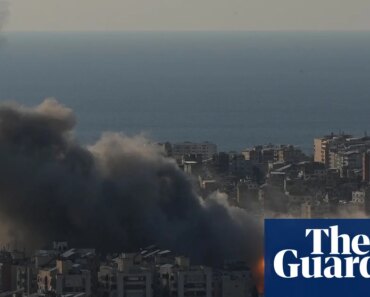
However, Iranian missile strikes increasingly managed to penetrate regional missile defenses, killing at least 11 civilians in Israel and three people in the United Arab Emirates.
U.S. Central Command reported Sunday that three U.S. service members had been killed in combat and five others had been seriously wounded as of Sunday afternoon. CENTCOM did not indicate where or how the service members were hit.
Iranian Foreign Minister Abbas Araghchi called the attacks “an act of self-defense and retaliation to American aggression.” Ali Larijani, head of Iran’s National Security Council, stated that Iranian forces “have no intention of attacking countries in the region.”
But in addition to launching missiles at several US military bases, Iran concentrated its missile and drone attacks on international airports, ports, residential neighborhoods and luxury hotels where US diplomats and military service members are believed to be staying.

Several US embassies across the region were evacuated or staff ordered to shelter in place, amid the risk of Iran attacking US diplomatic sites with missiles and drones.
In one such warning, the U.S. Embassy in Jordan “instructed all mission personnel to continue sheltering in place and avoid the U.S. Embassy compound in Amman as it could be a target.”
Hundreds of pro-Iran factions and Shiite mourners in Iraq attempted to storm the US embassy in Baghdad and the embassy housing complexes over Khamenei’s assassination. As of Saturday night, Iraqi security services continued to repel attempts with tear gas and live ammunition.
Mourning and celebration in Tehran
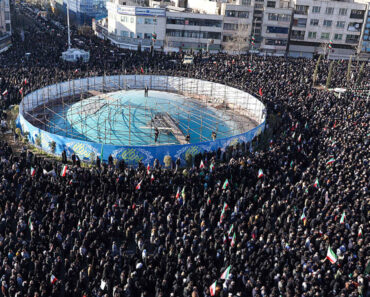
As videos emerged of many Iranians celebrating Saturday night, singing and setting off fireworks to commemorate the death of Khamenei – whose January crackdown on anti-regime protesters reportedly killed 7,000 Iranian civilians – on Sunday, legions of the ayatollah’s staunch supporters flooded the streets in tears in marches, expressing their disbelief and vowing revenge.
On state television, an anchor, shaking with pain, praised Khamenei as an “exalted soul (and) a tireless mountain of leadership,” who had dedicated a “life of unwavering jihad.”
Iranian President Masoud Pezeshkian said an interim leadership council was already in place. Araghchi, the foreign minister, told Al Jazeera news outlet that the new supreme leader would be chosen in “one or two days.”
As Israel continued its largest air war in history, Iran attacked Israeli urban centers with hundreds of rockets and drones, the vast majority shot down by Israeli interceptors. However, the estimated 10%-15% it managed to get through caused serious damage.

Iran Presidential Website/WANA/Reuters
An Iranian missile bombardment of Israel on Sunday afternoon included a direct hit on a synagogue between Tel Aviv and Jerusalem, killing nine people. The missile carried a payload of 500 kilograms, according to Israeli officials, and demolished the synagogue and destroyed nearby homes.
Schools and workplaces remained closed in Israel on Sunday, a normal weekday. Large gatherings were banned and the country’s airspace was closed, meaning some 100,000 Israelis were stranded abroad and unable to return home.
in defense
A combination of domestic and US missile defense systems proved highly effective in intercepting hundreds of drones and missiles launched against the United Arab Emirates, Bahrain, Kuwait, Qatar and Jordan on Sunday.
However, several drones and missiles broke through, and falling debris from intercepted missiles caused damage, puncturing the aura of stability and security in the luxurious Gulf states and rugged Jordan, and threatening American lives and important economic centers.
Multiple Iranian Shahed Drones struck five-star hotels in Manama, Bahrain and Dubai, in the United Arab Emirates, in what security officials believe were efforts to target American officials, military personnel and diplomats who may be staying at the hotels.

In the wake of a drone attack on the Crown Plaza Hotel in Bahrain’s capital early Saturday, the U.S. Embassy in Manama issued a public warning for U.S. citizens to “avoid hotels in Manama.”
As part of its expanding attacks, Iran carried out what appeared to be a systematic attack on Gulf airports, disrupting travel.
A drone targeting Abu Dhabi International Airport in the United Arab Emirates on Sunday was intercepted. According to Emirati authorities, falling debris killed one person and injured seven others. Iranian drones also attacked other international airports in Bahrain, Kuwait and Saudi Arabia.
Dubai International Airport, the world’s busiest, was attacked twice by Iranian drones on Saturday night and Sunday morning, injuring staff members, according to Dubai authorities, and prompting a mass evacuation of the airport.
The strikes left air hubs closed and the airspace of the United Arab Emirates, Qatar, Bahrain, Kuwait, Iraq, Syria and Israel closed until Monday or until further notice.

Institute for the Study of War and Critical Threats Project of the AEI
|
Jacob Turcotte
The war also highlighted risks to global energy supplies.
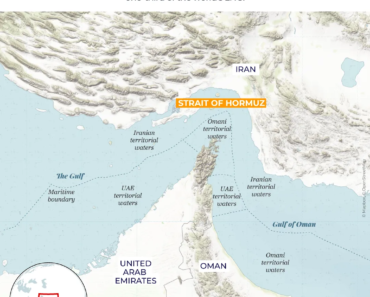
As the Iranian Revolutionary Guard Corps sent warnings to American ships not to enter its waters, the violence led to a de facto closure of the Strait of Hormuz, a bottleneck in the Persian Gulf through which a fifth of the world’s oil and gas supplies flow each day.
The world’s three largest container shipping lines – MSC, Maersk and CMA CGM said in separate statements that they had suspended cargo services through the Gulf and other parts of the Middle East.
Scott Peterson contributed to this report from London.