Posted August 12, 2025
A new study found that regularly blowing a conch shell can help reduce sleep apnea symptoms. The practice of shankh blowing has been a part of Indian culture for thousands of years. The new study found that adults who practiced shankh blowing had fewer interruptions in breathing at night and felt less sleepy during the day.
Thirty adults in the study were assigned to either shankh blowing or deep breathing exercises for 15 minutes a day for five days a week. Shankh’s group reported a 34% drop in daytime sleepiness, four to five fewer apneas per hour, better sleep quality and higher oxygen levels at night.
Dr Krishna K Sharma, Eternal Heart Care Center and Research Institute, Jaipur, India, said in a statement, “For people living with OSA, particularly those who find CPAP uncomfortable, unaffordable or unavailable, our findings offer a promising alternative. Shank blowing is a simple, inexpensive breathing technique that can help improve sleep needs and reduce machine medications.”
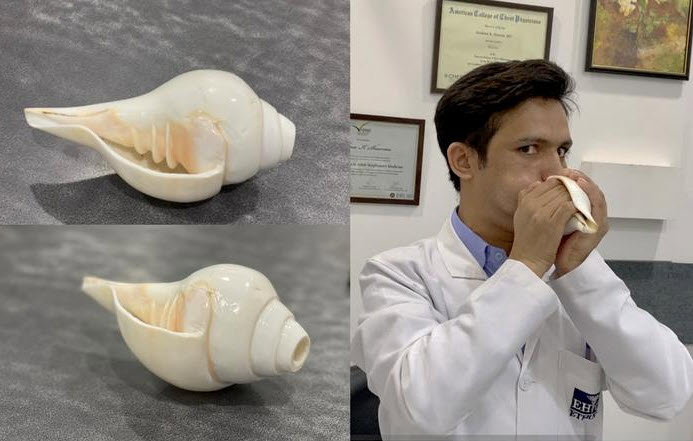
The shankh blowing technique involves a deep inhalation followed by a powerful, sustained exhalation through tightly pursed lips into a conch shell. A larger trial with several hospitals is being planned.
Dr. Sharma also says, “This is a small study, but we are now planning a larger study involving more hospitals. This next phase will allow us to validate and extend our findings in a wider, more diverse population and assess how shankh blowing works over longer periods of time. We also want to study how this practice affects airway muscle tone, oxygen levels and sleep in more detailed treatment settings. such as CPAP, and in investigating its potential help in more severe forms of OSA.”
Dr. Sharma is pictured performing the shankh blowing technique in the photo above. The article was published in the journal, ERJ Open Research.
Image: Krishna K Sharma / ERJ Open Research