Britain knew the United States was considering attacking Iran from the moment Donald Trump told protesters that “help is coming” in mid-January. It was obvious to the world that the White House was serious when the Abraham Lincoln aircraft carrier strike group was sent to the Arabian Sea in late January.
But as Trump gradually built up his “massive navy,” reinforcing it with a second carrier strike group in mid-February, UK deployments were restricted and limited, despite recognition that allies and bases with British soldiers were likely to be attacked in an Iranian retaliation.
In January, Defense Ministry officials said they understood Trump was “giving himself options” to attack Iran if nuclear negotiations were deemed to be failing. Qatar asked the UK to redeploy a joint RAF squadron from Coningsby, Lincolnshire, to the country that month, as collateral if an attack on Iran escalated.
Six F-35B aircraft flew to Akrotiri in Cyprus in February, but at the time the UK wanted to keep its military positioning low-key. For weeks it was clear that the UK did not want to be part of any initial US-Israeli attack on Iran, considering it illegal under international law, because Tehran did not pose an imminent threat to the UK.
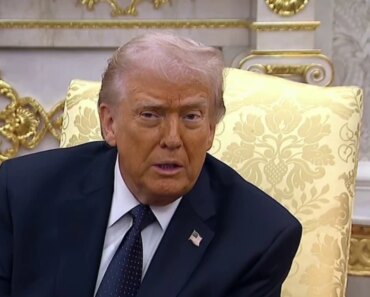
Keir Starmer spoke about Iran with Donald Trump on the afternoon of February 17. At one point, Trump asked whether the United States could use British air bases to launch bombing missions in Iran, raising the question of what else the American president shared about his military intentions with the prime minister.
Starmer refused, prompting an angry post from the US president the next day, complaining that the UK had made “a big mistake” by handing over sovereignty of the Chagos Islands to Mauritius, home of the Diego Garcia air base. “It may be necessary for the United States to use Diego Garcia” to attack Iran, Trump said.
The start of the US-Israeli attack was dictated by the realization that Iran’s Supreme Leader Ali Khamenei was meeting with senior security officials at his compound on Saturday morning. But the realization that something might be close led the United Kingdom to withdraw staff from its embassy on Friday.
However, when hostilities broke out, the United Kingdom did not appear to be adequately equipped. Luckily, a missile and drone attack on a US naval base in Bahrain narrowly missed the location of some 300 British troops. Three Shahed-type drones were reported to have been fired at the Akrotiri air base in Cyprus, one of them hitting a runway.
The Akrotiri attack was not serious, but it was embarrassing, prompting the evacuation of nearby villages and families from the base and unsettling Cypriots. The country’s president asked for naval support from France and Germany as the United Kingdom considered its options, before opting to send a destroyer on Tuesday.
However, the Royal Navy has no warships, apart from a single minehunter, in the Middle East for the first time since 2019. The last permanently deployed frigate, HMS Lancaster, was withdrawn in December, and the only options were three destroyers out of a total of six capable of tracking and destroying drones.
Last month, V Admiral Steve Moorhouse, commander of the Royal Navy’s fleet, argued that a reduced British presence in the Middle East was a virtue. Allies in the region wanted “a more modern offering,” which it said was “bringing in equipment to help them develop their own capabilities.”
There are now concerns that Iran’s retaliation against the Gulf States could deplete the Patriot and Thaad air defense systems used by countries in the region. Starmer agreed on Sunday to allow the United States to use British bases to attack Iranian missile silos, but on Wednesday officials reported that the United Kingdom may have to go further and participate more actively in attacking targets.
Meanwhile, HMS Dragon will take several days to be taken out of dry dock and ready. Then it will take almost a week to arrive in Cyprus. This may not matter if drone strikes have stopped, but when it comes to reassuring allies – or the 300,000 Britons living in the Gulf – the UK appears to have struggled to keep up.