A life shaped by creation, survival and place
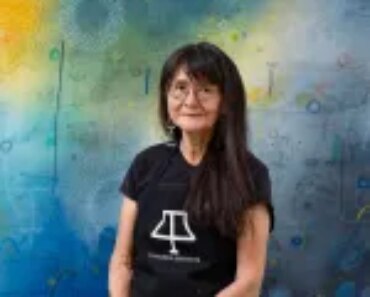
Star Smart is an award-winning contemporary abstract artist whose practice transcends aesthetics and extends into lived experience, advocacy, and creation. As an activist, writer, and political and artistic spokesperson, she has increasingly become a resonant creative voice for the embodied realities of motherhood, survival, and the cancer experience. Her work occupies an important place in contemporary abstract art because it refuses to break away. Rather, it insists on existential, emotional, and material truths. Each work reflects a life shaped by constant movement, intellectual rigor and personal transformation. Her artistic language is inseparable from her stories, providing viewers with an experience that is both visually engaging and deeply human.
Her academic foundation supports this broad vision. She holds a degree in fine arts and continued her education at institutions including MIT, Harvard, and Duke. Lifelong learning is not an addition to her practice, but is at its core. She often articulates that creating new artistic practices requires constant intellectual growth, a philosophy evident in her ever-evolving techniques and conceptual framework. This commitment to learning keeps her work fluid and responsive, able to absorb new ideas without losing its emotional core. Education becomes another material she shapes, like the recycled elements she transforms in her studio.
Recent changes in geography have further influenced her creative direction. After surviving a rare cancer and going through a deep personal crisis, Smart moved with his daughter from Miami, Florida to Cincinnati, Ohio. This move means more than just a change of address. It marks a conscious decision to slow down and reconnect with the landscape defined by the hills, historic buildings and the tactile presence of stone and brick. She now works out of a studio in a building that’s more than a century old, drawing inspiration every day from textures and seasons in her life that didn’t exist before. This environment gave her the physical space and emotional grounding that reinforced the sense that her most compelling work still lay ahead.
Star Smart: the foundation of a free-spirited visual language
The origins of Star Smart’s artistic voice can be traced back to an unconventional childhood rooted in freedom, curiosity, and shared values. Growing up in an environment where creativity and social justice were encouraged as daily practices, she understood art early on as a way of life rather than a separate discipline. Environmental awareness and activism were ingrained in her commune life with her parents and extensive travels across the United States. Experiences such as picking fruits, getting close to nature, and constantly moving have cultivated people’s curiosity and intimacy with the physical world. This formative period taught her to observe nature up close and understand the relationship between touch, memory and imagination.
These early encounters continue to appear in her work in forms that echo organic life. Her work often unintentionally references the quiet persistence of flowers, fungi, molds, mushrooms, and things that grow, squirm, and transform. She expresses satisfaction in recognizing these influences because they reflect an inherent continuity between her past and present. Her art does not attempt to imitate nature directly. Rather, it channels the emotional residue of those earlier experiences, transforming them into abstraction. The result is work that feels familiar yet invented, grounded yet otherworldly, shaped by instinct rather than imitation.
After adolescence, Star Smart forged his own path through independence and resilience. She was liberated from an early age and faced the world with an open and strong attitude. Being immersed in underground culture, street art, and club intensity exposed her to unfiltered creative expression. These experiences, both joyful and painful, expanded her emotional range and strengthened her commitment to authenticity. Today, creative exchange remains crucial to her creative process. Sharing ideas with her daughter and her partner (both artists) creates an atmosphere of possibility. This ongoing dialogue keeps her imagination active and reinforces the collaborative spirit that has always defined her approach to art-making.
Material Transformation and the Vision of the Alien Forest
Star Smart’s studio practice is distinguished by its creative use of materials and refusal to accept traditional boundaries between value and waste. She instinctively enlivens materials that others discard, collecting scraps of plastic and transforming them into a pliable, felt-like substance that becomes the basis of her work. This process embodies both environmental awareness and a philosophical stance. By transforming what is considered trash, she challenges assumptions about value, permanence and beauty. Her approach combines abstraction with an ethics of life, making material choices an extension of faith rather than technical decisions.
Her visual language draws from a wide range of influences, including abstraction, minimalism, dadaism, ikigai, music, and a deep devotion to heritage. Rather than re-creating what already exists, she seeks to give form to the original imagination itself. Emotion serves as connective tissue in her work. Viewers are invited not only to observe but to feel, encountering surfaces and structures that convey vulnerability, strength and perseverance. Over time, her hand-formed and fire-shaped components began to assemble into low-relief soft sculptures, with each element acting as a piece in itself while contributing to a larger whole.
This evolution led to the concept of the Alien Forest, an imaginary environment in which her invented forms could coexist and grow. This ongoing work envisions an organic space built entirely from recycled materials. Alien Forest reflects her fascination with life forms outside traditional categories, echoing her own experiences of survival and transformation. Influenced by artists such as Louise Bourgeois, Yayoi Kusama, Ray Eames, Anni Albers, Ruth Asawa, Gloria Keh, Mi Heui Jeong and Sky Kim, her work carries an innovative pedigree while remaining distinctly her own. Each piece helps shape a larger vision through resilience, imagination and material memory.
Xingzhi: Pain, process and what happens next
One of Star Smart’s most important works is Pain, a work born directly from physical pain and emotional endurance. After cancer treatment, she developed painful skin lesions initially attributed to herpes zoster, a common disease among survivors. These events left her feeling disconnected from herself as she tried to rebuild her life. Things quickly worsened, with lesions spreading throughout her body, and she was later diagnosed with a second cancer. Despite her fear and exhaustion, she saw a familiar inner resolve. Survival was a recurring chapter in her life, and she understood that creating would once again become a means of processing and release.
One night, in agony, she decided to go to work. Wearing protective clothing and a respirator, she returns materials and tools. The physical discomfort was severe, but she decided to spend a few minutes using a blowtorch, believing that the act itself would bring relief. She continued working until the sun disappeared behind the historic building, allowing the process to unfold without restraint. The imagined language of shingles transforms into something more complex, revealing memories, scars, and layered information embedded in the material. What emerges is not just a response to illness, but a visual record of endurance and transformation.
The finished piece, eventually titled ‘Pain’, consists of large, double-sided tile-like forms joined together. It is designed to be flexible and can be hung in any direction, allowing multiple narratives to coexist. This adaptability reflects her intention to accommodate multiple stories simultaneously rather than offer a single explanation. In daily practice, Star Smart continues to work intuitively, using strength and energy as a guide during the recovery process. With no set schedule, she often develops multiple works simultaneously to create emotional distance when needed. Looking to the future, she aspires to realize a colorful sphere in the expanded studio space and revisit the integration of paint with bas-relief combinations. These upcoming projects signify an artist still evolving, still imagining, still translating experience into form.