The long-term return of form, service and painting
Scotty Pooley’s path to painting has been shaped by a fusion of disciplines and experiences that have rarely come together so closely in a single practice. Based in Dallas, he has a foundation in fine arts, early architectural studies, years of military service, and a career in user experience design. Each of these areas contributed to how he understood space, structure, and translated lived experience into visual form. His initial exposure to art was closely related to architectural thinking, developing an awareness of proportion, balance, and the way the physical environment guides perception. Even as his life moved in a direction that placed painting outside the center of everyday activities, attention to structure never disappeared. Instead, it remains a quiet frame that later reasserts itself through painting, gesture and proportion, giving his works an underlying sense of order beneath their openness.
“Job 37:16”
oil painting on canvas
16″ x 20″
During the Gulf War, Pooley left school to serve in the U.S. Navy, a pivotal chapter in his life. For more than seven years, he served as a nuclear engineer on one of the military’s most demanding technical programs, an environment of precision, discipline, and high-consequence decision-making. His service ended under the “Don’t Ask, Don’t Tell” policy, an experience that marked a deeply personal turning point. Although his discharge was honorable, being forced out of the Navy left a lasting impression that continues to shape his outlook and artistic sensibility. During this period, maintaining a full studio practice was impossible, but the art did not disappear. Paintings and small private works remained part of his life, serving as a quiet counterbalance to the intensity and constraints of his professional environment.
After retiring, Pooley turned to digital and user experience design, where systems thinking and problem solving through empathy became central to his work. This career period enhanced his ability to transform complex human experiences into coherent forms, a skill that would later resurface in his painting practice. After living across the United States, his return to Texas proved fateful. Reconnecting with the sunshine, weather and vast landscapes of the South reawakens a commitment that has been slowly built over decades. The first paintings he produced after his return confirmed that this interest in painting was not accidental or temporary. It reveals an inner necessity that has always existed quietly, waiting for the conditions to make it fully manifest.
“Wind and Fury I & II”
oil painting on canvas
20” x 16” 0.5” each
Scotty Pooley: Ambiguity, Gesture and Emotional Weight
Pooley often described becoming an artist not as a sudden transformation but as a gradual return. Art formed the core of his early education, but responsibilities and professional demands pushed painting to the background over the years. Even so, it never went away. Paintings and small-scale works provide continuity, keeping ideas and instincts alive beneath the surface. When he recommitted himself to painting seriously about a decade ago, the experience felt less like a fresh start and more like paying sustained attention to something that had long existed. This perspective tells us something about how his work resists dramatic declarations. Rather than presenting clear narratives, his paintings operate through suggestion, allowing the viewer to encounter them without being led to a single interpretation.
At the heart of Puli’s visual language is a commitment to openness and uncertainty. His storm-filled landscapes especially avoid clarifying whether weather systems are approaching or receding, or whether danger has passed or is still building. The refusal to resolve the moment suspends the work, inviting the viewer to project their own emotional and experiential context onto the scene. Although the paintings are abstract, they are still grounded in observation, drawing inspiration from direct contact with the land, sky and changing atmospheric conditions. In addition to these landscapes, his floral works explore impermanence through the lens of ichigo ichie, the concept that each moment is unrepeatable and deserves full attention. These paintings celebrate not only peak beauty, but also transition, decline, and quiet forms of existence that are often overlooked.
At the heart of Puli’s practice lies an ongoing interest in stillness and the emotions brought about by light, color and movement. Rather than constructing a fixed story, he creates spaces where tension and calm coexist. Meaning gradually emerges, shaped by the inner life of the viewer and the painted surface itself. This approach reflects a belief that art can maintain complexity without explanation, providing pause rather than guidance. His paintings seek attention rather than interpretation, encouraging slow encounters. In this balance, Pooley situates painting as a site of quiet consequence, where presence and unresolved hope become subjects.
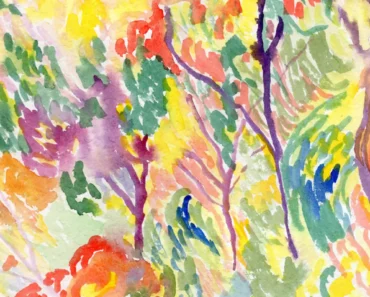
“estuary”
oil painting on canvas
32” x 28”
The influence of non-imitation and the weight of life experience
Pooley’s influence is defined less by stylistic borrowing and more by an interest in how painting produces meaning through restraint and suggestion. Edward Hopper is an important reference, not because of visual similarities, but because of the way his work imbues stillness with consequences. In Hopper’s paintings, action often exists beneath the visible surface, played out through gesture, light, and pauses. This unresolved tension shaped how Pooley approached his work, particularly in the Storm paintings, where the most important events are implicit rather than represented. The goal is not to replicate a mood, but to understand how quiet moments can carry emotional gravity without overt drama.
Another influential figure was Francis Bacon, and Pooley admired the ability of his work to demand an immediate emotional response. There was little room for detachment when encountering Bacon’s paintings, and this intensity of emotion made Pooley eager to express emotion in his work. The difference is intention. Rather than confronting pain through shock or attack, Pooley sought to create conditions in which meaning and hope could coexist alongside difficulty. His paintings acknowledge pain and uncertainty while leaving room for endurance and compassion. This balance reflects a broader commitment to emotional honesty without being compelling, allowing viewers to engage deeply without being overwhelmed.
Life experiences play an equally important role in shaping Pooley’s work. His relationship with her husband, forged through shared military service and lasting more than thirty years, was filled with forgiveness, love and friendship. These qualities appear quietly in the paintings, sometimes through paired forms or tiny living beings that acknowledge companionship and resilience without serving as direct symbols. Place also has a lasting impact. Growing up in rural Texas, spending time on his grandfather’s farm and later living in small towns in Missouri helped him become familiar with openness, weather and scale. What these environments bring to his work is not nostalgia but lived experience, shaping how the land and atmosphere carry emotional weight over time.
Scotty Pooley: Process, Being, and the Unsaid
Among Pooley’s works, the oil painting “What Hath” is particularly important. Centered on a vibrant horizon where land and sky appear suspended in a moment of reckoning, the painting resists narrative closure. The storm inside has no obvious advance or retreat, leaving the audience unsure of their position. They may find themselves metaphorically taking a knee, either in preparation for what is to come or in gratitude for what has passed. This uncertainty is crucial to the meaning of the work. The painting does not instruct the viewer on how to interpret the scene, but rather allows each individual to determine their own posture relative to the scene. Within this openness, Puli carefully leaves behind “koor Soo,” a Persian term that suggests a faint glimmer of hope, which may appear as a break in light, a thinning of clouds, or a subtle change in the land.
In addition to this vast painting of a storm, Pooley frequently refers to “Wedding Hydrangea,” an oil painting on board that touches on a more intimate register. Rather than depicting a specific event, the work focuses on presence and attention, allowing memories to emerge indirectly through color, gesture and restraint. Like “What Hath,” it eschews explanation, choosing instead to gently preserve meaning and allow it to unfold over time. Together, these paintings reflect his artistic attitude, not as a depiction, but as a condition. They invite viewers to maintain ambiguity and recognize that meaning often lies in what is left unsaid. Pulley shows through scale and subtlety how openness can carry emotional depth.
Pulley’s daily practice reflects his reflexes in getting the job done. His studio is just steps from his loft, allowing for a fluid flow between daily responsibilities and painting. Mornings are typically spent working on computer-based tasks, while afternoons are devoted to studio time. He often works on multiple paintings simultaneously, moving between them as color, energy, and focus shift. Living with adult ADHD made him acutely aware of rhythm and focus, and he learned to see these fluctuations as part of the process rather than a hindrance. When life feels vast, gestures relax and paint blends directly onto the surface. During periods of greater introversion, work becomes more intense and becomes more restrained. Looking to the future, Pooley aspires to continue to expand the dialogue between the large-scale storm paintings and the quieter, more intimate works, allowing intensity and stillness to coexist with increasing clarity.