Reserve Bank of Australia Governor Michele Bullock says there is a “real” chance of a rate hike within two weeks, as the central bank fears a “prolonged” oil price rise as a result of attacks on Iran will make inflation harder to control.
Investors and economists had largely ruled out the possibility of a move at the next board meeting on March 16-17, believing the RBA would wait for the next quarterly inflation report before a likely increase in May.
But Bullock, in unusually frank comments, said a consecutive rate hike was on the cards given “elevated” inflation and a tight labor market.
“I’m not making a prediction about March, but it will be a live meeting,” he said.
“We have general inflation of 3.8% and unemployment of 4.1%; (that is) adjusted.
“The board will actively examine whether or not we need to act more quickly. So I would discourage people from thinking that we necessarily only meet quarterly.”
The RBA board raised its cash rate to 3.85% at its February meeting in response to a surprise inflation surge during the second half of last year.
Sign Up: AU Breaking News Email
Financial market prices showed the chance of a hike on March 17 jumping from nearly zero to more than 25% after the governor’s comments, Bloomberg reported, although bets remained on the next meeting in May as the most likely time for another move.
“The board’s strategy has been to try to reduce inflation to target in a reasonable period of time while preserving employment gains,” Bullock said.
“But it does raise the question of how patient we can be.”
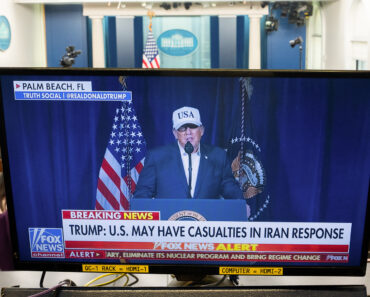
With a key shipping route for crude oil in the Middle East virtually closed since missile attacks between the United States and Israel over the weekend, Bullock warned that a “very high and prolonged rise” in energy prices was a threat to economic growth, here and around the world.
Speaking at the AFR business summit on Tuesday morning, Bullock said the central bank normally overlooks temporary price shocks, but it was not clear that such an approach would be appropriate this time.
“This might be a little bit more difficult, because… we already have high inflation, and I think there’s a risk that inflation expectations become a little bit unanchored,” he said.
The price of Brent crude oil, an international benchmark, rose slightly overnight to trade at $78.07 a barrel, while stocks on Wall Street ended the session virtually unchanged.
Bullock said the response to the attacks on Iran had so far been “orderly” and that the central bank had been thinking about the potential impact of energy price shocks since last year.
He said more expensive fuel, added to overall inflation, could boost government coffers through energy exports, but also drags down growth as households face higher energy bills and gasoline costs.
“At the same time that there is a potentially inflationary impact, there is also the possibility, if it is a very protracted conflict, that it could affect economic activity, not only here, but around the world.”