Markets on Wall Street retreated and oil prices jumped as much as five percent again early Thursday as the war in Iran approaches its second week, with no indication that the United States and Israel are ready to scale back their attacks.

Futures for the S&P 500 lost 0.5 percent before the opening bell, while futures for the Dow Jones Industrial Average were down 0.6 percent. Nasdaq futures were also down 0.5 percent. On Wednesday, the Dow fell 0.6 percent to a year low.
Oil prices initially rose more than nine percent as supply concerns worsened with Iranian attacks on commercial shipping around the Strait of Hormuz. The US airstrike campaign in Iran has now entered its 13th day.
US benchmark crude rose US$4.52 to US$91.77 a barrel. Brent, the international benchmark, rose US$5.34 to US$97.32 per barrel after briefly eclipsing the US$100 level.
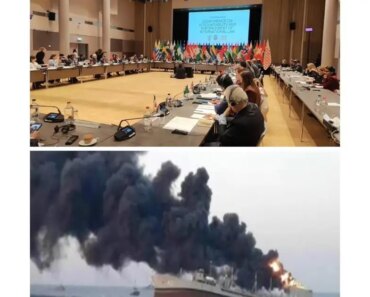
Iran has stepped up its attacks, targeting oil fields and refineries in a handful of Gulf Arab states, aiming to cause enough global economic pain to pressure the United States and Israel to end the war. Iran’s actions have effectively halted cargo traffic through the narrow Strait of Hormuz, through which one-fifth of all traded oil passes.

In response, the International Energy Agency agreed on Wednesday to release 400 million barrels of oil, the largest amount of emergency oil reserves in its history, in an effort to counter the effects of the war on energy markets. The US plans to release 172 million barrels of oil from its Strategic Petroleum Reserve next week to combat steeper prices.

Get weekly money news
Get expert insights, markets, housing, inflation and personal finance information delivered to you every Saturday.
The IEA’s announcement came a day after energy ministers from the Group of Seven – the major industrialized nations of Canada, the United States, France, Italy, Japan, Germany and Britain – met in Paris to look at ways to lower prices.
But continued strife and uncertainty have spurred speculative prices to push even higher, dragging down markets around the world.
In a report, Oxford Economics noted that “fluctuations in Brent crude oil prices have been in focus over the past several days, and volatility remains as there is no timeline for when the conflict will escalate and when traffic in the effectively closed Strait of Hormuz will begin to recover.”
Oxford analysts said oil prices could rise as high as US$140 per barrel, depending on the level of volatility, depending on news developments.
Since the start of the war, sharp movements in oil prices have caused financial markets around the world to fluctuate, sometimes for hours. Oil prices briefly rose to their highest level since 2022 this week on the prospect of prolonged production curbs in the Middle East, raising concerns about a surge in inflation crippling the global economy.
By midday in Europe, Germany’s DAX and Britain’s FTSE 100 were both relatively unchanged, while the CAC 40 in Paris lost 0.4 percent.
In Asian trading, Tokyo’s Nikkei fell 225 percent to 54,452.96. In South Korea, the Kospi lost 0.5 percent to 5,583.25, while Hong Kong’s Hang Seng shed 0.7 percent to 25,716.76.
The Shanghai Composite index fell 0.1% to 4,129.10 and in Australia, the S&P/ASX 200 fell 1.3% to 8,629.00.
In early currency trading on Thursday, the dollar fell to 158.62 Japanese yen from 158.95 yen. The euro fell to US$1.1563 from US$1.1566.
© 2026 The Canadian Press
(tags to translate)Iran(T)Iran War(T)Oil Prices(T)Economy(T)Money(T)World