Rising oil prices from the Iran war will hit Canadians “across our economy,” experts say.

“The increase in energy costs isn’t just at the pump. It’s an added layer of costs and complexity across our economy, affecting everything from jet fuel to trucking and shipping costs,” Brian Dechau, senior director of the Canadian Chamber of Commerce, said in a statement.
“Rural communities, where diesel is sometimes essential, are particularly hard hit. Rising transportation costs drive up prices on groceries and everyday goods like plastics, food, fertilizer, clothing, electronics, furniture and home building materials.”
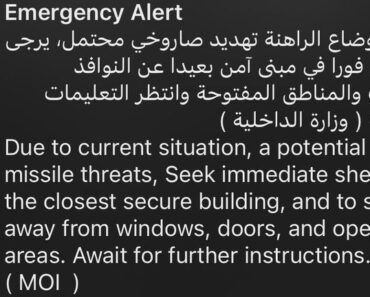
Iran has effectively closed the Strait of Hormuz by threatening to attack any ship passing through the key choke point in the Persian Gulf, which sees about 20 percent of the world’s oil supply.
Oil tankers and cargo ships have been avoiding the narrow waterway for about a week, meaning oil and other cargoes are at risk of running low.
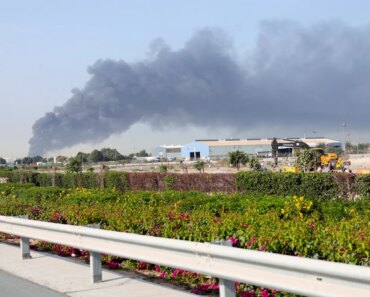
In addition, Iran has been attacking targets in the Gulf region and beyond, including oil and gas infrastructure in neighboring countries such as Qatar.
“Everything we do relies on oil as a byproduct or directly as a source of energy for us, even to turn on our computer, for example,” said Andre Cyr, assistant professor of operations management and supply chain analysis at the University of Toronto’s Rotman School of Management.
“So, all of society is physically connected to oil, to energy – everything is connected to oil.”
Oil prices touched US$120 per barrel over the weekend, falling below $100 late Monday. It was around $64 in the days before the US and Israel launched the first wave of attacks on Iran on February 28.
When the price of oil goes up, gas and other fuel costs usually go up as well.

Higher oil prices = higher fuel costs
When a business faces higher costs for its operations and supplies, including fuel, it usually charges its customers more or absorbs those increases by taking less profit.
Gas prices have already soared since the war began, with the national gas price for regular grade sitting at C$1.54 as of early Monday — up more than 20 cents over the past week, according to the CAA. Diesel fuel, which is mostly used for commercial vehicles and transportation, is generally more expensive.

Get daily national news
Get the day’s top news, political, economic and current affairs headlines delivered to your inbox once a day.
“Even any kind of transportation system in Canada, because the price of oil is going to go up. When you order your product on Amazon, your Prime delivery, one day, unfortunately, it’s probably going to take longer because it’s going to be more expensive to ship it,” Cyr said.
Global News sent requests to both Canadian National Railway (CN Rail) and Canadian Pacific Kansas City Railway (CPKC, formerly Canadian Pacific Railway), as well as the Canadian Trucking Alliance to see if they expect higher oil prices to translate into higher freight costs.
No one responded to the announcement.
As air carriers face higher fuel costs, the cost of traveling and transporting goods by air will become more expensive for consumers and businesses.
“It’s a no-brainer — there’s an immediate increase in the cost of jet fuel. It’s either eaten by the airlines or passed on to consumers or a combination thereof,” said Martin Firestone, president of Travel Secure Inc.
“The next problem is going to be real fuel shortages and cancellations of flights because we don’t have fuel. When it gets to that point and that’s a major, major problem.”
Customers who have already booked their flights lock in those ticket prices, but new bookings can be more expensive. At the same time, there may be more volatility for air travelers as higher fuel costs and potential shortages may require some carriers to adjust schedules.
WestJet told Global News the Iran war is already making flights more expensive, but would not comment on potential fuel shortages affecting schedules.
“Fuel is the largest input cost for the airline. The recent sharp increase due to the situation in Iran has already made operating flights more expensive, based on which, further price adjustments may be required,” a WestJet spokesperson said in a statement.
“We will continue to monitor the situation and respond accordingly, committed to delivering affordable airfares to our guests.”
Air Canada also responded to Global News on Monday.
“We cannot speculate (nor are we permitted to comment) on future prices, but our prices vary according to a number of factors, including the cost of jet fuel,” an Air Canada spokesperson said in a statement, adding that customers are given the full applicable price and breakdown before purchasing a flight.
“The full price applicable and its breakdown will be provided to customers before they purchase their flights.”
“It is too early to predict how this may impact ticket prices, but we are monitoring the situation closely,” Porter Airlines said in a statement to Global News.
A similar request sent to Air Transat has not yet received a response.

Expensive oil, expensive plastic
Oil can be refined into byproducts called petrochemicals, which are used to make a variety of plastics, rubber, synthetic fibers, and industrial solvents.
That’s why plastic prices often rise with oil prices.
“Oil is a really critical component in any type of plastic, but also in electronics and many other types of manufactured goods. As far as I know there is no other sustainable way to produce plastic, and plastic is in everything, in our phones, in everything,” Sire said.
“We (Canada) have a lot of processing capacity, which we’re very strong at, but we don’t have the capacity to produce all the plastic we need. So packaging, everything that indirectly depends on oil, will also increase.”
How the Canadian economy can benefit
Canada will benefit from the risk of an Iran war to global oil markets because of the high cost of oil and an expected rise in demand, experts say.
As oil prices are fixed globally, higher prices translate into immediate increases in taxes collected for Canadian oil companies Suncor Energy, Canadian Natural Resources and Cenovus Energy and governments.

The Alberta government indicated higher oil prices from the Iran war could help put a dent in its deficit due to higher revenues, and Saskatchewan said it would see more money generated.
“Think about the West — Alberta, Saskatchewan — they’re benefiting a lot from the increase in oil crude prices, in contracts, in the revenue you get from taxes,” Cyr said.
“Canada is a big contradiction, there’s a lot of contradictions going on here, because in a way, we benefit a lot from the oil boom..”
Then there is the demand side.
If the Strait of Hormuz cuts off 20 percent of global supply, Canada could be seen as a source to offset that decline.
Those benefits can only really be seen if the war drags on for a long time.
“Canada is a net oil and gas surplus producer and exporter and it will be even more next year. So the longer this (Iran war) goes, the better off we are,” says John Kirton, University of Toronto political science professor emeritus.
“The broader impact on the negative side is every product we buy as input petrochemicals, like plastics. A lot of consumer goods, toys, they’re going to be worse off if this continues. But there are a lot of sectors that could benefit if Canada is better positioned.”
(tags to translate)Iran