Robert F. Kennedy Jr, America’s top public health official, recently claimed that some religious groups avoid the measles, mumps, and rubella (MMR) vaccine because it contains “aborted fetal remains” and “DNA particles.”
The United States is facing its worst measles outbreak in years with nearly 900 cases nationwide and active outbreaks in several states.
At the same time, Kennedy, secretary of the Department of Health and Human Services, continues to erode confidence in vaccines.
So what can we say about his latest claims?
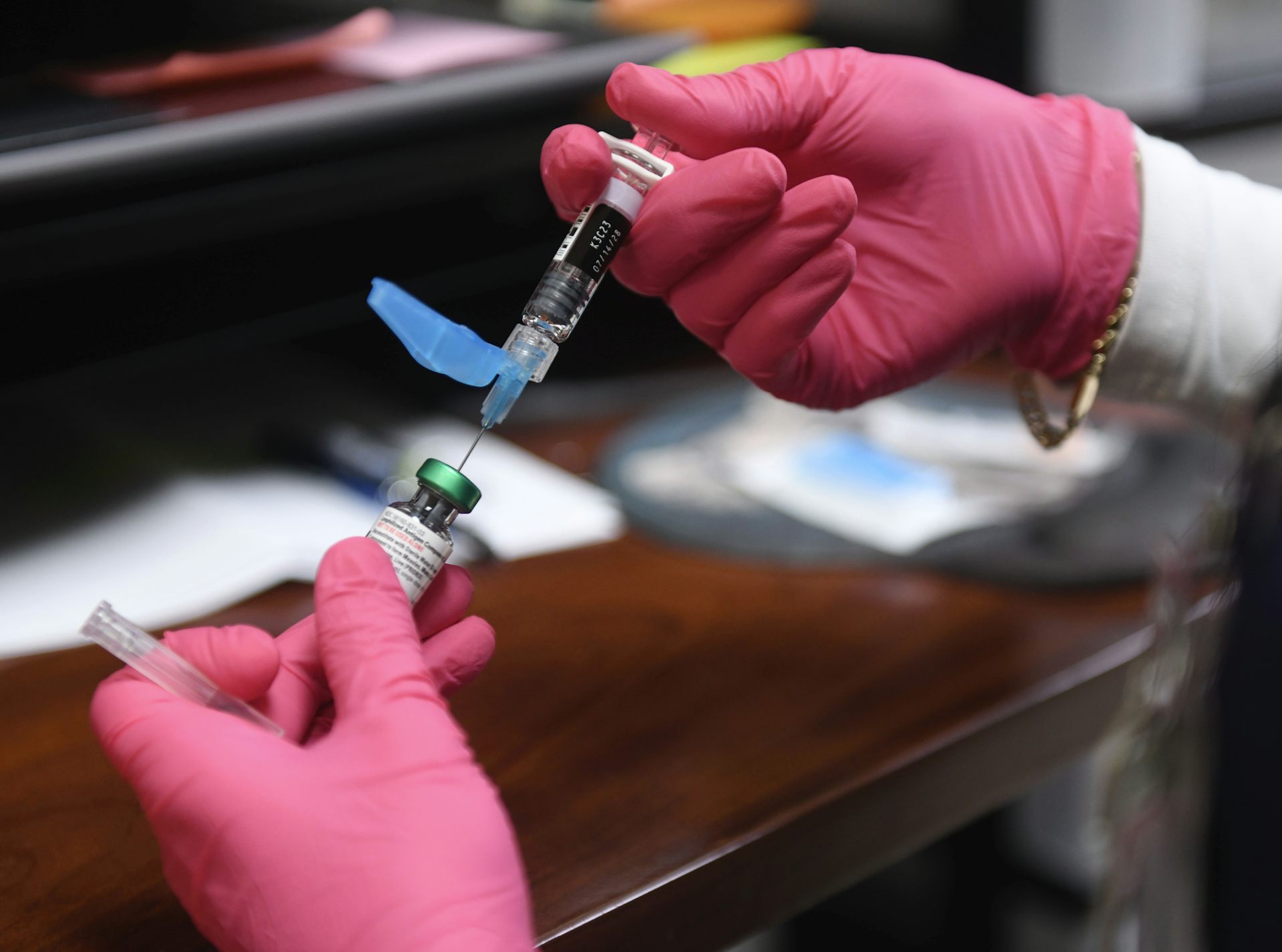
Credit: Annie Rice/AP, provided by The Conversation
There are no fetal residues in the MMR vaccine
Kennedy said that “aborted fetal remains” in MMR vaccines are why many religious people refuse vaccination. He was referring specifically to the Texas Mennonites, a deeply religious community, who have been among the hardest hit by the current measles outbreaks.
Many vaccines work by using a small amount of an attenuated (attenuated) form of a virus, or in the case of the MMR vaccine, weakened forms of the viruses that cause measles, mumps and rubella. This gives the immune system a safe opportunity to learn to recognize and respond to these viruses.
As a result, if a person is later exposed to the infection itself, their immune system can respond quickly and effectively, preventing serious illness.
Kennedy’s fetal residue claim specifically refers to the rubella component of the MMR vaccine. The rubella virus is usually grown in a human cell line known as WI-38, which was originally derived from lung tissue from a single elective abortion in the 1960s. This cell line has been used for decades, and no new fetal tissue has been used since.
Certain vaccines against other diseases, such as chicken pox, hepatitis A and rabies, have also been made by growing the viruses in fetal cells.
These cells are used not because of their origin, but because they provide a stable, safe and reliable environment to grow the weakened virus. They only serve as a growth medium for the virus and are not part of the final product.
You can think of the cells as virus-producing factories. Once the virus is cultured, it is extracted and purified as part of a rigorous process to meet strict safety and quality standards. What remains in the final vaccine is the virus itself and stabilizing agents, but not human cells or fetal tissue.
So claims of “fetal residues” in the vaccine are false.
It is also worth noting that the world’s major religions allow the use of vaccines developed from cells originally derived from fetal tissue when there are no alternative products available.
Are there fragments of DNA in the MMR vaccine?
Kennedy claimed Mennonites’ reluctance to vaccinate stems from “religious objections” to what he described as “a lot of aborted fetal remains and DNA particles” in the MMR vaccine.
The latter claim, about the vaccine containing DNA particles, is technically true. Trace amounts of DNA fragments from the human cell lines used to produce the rubella component of the MMR vaccine may remain even after purification.
But with this claim there is an implication that these fragments pose a health risk. This is untrue.
Any DNA that may be present in this vaccine is found in extremely small amounts, is highly fragmented and degraded, and is biologically inert – that is, it cannot cause harm.
Even if, hypothetically, intact DNA were present in the vaccine (which it is not), it would not have the capacity to cause harm. A common (but unfounded) concern is that foreign DNA can integrate with a person’s own DNA, altering their genome.
Introducing DNA into human cells in a way that leads to integration is very difficult. Even when scientists deliberately try to do this, for example in gene therapy, it requires precise tools, special viral delivery systems and controlled conditions.
It is also important to remember that our bodies are exposed to foreign DNA constantly, through food, bacteria and even our own microbiome. Our immune system routinely digests and discards this material without incorporating it into our genome.
This question has been extensively studied over several decades. Several health authorities, including Australia’s Therapeutic Goods Administration, have addressed the misinformation about supposed harm from residual DNA in vaccines.
Ultimately, the idea that fragmented DNA in a vaccine can cause genetic damage is false.
The bottom line
Despite what Kennedy would have you believe, there is no fetal residue in the MMR vaccine, and the trace amounts of DNA fragments that may remain pose no health risk.
What the evidence shows, however, is that vaccines such as the MMR vaccine provide excellent protection against fatal and preventable diseases, and have saved millions of lives around the world.
By Hassan Vally, Associate Professor, Epidemiology, Deakin University. This article is republished from The Conversation under a Creative Commons license. Read the original article.