Active Citizens, Armed Conflicts, Civil Society, Democracy, Featured, Global, Headlines, Health, Human Rights, TerraViva United Nations
Opinion

Credit: Jonathan Ernst/Reuters via Gallo Images
– The last World Economic Forum made clear the current crisis of multilateralism. More than 60 heads of state and 800 corporate executives met in Davos under the theme “Spirit of Dialogue” aimed at strengthening global cooperation, but was preceded by a series of events that pointed to further unraveling of the international system.
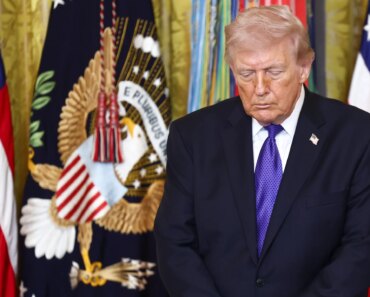
On January 3, Donald Trump launched an illegal military attack against Venezuela to kidnap President Nicolás Maduro, which was widely condemned as a violation of international law. On January 7, he signed an executive order withdrawing the United States from 66 international bodies and processes, including 31 UN entities such as the United Nations Democracy Fund, the United Nations Framework Convention on Climate Change and UN Women. Then came the launch of Trump’s Peace Board, evidently an attempt to supplant the UN Security Council. The country that helped build the multilateral system is distancing itself from the parts it doesn’t like and trying to reshape the rest according to its interests.
Trump’s approach to multilateralism is overtly transactional. His administration engages in international processes only when they promote immediate US interests and withdraws from those that impose obligations. This disassociates multilateralism from its fundamental principles: responsibility for shared standards, equality between nations and universality. He encourages other states to follow suit.
This approach brings devastating financial impacts. The United States’ threats to withdraw funds from international organizations have left institutions in trouble. The UN’s development, human rights, and peacekeeping programs relied heavily on financial contributions from the United States. The World Health Organization faces shortcomings that threaten its ability to respond to health emergencies because the United States government resigned without paying its arrears.
America’s closest allies are not safe. Trump threatened NATO member Denmark with 25 percent tariffs unless it agreed to the U.S. purchase of Greenland, and suggested he could seize the territory by force. NATO’s Article 5 on collective defense – invoked only once, by the United States after 9/11 – is in doubt. European states are reacting by seeking strategic autonomy, cutting development aid and reducing UN contributions, while finding additional billions for military spending.
Problematic alternatives seek to capitalize on the crisis. In Davos, China positioned itself as the adult alternative to Trump, promoting its Friends of Global Governance initiative, a group of 43 mostly authoritarian states, including Belarus, Nicaragua and North Korea.
The queue of heads of government meeting Chinese leader Xi Jinping shows that many states are turning in this direction. But it comes at a cost: In China’s vision of international cooperation, state sovereignty is paramount and there is no place for international scrutiny of human rights or cooperation to promote democratic freedoms.
The same happens with the new Peace Board. The body originated in a controversial November 2025 Security Council resolution establishing external governance of Gaza, but Trump clearly envisions a permanent and expanded role for it. He presides in his personal capacity, with full powers to veto decisions, set the agenda and invite or dismiss members. Permanent membership costs $1 billion and where the money goes is unclear.
The Board’s draft statute does not mention the protection of human rights, contains no provisions for civil society participation, and does not establish accountability mechanisms. Most members so far are autocratic states such as Belarus, Egypt and Saudi Arabia. Its credibility is further undermined by the fact that Israel has just joined, despite having flouted international humanitarian law. More democratic states have rejected the invitations, mainly due to concerns about the body’s unclear relationship with the UN. Trump’s response was to threaten to increase tariffs against France and withdraw Canada’s invitation. He has made it clear that he considers himself above international law and presents himself as a de facto world president capable of resolving conflicts through personal power and pressure.
As the old order dissolves, civil society must play a critical role in defining what comes next. While the UN – particularly its Security Council, crippled by the use of veto powers by China, Russia and the United States – needs reform, it remains the only global framework built on formal equality and universal human rights. As the UN faces attack from those who abandon it or seek to dilute its human rights mandate, civil society must mobilize to keep it anchored in its founding principles and challenge hierarchies that exclude voices from the global South.
It is up to civil society to organize across borders to defend international law, document violations of international humanitarian and human rights law, and demand accountability. It is not the first time that civil society needs to win the argument that might does not mean right.
samuel king He is a researcher on the research project funded by Horizon Europe ENSURED: Shaping Cooperation for a world in transition at CIVICUS: Global Alliance for Citizen Participation.
For interviews or more information, contact research@civicus.org
$images_for_story = ips_images_for_story(); echo $images_for_story; // story photos to display in sidebar ?>