A prolonged energy crisis caused by the widening war in the Middle East could offer an economic lifeline to the Russian war machine at a time when it was beginning to show signs of strain.
The sharp weakening and possible collapse of Iran’s regime would deprive the Kremlin of one of its closest regional partners. But that setback could be offset by an economic windfall if the disruption pushes buyers toward Russian energy, along with a possible slowdown in Western arms supplies to Ukraine.
“When a fifth of the world’s oil supply and about a quarter of maritime trade are effectively blocked, that’s a blessing for Russia,” said Sergey Vakulenko, a senior fellow at the Carnegie Russia Eurasia Center and a leading expert on Russia’s energy sector.
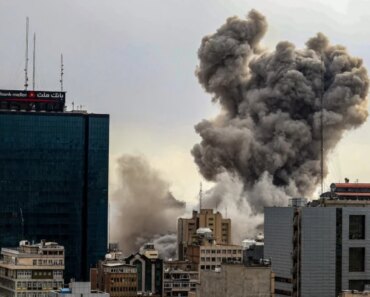
Brent crude rose more than 7% on Tuesday to surpass $80 a barrel, adding to Monday’s 7.2% jump, after a shipping disruption in the Strait of Hormuz followed by Iranian missile and drone attacks on regional infrastructure.
The increase took prices to their highest level since July 2024 and they are expected to continue rising.
India and China – among the largest buyers of Middle East crude – would be hardest hit by any prolonged disruption and could be forced to increase purchases from Moscow.
While Beijing has long diversified its oil imports into the Middle East, Africa and Russia, any sustained disruption to Gulf supplies — particularly from Iran — could accelerate a deeper tilt toward Russian barrels, Vakulenko said.
India faces a more delicate balancing act. Until recently, Russia was its largest supplier of crude oil, a relationship that deepened after Western sanctions reshaped global energy flows. But under a trade deal reached with Donald Trump last month, New Delhi began replacing some Russian shipments with Gulf oil, reducing imports from Moscow to their lowest level since 2022.
If supplies from the Middle East falter, Indian officials are likely to seek greater flexibility from Washington, reopening the door to greater Russian purchases.
Together, these changes will strengthen Russia’s position in negotiations for higher prices.
For months, Moscow had been forced to offer deep discounts on oil as global oversupply and lingering sanctions risks made traders wary of buying Russian barrels. Storage capacity was shrinking and there were growing signs that Russia might eventually be forced to curb production as shipments struggled to find buyers.
“Some of the Russian oil that has been in tankers will definitely find buyers now,” Vakulenko said.
Much depends on how long the crisis lasts. Importing countries typically have about three months’ worth of oil in advance, and last summer’s 12 days of fighting had only a fleeting impact on energy markets. Another question will be the extent to which the Gulf’s energy infrastructure – on all sides – will be damaged when the fighting ends.
“If it’s two weeks, it doesn’t matter much. If it’s more, then things start to get interesting,” Vakulenko said.
Beyond oil, Russia could also benefit from a gas crisis. A halt to Qatari LNG exports would leave a gap in global supply that Russian producers could partially fill, although gas flows are less flexible than oil and harder to divert at short notice. Russian energy stocks have already reacted, with Gazprom and Novatek among the biggest gainers on the Moscow exchange.
The timing could not be worse for Ukraine.
Russia’s oil and gas revenues, vital to financing its war, fell to a five-year low in 2025 as crude prices softened and exports declined under sanctions. The crisis had raised hopes in kyiv that Moscow could struggle to maintain its military campaign at the current intensity until 2026.
“For our budget, the attack on Iran is a big plus,” prominent Kremlin television host Vladimir Solovyov gloated to his viewers on Monday. “If Trump attacks the Iranian oil fields, then, as unfortunate as it may seem, we would become one of the few oil-producing countries left.”
For Europe too, the crisis risks reopening divisions over its attitude towards Moscow. The EU has been taking steps to phase out Russian fossil fuels, a policy opposed by Moscow-friendly governments in Hungary and Slovakia and criticized by growing right-wing parties across the bloc.
Norwegian Energy Minister Terje Aasland acknowledged Tuesday that the escalation in the Middle East could reignite debate within the EU over banning Russian gas imports.
“The EU has been very clear that it wants to free itself from Russian oil and gas, but the events of the last three or four days have been difficult,” Aasland told a conference in Oslo. “With the geopolitical situation we see now, I think the debate will be reactivated.”
Kyiv is also concerned about military repercussions. Volodymyr Zelenskyy said Monday that Ukraine could face difficulties securing air defense systems, particularly U.S.-made Patriot missiles, if Washington and its regional allies prioritized their own needs.
“We may have difficulties acquiring missiles and weapons to defend our airspace,” the Ukrainian president told the Italian newspaper Corriere della Sera. “Americans and their allies in the Middle East may need them for self-defense.”
He added that Iran’s attacks on Israel last June had already delayed some deliveries.
In the Kremlin, the prevailing mood is “wait and see,” said one Moscow insider. “The world is in crisis, but this time we are not at the epicenter,” the source said.
Vladimir Putin has been careful not to criticize Donald Trump too harshly over the bombing of Iran, fearful of alienating an American president he sees as instrumental in pressuring Ukraine to accept peace terms on Moscow’s terms.
Instead, with every rise in oil prices, there is barely concealed satisfaction among the Russian elite.
“Soon $100+ oil per barrel,” Kirill Dmitriev, head of Russia’s sovereign wealth fund, wrote on X.