Armed conflicts, Development and aid, Economy and trade, Financial crisis, Global, Headlines, Work, North America, TerraViva United Nations
Opinion
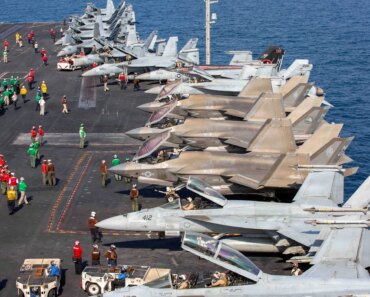
– As US President Donald Trump pushes the world into war, spending on weapons has been increasing around the world. Wars ensure more budget allocations, primarily benefiting the US-dominated military-industrial complex.

Jomo Kwame Sundaram
US military spending increases
After bombing Venezuela, the Trump administration increased its war budget from $1.0 trillion, 47% of discretionary government spending in 2024, to $1.5 trillion!
In 2024, the United States accounted for more than 36% of global military spending: $2.7 trillion! This exceeded the total spending of the next nine top spenders: China, Russia, Germany, India, the United Kingdom, Saudi Arabia, Ukraine, France and Japan.
China’s military budget for 2025 was $250 billion to $300 billion. Most of the others are US allies who have promised to increase war spending from less than 2% of GDP to 5%!
The United States and its allies will be even further ahead despite pressuring friends and enemies to spend more. Fortune The magazine projects that US spending will exceed that of the next 35 highest spending countries combined!
Despite its enormous economic costs, the increase is justified as helping to achieve “peace through strength.” After all, bombing ten nations in the first year of Trump 2.0 did not result in significant American military casualties.
Borrow for war
Earlier this year, Dean Baker warned that President Trump was planning to increase annual military spending by $600 billion. At just under 2% of GDP, the increase in spending would be enormous.

K Kuhaneetha Bai
Since Trump is more committed to cutting taxes than to the US federal public debt, the “$600 billion increase in annual taxes would amount to $6 trillion, about $45,000 per household” over the next decade.
The independent Committee for a Responsible Federal Budget projects that federal debt for military spending will increase by $5.8 trillion over the next decade!
Trump has long promised to cut the US public debt, which is already equal to 120% of annual output, and not increase the deficit! But this would require massive tax increases, impossible to achieve with tariffs alone.
Worse, the federal government’s debt, which Trump promised to cut, will increase. Meanwhile, 94% of his Big Beautiful Bill (BBB) tax cuts benefit the richest 60%, and only 1% reach the poorest fifth.
The top fifth nominally gets 69%, but only the top 5% will actually pay less! The bottom 95% will pay more taxes, and low-income households will pay relatively more for tariffs!
Trump’s Department of Government Efficiency (DOGE), led by Elon Musk, was supposed to reduce fraud, waste and federal government debt, but instead slashed US growth in the final quarter of 2025.
While the BBB cut $186 billion in food aid for the poorest Americans, increased war spending will primarily benefit cronies in the U.S. military-industrial complex.
American consumers will pay more
The increase in tariff rates would have to be incredibly high. And these would have to be even higher if exemptions are granted. Imports would fall sharply with such high tariffs.
Trump claimed the additional tariff revenue would cover half a trillion dollars of additional military spending. It has long claimed that other countries pay the tariffs.
With deindustrialization over the last half century, consumers have been buying more imports, paying the lion’s share of tariff revenue.
Imports would fall sharply with such high tariffs. Since many imports are intermediate goods used in manufacturing, high tariffs would hurt the industries Trump claims to promote.
High tariffs will dramatically raise consumer prices. The cost of living increases would be unaffordable for many, including Trump’s political base.
Before the Supreme Court’s Feb. 20 decision declaring them unconstitutional, the tariffs were only expected to raise $300 billion in the first year.
Incomes were expected to fall as consumers bought more domestically produced goods rather than imported ones.
Since many intermediate goods for manufacturing are imported, higher tariffs would hurt the very industries Trump claims to be helping. Therefore, high tariffs will sharply raise consumer prices for both imports and American-made substitutes.
Furthermore, a massive increase in military spending will divert resources, including labor, from more productive uses.
Military Industrial Cronies
US military contracts were awarded primarily to five corporate groups even before Trump 2.0. While the projects are worth more, the beneficiaries are fewer, reflecting lobbying efforts.
Increased government military spending is unlikely to increase jobs in the long run, as jobs have declined sharply since the 1980s due to increased automation.
Military contractors shift R&D costs and capital expenditures to taxpayers, freeing up revenue to pay cash dividends and stock buybacks.
In 2024, the Pentagon’s main contractor, Lockheed Martin, paid $7 billion in stock buybacks and dividends.
Although Trump once offered to work with China and Russia to cut the trio’s military spending in half, it was difficult to take his offer seriously given his other pronouncements and actions.
American military spending will continue to rise, driven by the same interests and impulses behind the recent massive increases.
Military spending needs wars to secure even more allocations to buy more military equipment, to the beat of war drums.
Real political and business relationships are complex and constantly changing. As Walter Scott observed in 1808:
- Oh, what a tangled web we weave!
When we first practiced to deceive
IPS UN Office
$images_for_story = ips_images_for_story(); echo $images_for_story; // story photos to display in sidebar ?>