When you look back at textile traditions, you’ll find that this beautiful, tactile medium has long used weaving, dyeing, and embroidery as a way to tell stories or mark moments in history. For Mary Holst, she was inspired by the patterns and techniques of classical textiles, particularly the flowers depicted on tablecloths and rugs.
“As a tapestry weaver,” she says, “I’m very interested in how this medium can serve as an almost cartoon-like form of storytelling. I’m interested in how digital jacquard weaving can be used to revitalize this medium and be used to tell stories today. What are the grand narratives of our time? Which ones need to be told?”
It’s these issues that drive her work and provide a platform for those who have long been overlooked. “Historically, it’s been the stories of society’s elite that have been spread, but I’m interested in trying to give a voice to things or people that we don’t usually listen to.”
Marie lives and works in Copenhagen, graduating from the Royal Danish Academy of Fine Arts before establishing her own tapestry weaving practice. Much of her workflow involves sketching and painting, then digitizing her creations and completing them on the computer. From there, it’s a “collage-like” approach that involves moving elements, adjusting size, and composition.
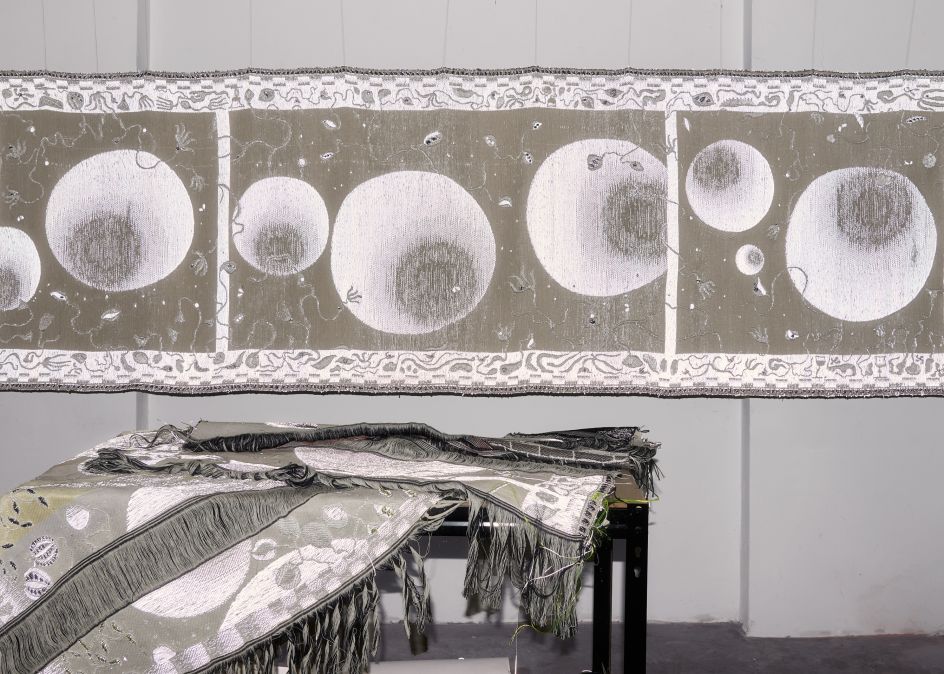
Lost and Found. Photography by Benjamin Lund
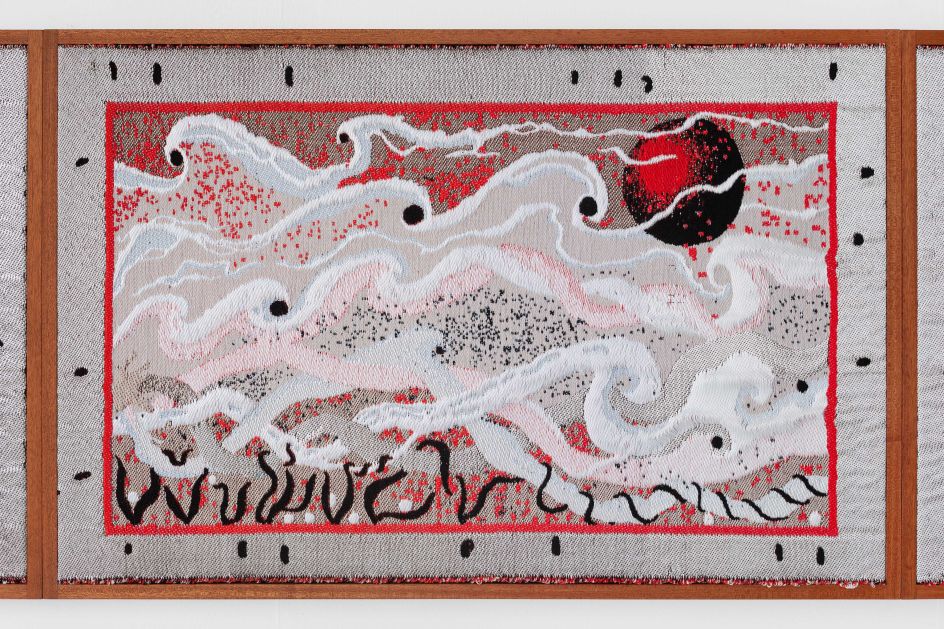
“Cry Me a River” 02. Photography: Jacob Friis-Holm Nielsen
Once she settles on the visuals, she translates them into knitting. “It’s a very systematic and mathematical process, designing different weaving structures to create a variety of colors and textures in the pieces.” It’s a combination of computer work and loom testing that requires a lot of back and forth. “That’s what happens when working with real materials. There’s always unpredictability that can’t be completely foreseen, so I test different yarns, color mixes, weave structures, etc.”
The last part is the actual weaving, which she says is the fastest step in the whole process. “It’s all about preparation. Weaving construction is inherently simple; it’s always ‘just’ two sets of threads, warp and weft, and how they intertwine. This creates a limit and a rigid framework, but once you accept that very rigid framework, there are endless combinations and variations.”
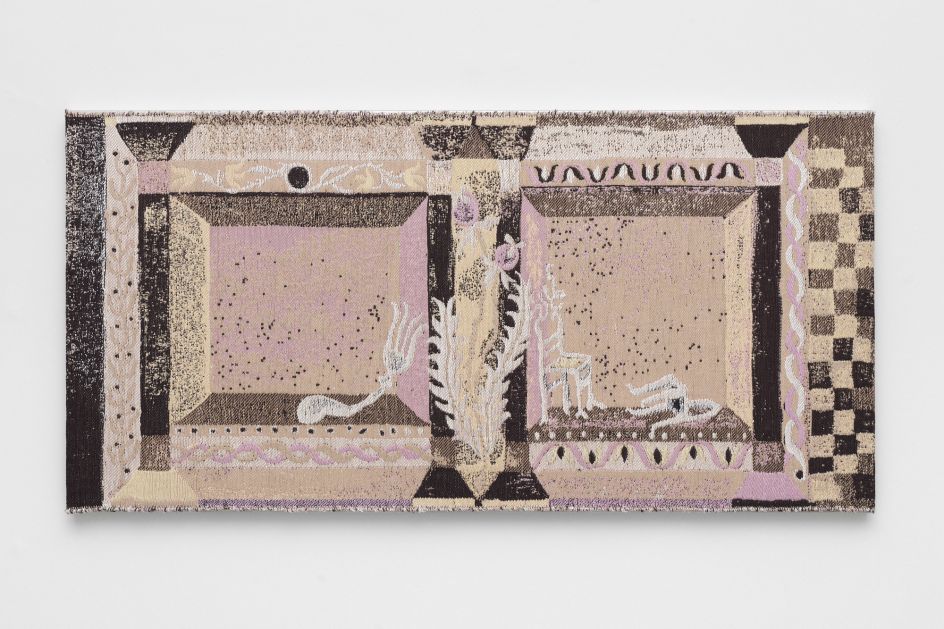
Scene 05, garden. Photo credit: Robert Damisch
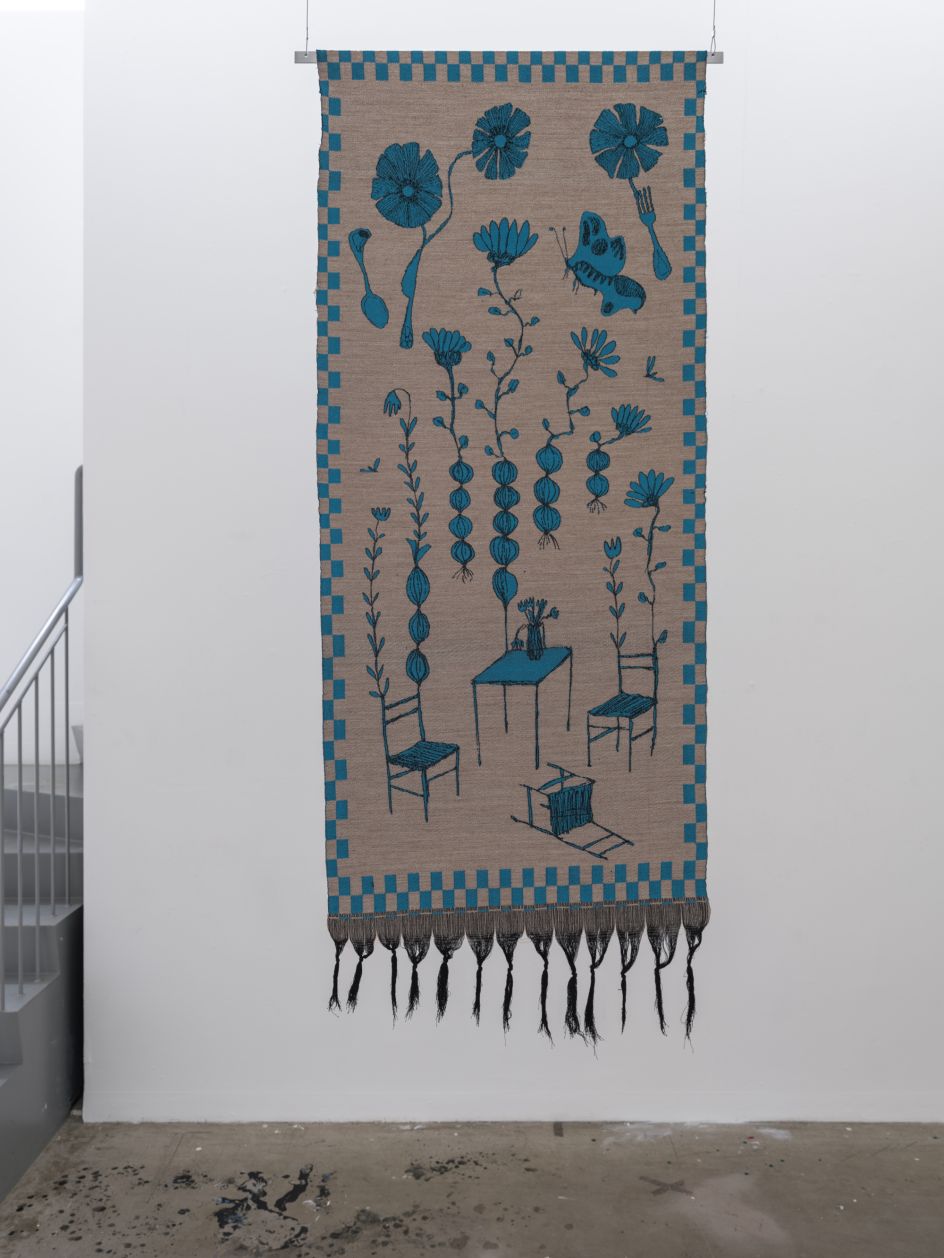
Loom Control I. Photo: Per Andersen
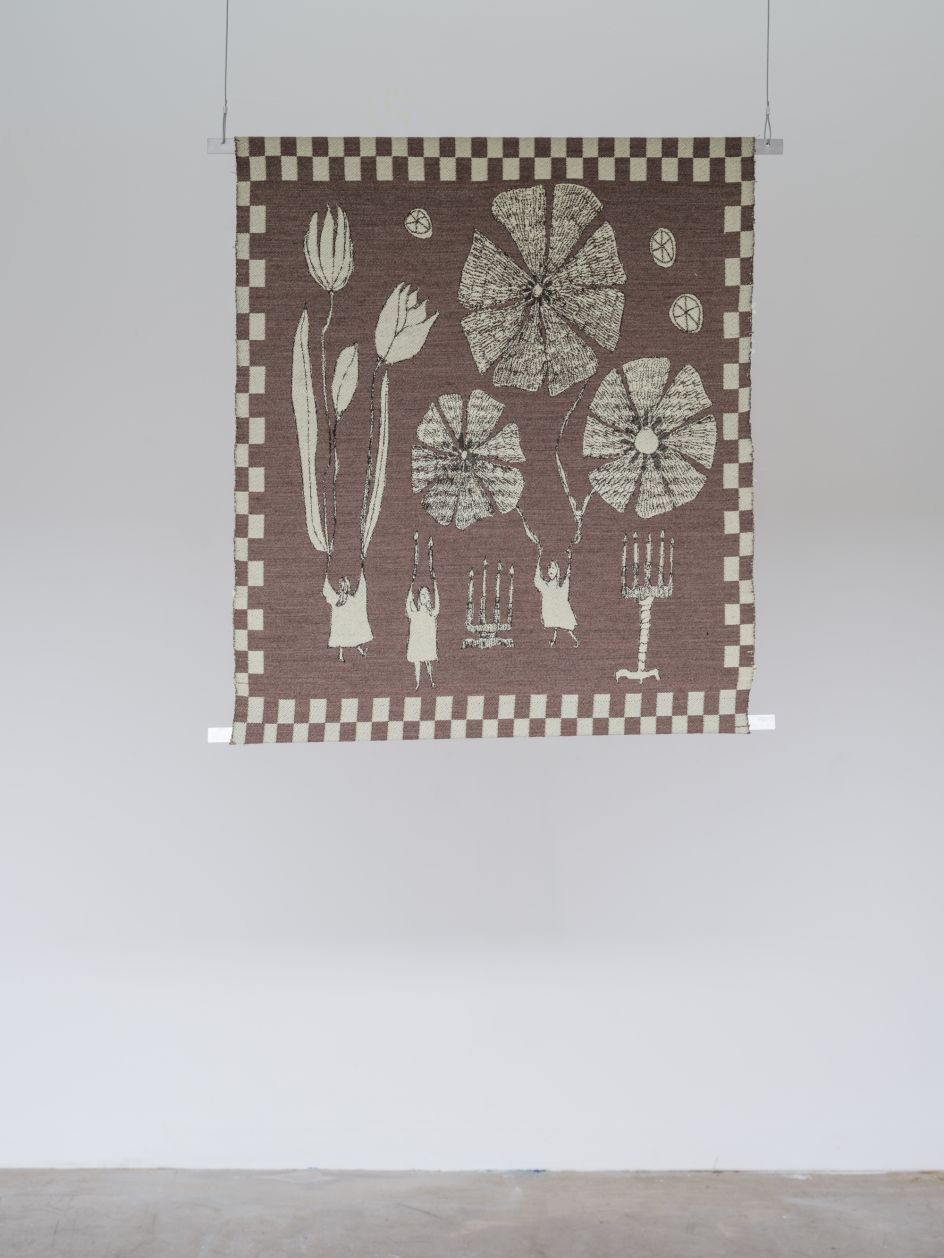
Loom control 2. Photography: Per Anderson
Mary’s tapestries are exquisitely detailed, from the sepia-toned displays of flowers to the fragments of chairs, small figures and butterflies that decorate the scenes. Sometimes the works are spread across multiple monitors – the stitching within them acting as pictograms, revealing different steps in the story, similar to hieroglyphs. For Cry Me a River, a work at the Danish Biennale of Arts and Crafts, she created a six-meter-long tapestry divided into six chronological scenes of the sea. It begins with a prologue and is followed by five separate stories.
“I was drawn to the sea as a subject,” she explains. “It has been used extensively throughout classical art history, but as mentioned earlier, I’m interested in history as seen from our own time. What does the sea look like today as a subject?” The piece uses a mix of matte and shiny yarns to create surfaces that change perspective with the light, similar to the way the sun or moonlight hits the waves.
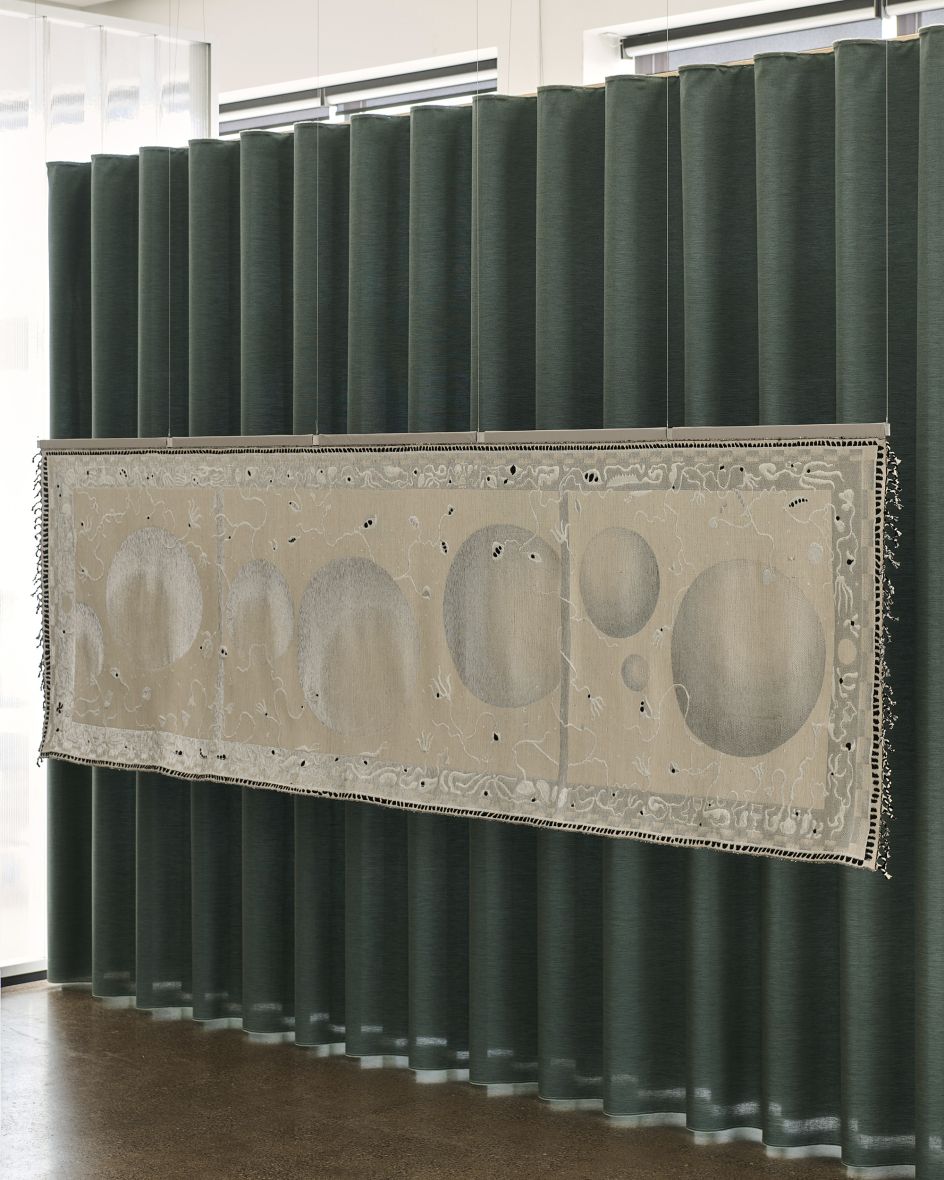
Lost and Found. Photography by Benjamin Lund
In another piece, “Lost and Found,” she explains a damask tablecloth and imagines someone discovering a tablecloth that had been stored for decades, only to find it covered in overgrown plants and wildlife. Like Cry Me a River, it’s made from reflective yarn and both are filled with stories.
As a viewer, it’s hard not to find a comfy seat, bundle yourself up and stay warm – because when you see these tapestries, you see a good story.