Painting as confrontation and becoming
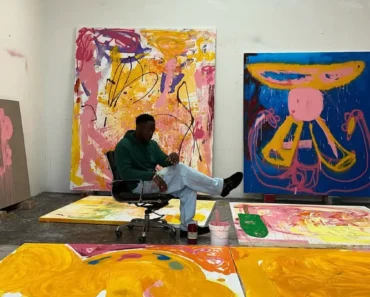
Marc Gunz’s work is powerful evidence that painting can be an act of physical endurance and existential inquiry rather than simple expression. His practice stems from an intense, almost combative engagement with the canvas, where the surface becomes the terrain and the paint becomes a material imbued with memory. Rather than creating images that depict the visible world, he sees painting as a site to be worked on, squeezed, scraped and subjected to the burden of time. Each work bears the mark of a sustained effort, revealing the process by which friction develops between intention and resistance. Over the years, his trajectory has been steadily towards simplicity and essence, refining gesture and material presence until the painting itself becomes the embodiment of lived experience. In this case, the canvas is not a window but a field of action where matter accumulates and erodes and the artist’s body engages in direct negotiations with color, density and gravity.
This evolution resulted not from a sudden decision to become an artist, but from a gradual realization that painting provided a necessary outlet for inner tensions and bodily memories. Creative identity emerges through repetition, through facing uncertainty, and through the slow realization that the image is less important than the process. For Marc Ganz, painting becomes a space where the self can fracture, expand and reconfigure. Surface work allows him to externalize emotional stress and explore states of collapse and reconstruction. Over time, the focus shifted from depicting recognizable scenes to making transformation itself the central theme. What matters is not what is shown, but what happens between the hand and the material. This commitment shapes his artistic language and the way he inhabits the world, rooting his practice in persistence, endurance and the search for authenticity through matter.
His current style is defined by his dense, sculptural use of oil paint, where thick coats build organic, tectonic structures on the canvas. Color is used not to illustrate form but to generate it, accumulating in thick layers suggesting geological pressure and physical force. Themes such as fragmented identity, the tension between character and environment, and the fragile balance between destruction and origin recur throughout his work. The human face recurs but resists psychological portraiture. Instead, it becomes an emotional landscape shaped by concealment and exposure. Through this material language, Marc Ganz aligns himself with a lineage of painters who understand art as a physical presence rather than an illusion. His canvases insist on weight, texture, and the undeniable fact that painting still requires time, closeness, and sustained attention.