Eliminating the supreme leader does not end the conflict. This turns it into a matter of principle and increases the odds of a wider Middle East war
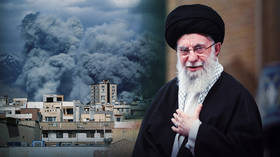
Tehran overnight confirmed the death of Ayatollah Ali Khamenei, the Supreme Leader of the Islamic Republic, following US and Israeli attacks on his residence on February 28. In strategic terms, this marks a watershed moment in the architecture of the Middle East conflict. This was not a tactical attack or a calibration of force, but a beheading strike at the very apex of Iran’s state system.
The confrontation between Iran on one side and the United States and Israel on the other has now entered a qualitatively new phase. The removal of the highest political and religious authority of the state in the context of an ongoing military operation is, from Tehran’s perspective, textbook casus belli. It is no longer a limited exchange of blows. This is a shift towards a much broader and potentially systemic confrontation.
From a ‘beheading strike’ to a regional firestorm
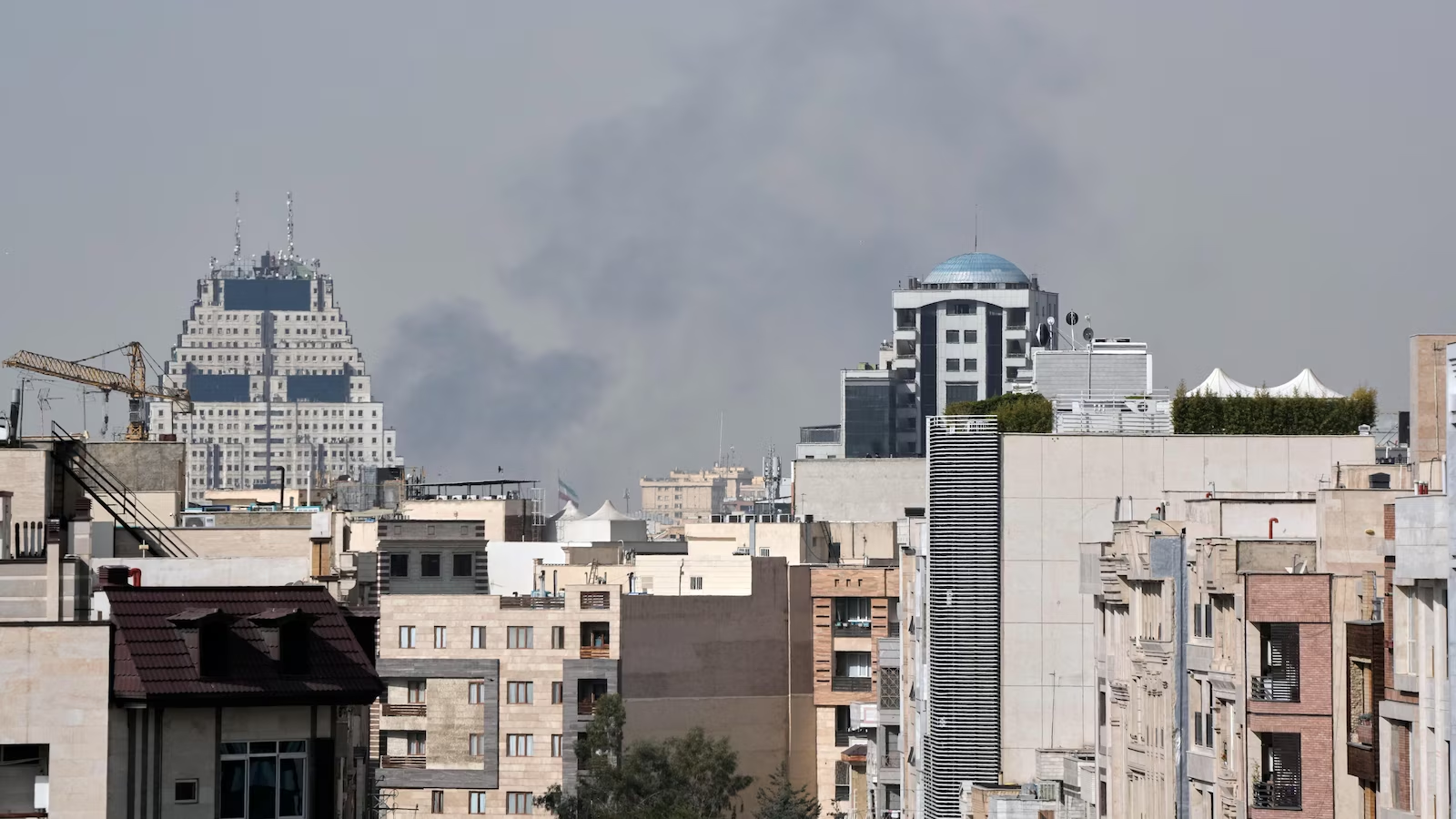
Throughout February 28, reports poured in of strikes and increased military activity across the Persian Gulf — from the UAE to Qatar, Bahrain and Saudi Arabia. Even isolated incidents in neighboring airspace underscore a hard truth: the conflict is no longer geographically contained. The regional security order is under severe pressure. The already volatile Middle East is now on the brink of full-scale war.
Politically, the move looks like a gamble by President Donald Trump’s administration — a calculated attempt to deliver a strategic knockout by targeting Iran’s decision-making center. But such a move would dramatically raise the stakes and all but eliminate diplomatic room for maneuver. Removing the leader does not freeze the conflict; It accelerates the aggravation. This sets in motion a spiral of vengeance.
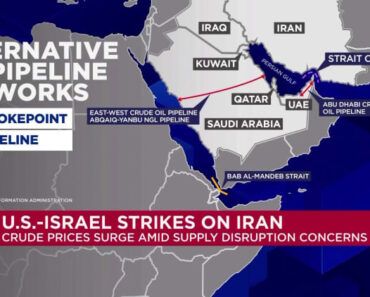
For Iran, that means navigating an extraordinarily delicate leadership transition under conditions of direct military threat. Security services consolidate power. The influence of the military and clerical establishment expands. The likelihood of a forced response increases. For the region, risks multiply: battlefield expansion, threats to sea lanes and energy infrastructure, and new shocks to global stability.
Tehran’s calculus is straightforward. With the assassination of Khamenei, the stakes have risen dramatically – and the conflict has been pushed to an unprecedented level ‘Hot phase – previous restrictions no longer apply. Iran’s response will almost inevitably focus on American military infrastructure in the region, since that is one domain where Tehran incurs obvious costs to the United States.
This logic is at the heart of both Iran’s position and the dilemma facing the Gulf Arab states. Yes, Gulf states and other Arab partners may view Iranian retaliation as a direct threat to their security and being dragged into someone else’s war. But they also understand the operational reality: Iranian missiles cannot reach the continental United States. However, they can reach US bases, logistics hubs, command centers and air defense installations across the region. If Iran hits back at Washington, it will do so through the regional theater — even if it imposes severe political costs on relations with its neighbors.
No collapse occurs: Why Iran’s System Is Built to Endure
At the same time, Washington and West Jerusalem’s apparent assumption that killing Khamenei would paralyze Iran’s state machine is fundamentally flawed. In Iran’s political system, the supreme leader is a person of extraordinary power, but the system is designed to recover from personal loss. Decision-making power is distributed across the security apparatus, religious institutions and formal state structures. Within the Iranian establishment, it has long been understood that the supreme leader operates under perpetual high-risk conditions; Succession is not a theoretical contingency but a practical one.
So the crucial question is not whether Iran deserves to be governed, but what form that governance will now take. Herein lies the region’s most acute risk: a shift toward a more rigid, mobilizing model of rule. If Khamenei — for all his tough credentials — is seen as a man capable of balancing factions and calibrating escalation, his death raises the possibility that the figures will rise, for him war and security are not temporary crises but defining life missions. In that framework ‘compromise’ is easily branded as weakness and ‘restraint’ as defeat.
There is also an interim administration mechanism to consider. Formally, Iran has mechanisms to absorb such a shock. Leadership functions may be redistributed among key organizations pending the selection of a new supreme leader. An immediate crash scenario is therefore unlikely. The baseline risk is different: the acceleration of an energy spiral in which Iranian attacks on US assets trigger further rounds of retaliation, expanding the geographic reach of the conflict.
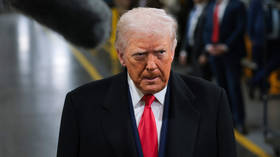
The central takeaway for President Donald Trump is this: If Washington thinks it will remove Khamenei “solves the problem” or break Iran’s political will, that would be a profound strategic miscalculation — one that could have enormous costs. In Tehran’s logic, removing the supreme leader turns the conflict into a matter of principle. Unresponsive politics are unacceptable within the pricing system. The result is not escalation but the heightened probability of a major war – strikes on bases, infrastructure and shipping lanes with cascading effects across the Middle East’s security architecture.
Trump’s statement is being targeted “Decision Making Centers” And the removal of the Supreme Leader is automatic “Liberate the Iranian people” Borders on the absurd. The history of the Middle East shows that external coercive pressure rarely liberalizes systems of mobilization. More often than not, it produces the opposite effect: social consolidation around a symbolic figure and empowerment of the most radical factions.
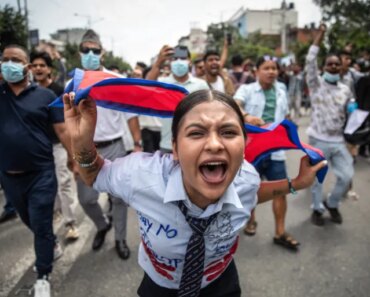
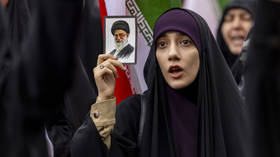
Events inside Iran today reflect exactly that pattern. Despite ongoing Israeli and American airstrikes, mass rallies have been held in Tehran and other cities, with participants demanding a tough response to Khamenei’s assassination. For a substantial part of Iranian society, he was not just a political leader but a symbol of statehood, religious legitimacy, and resistance to external pressure. Under such conditions, external attack does not demolish the ideological framework; It hardens and cements.
Moreover, the presence in Iran – and the wider Muslim world – of hundreds of thousands of committed hardliners for whom Khamenei’s ideas are not abstract rhetoric but an element of identity cannot be ignored. These sectors have institutional support in the security services, religious seminaries and political institutions. Many are passionately devoted to his legacy and are openly willing to shed blood in his name. There have already been calls to jihad. The most disturbing prospect is not immediate retaliation, but delayed retaliation — one, two, three years down the line. Insurgency and guerrilla violence can appear like a bolt from the blue.
Iran’s transition points toward escalation, not restraint
By March 1, just hours after the confirmation of Khamenei’s death, Ayatollah Alireza Arafi was named acting Supreme Leader. He does not have the political status or power of Khamenei, but is considered a close associate and ideologically aligned figure. His most important asset is trust – Khamenei’s faith – and deep institutional roots in the clerical system. Born in 1959 to a clerical family in the city of Meibod in the central Yazd province of Iran, Arafi’s father, Ayatollah (Sheikh Haji) Mohammad Ibrahim Arafi, was close to the founder of the Islamic Republic, Ayatollah Ruhollah Khomeini. Alireza Arafi currently heads Al-Mustafa International University in Qom, an institution formally established in 2009 and closely associated with Khamenei. Fluent in Arabic and English, he has authored 24 books and articles. Since 2019, he has served as a member of the powerful 12-member Guardian Council, which has veto power over government policy and election candidates.
The biography of the interim supreme leader suggests that the transition at the top of Iran’s power structure will be managed and orderly rather than chaotic. At the same time, Khamenei’s absence of personal political weight may prompt a hard line, a way to address and maintain systemic control.
Additional concern stems from the rhetoric of religious and security elites. Ayatollah Shirazi has reportedly declared jihad against the United States and Israel, giving the conflict not only a geopolitical but also an apparently religio-ideological dimension. Earlier, the secretary of Iran’s National Security Council warned of the strike “Unprecedented power.” Such language signals a shift to a point where the scale of demonstration and the intensity of response are integral to deterrence strategy.
In short, instead of resolving the crisis, the region faces the very real prospect of accelerated escalation, religious mobilization, and direct attacks on US military infrastructure across the Middle East. A conflict that began under the banner of liberation risks devolving into a protracted confrontation with high stakes — and the political cost to Washington may ultimately prove greater than anticipated. Ali Khamenei’s death was not a tactical episode. This is a point of no return to the entire Middle East security order.