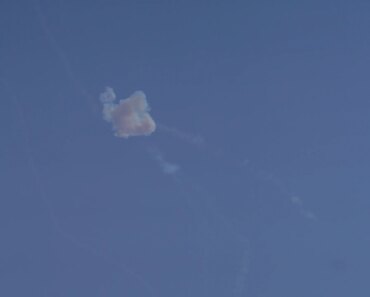
On February 28, the United States and Israel began war on Iran. The US-Israeli strikes came without prior warning or approval from the United Nations and targeted and killed Iran’s supreme leader, Ayatollah Ali Khamenei.
Just two months ago, the US launched another attack on Venezuela, in which its special forces kidnapped Venezuelan President Nicolas Maduro from his residence in Caracas and transferred him to New York, where he faces criminal charges in federal court.
Between these two violent attacks, US President Donald Trump withdrew from 66 international organizations, including 31 UN entities, and launched the Board of Peace, a new body chaired by him personally that he suggested could replace the UN.
These and other developments in recent years show that the world order the US helped establish in 1945 no longer serves its interests.
For eight decades, US funding, diplomacy and military power sustained this architecture. Whatever the criticisms of how that authority is exercised, the scale of the commitment is significant and the US should not have to do it. Chose it.
The world of 2026 bears little resemblance to 1945. Europe rebuilt. China has risen. Canada, Japan, South Korea and many Gulf states are wealthy. And Brazil, Indonesia, Nigeria, India, Vietnam and other countries are increasing.
Today’s threats – climate change, epidemics, terrorism and others – could barely have been imagined when the UN Charter was created. It is not unreasonable for Americans to ask why a system designed for a world that no longer exists should continue to be disproportionately burdened.
The question is what the rest of the world wants to do. For too long, multilateralism was something the US provided and others consumed. European countries have sought refuge under American security guarantees while criticizing US foreign policy. Developing countries dependent on US funding demanded institutional reforms. Small states like the Caribbean use international law as our shield and contribute little to its enforcement.
If we truly value this system, we must now demonstrate that value with resources, not just rhetoric.
A strong first step would be to move the UN headquarters from New York as an acknowledgment of reality. Why should a world organization remain in a nation that is withdrawing from many of its parts and building alternatives?
The relocation signals that the international community intends to preserve multilateralism regardless of American participation, and that we are willing to bear the costs of doing so. And there are many options for where the UN could be based. Geneva and Vienna could offer neutrality. Nairobi and Rio de Janeiro center the organization in the Global South.
An island nation is also an option: Antigua and Barbuda, Barbados, Jamaica or Mauritius. Such choice emphasizes that it is now an institution for the weak, not the powerful.
If the world can mobilize trillions for wars and bailouts, it can fund headquarters moves.
More fundamentally, the UN needs a new funding model. The US provided approximately 22 percent of the regular budget and more for peacekeeping. This dependence gave Washington greater influence and made the organization hostage to US domestic politics.
If we value multilateralism, we must fill the gaps. The European Union, China, Japan, the Gulf States and emerging economies must contribute their share in a functioning international order. A diversified funding base will ensure survival and democratize global governance in a long-term overhang.
The urgency of these reforms is underscored by the crises now unfolding. Attacks on Iran risk a broader regional conflict that could draw in Gulf states, disrupt global energy supplies and push fragile economies into recession. The kidnapping of the Venezuelan president has destabilized Latin America and set a precedent that no sovereign leader can exceed the reach of unilateral power.
Meanwhile, wars in Gaza and Sudan continue, the eastern Democratic Republic of Congo is mired in conflict, and millions of displaced people strain the capacity of neighboring states. In each case, the UN Security Council has proven unable or unwilling to act, paralyzed by an ultra-veto structure that privileges the powerful over the weak.
A relocated and revitalized United Nations, broadly funded and no longer entrusted to a single patron, will not solve these crises overnight. But it can operate with greater fairness and less selective morality.
It can authorize humanitarian corridors without fear that one member’s geopolitical interests will constrain action. It can convene emergency sessions on energy price stabilization, coordinate debt relief for countries marginalized by conflict-driven commodity shocks, and deploy peacekeeping missions contingent on a country’s budgetary politics. The point is not that the improved UN is perfect. The present is structurally incapable of responding to emergencies that demand collective action.
Each month of inaction widens the gap between what the organization promises and erodes the faith of the most vulnerable countries that multilateralism is worth defending.
Climate architecture requires specific urgent action. American withdrawal from the UN Framework Convention on Climate Change threatens the Green Climate Fund, the Adaptation Fund and loss and damage mechanisms. For small island developing states and other climate-vulnerable countries, these are lifelines, not abstractions.
The window for building climate finance independent of US participation is narrow, but it exists. Europe must demonstrate its climate leadership with resources. China, the world’s largest emitter, has the potential to make an important contribution if it seeks ethical leadership.
For the Caribbean, this transformation requires both humility and ambition. Modesty because we have been dependent on frameworks for so long that we have underfunded. Ambition because we have 14 UN General Assembly votes, moral authority from the frontlines of climate change and a tradition of punching above our weight.
The Caribbean Community (CARICOM) should propose a resolution on headquarters relocation and reform of funding, convene like-minded states and strengthen the Caribbean Court as a regional base when global mechanisms falter. Blocks representing small island developing states, Africa and other parts of the developing world have the numbers to reshape governance if they act in concert.
The US remains the world’s largest economy, its most powerful military power, and home to many of the institutions, universities, corporations, and civil society organizations that drive global progress. Americans who believe in multilateralism remain numerous and influential. The door to renewed American engagement should always be open.
But the rest of the world cannot wait indefinitely for US domestic politics to sort themselves out. We must build enough resilience to operate with or without American participation.
(A war-weary and liberal America in 1945 chose to build instead of retreat, and that choice shaped the world we inherited. A different America in 2026 made a different choice.) We must accept it without malice and recognize it for what it is—ultimately an invitation to take ownership of the international order we claim to value.
The views expressed in this article are the author’s own and do not reflect the editorial position of Al Jazeera.
(tags to translate) Opinions