The Israeli military is pursuing a new war strategy targeting checkpoints set up by the paramilitary Basij force in the Iranian capital as the Islamic Revolutionary Guard Corps (IRGC) and the United States carry out more attacks.
Heavily armed checkpoints, roadblocks and patrols are on the rise in Tehran and across the country after thousands were killed during January’s nationwide protests, and especially since the start of the ongoing war two weeks ago.
Recommended stories
List of 3 itemsEnd of list
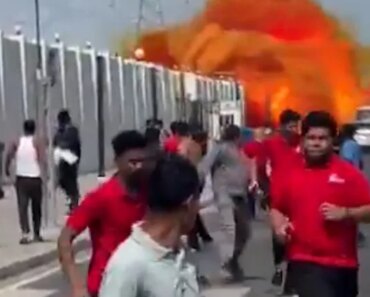
IRGC-affiliated media have confirmed that drone strikes have been hitting heavily armed checkpoints since Wednesday night, killing and wounding several Basij members.
The funeral of Morteza Darbari, described by the IRGC-affiliated Tasnim news agency as a commander of the local Basij force based in a mosque in Tehran, was held in Semnan province on Friday. He was killed while commanding an armored checkpoint in southeastern District 15.
State media broadcast footage of the funeral of another slain member, Mohammad-Hossein Kouchaki, on Saturday, in which his family members, surrounded by fellow Basij fighters armed with assault rifles, vowed revenge.
“Both of those (dissidents) inside and outside the country, their fate is clear, we will kill them all,” Kouchaki’s mother said at the ceremony. “We will give martyrs in our path but not bow down. No compromise, no surrender, fight till victory, sacrifice for Mojtaba Khamenei”.
Kouchaki was reportedly killed in a drone strike in northeast Tehran, with the Israeli military confirming responsibility by releasing the footage. The site of the attack is close to where a major fuel depot was bombed amid widespread Israeli strikes targeting Iranian oil reserves.
Checkpoints in several districts of the sprawling city have been similarly targeted, and state forces are responding with “new and creative plans” to adapt to the strikes and increasing their patrols, the state-run Fars news agency said.
Intelligence ‘from the Iranians’
According to unnamed sources cited by multiple Western news outlets, Israeli commanders acted in part on intelligence sent to them by the Iranians, who were filming roadblocks and sending messages via social media.
Videos emanating from Iran continue to circulate on social media, but the theocratic establishment has created a black market for the few proxy connections to the outside world that still function, despite a complete internet shutdown now in its 16th day.
The state imposed a 20-day total internet blackout in response to protests in January, meaning more than 90 million Iranians will now spend more than a third of 2026 without access to the global internet. Other alternatives to state media are satellite television dishes found in most homes, but officials have been hampered by jamming signals.
Through state media, the Islamic Republic’s political, military and judicial authorities are issuing threats of retaliation against any form of dissent that could be interpreted as acting in the interests of the US and Israel.
The police chief, the IRGC commander and a state television host have all emphasized in the past week that they regard people who take to the streets against the establishment as “the enemy”.
The judiciary announced on Saturday that any “rioters” arrested while acting against the establishment would have their property confiscated to “compensate a part of the damage suffered during the war” with the US and Israel. Several people have already been arrested for trying to film missile impact sites and roadblocks, with authorities continuing to promise harsher punishments.
It comes days after the judiciary said that Iranians living outside the country could have their property confiscated if they engaged in anti-establishment activities, such as participating in rallies calling for the return of Reza Pahlavi, the son of Iran’s US-backed Shah, who was deposed in the 1979 Islamic revolution.
The battle could drag on for weeks
Pahlavi released a video message on Saturday saying he was with the team for a “transition period” away from the Islamic Republic.
In lockstep with US President Donald Trump and Israeli Prime Minister Benjamin Netanyahu, he has called on Iranians to remain vigilant in their homes until the time is right to take to the streets.
The Israeli military characterized its strikes on roadblocks in Tehran, as well as several Basij, IRGC and police bases across the country, in an attempt to weaken the Iranian authorities’ domestic security apparatus.
“These forces spearheaded the regime’s primary efforts to suppress internal protests, particularly in recent months, with extreme violence, mass arrests and the use of force against civilian demonstrators,” the military said last week.
Speaking on Fox News Radio on Friday, Trump said the establishment in Iran will eventually fall, but “probably not immediately.”
“They literally have people in the streets with machine guns, machine-gunning people down if they want to protest,” Trump said, referring to Iran’s state security forces.
“It’s a very big hurdle for people who don’t have weapons to climb,” he said of anti-establishment Iranians, adding that military strikes would continue.
Both sides of the conflict have said the fighting could drag on for weeks, with Iranian officials saying there is no prospect of talks.
The USS Abraham Lincoln supercarrier was “taken out of commission after suffering serious damage and taken away from the area,” a senior spokesman for Iran’s armed forces said in a statement carried by state media on Saturday.
“If the regional countries do not trust the fake power of the US, the American forces will be forced to leave the region because they cannot protect their own forces and bases,” said Abolfazl Shekarchi.
(tags to translate)news