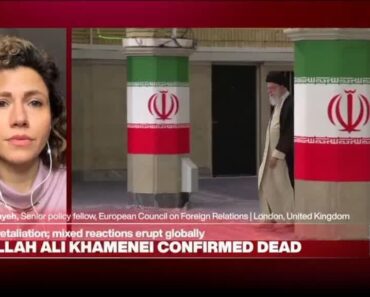
Israel carried out heavy airstrikes against Hezbollah-controlled southern suburbs of Beirut on Monday, after the Iran-backed group launched missiles and drones towards Israel in retaliation for the assassination of Iran’s Supreme Leader Ali Khamenei.
Beirut residents woke up to the sound of a dozen explosions at 3 a.m. Monday, as Israel attacked three different locations in the capital’s southern suburbs.
The explosions shook the windows of the capital city and were heard for miles. People in southern Lebanon heard fighter jets and bombs dropped as airstrikes were carried out across wide areas of the country’s south, collapsing buildings in villages near Tyre, in the south of the country.
Hezbollah said in a statement that it had launched a barrage of missiles and drones against the Mishmar al-Karmel missile defense facility near Haifa around midnight, in “retaliation” for the assassination of Khameinei” and “in defense of Lebanon and its people.”
Israel responded just hours later, attacking what it described as Hezbollah targets throughout southern Lebanon, the Bekaa Valley and the Beirut suburb of Dahieh. The Israeli military claimed that the attacks on Dahieh had killed several senior Hezbollah officers.
“Hezbollah opened a campaign against Israel overnight and is fully responsible for any escalation. Any enemy that threatens our security will pay a high price,” Israeli army chief Lieutenant General Eyal Zamir said in a statement.
An Israeli military spokesman issued evacuation orders for 55 different towns and cities across Lebanon, asking people to stay at least 1,000 meters away from them as they were close to “Hezbollah operatives and facilities.” Earlier on Sunday, the Israeli army announced the deployment of 100,000 reservists, many of them along the border with Lebanon.
Streams of people began fleeing Dahieh in cars and on foot, and lines of cars began to form outside gas stations in the southern city of Tire as residents began heading north. Roads from Dahieh to the capital were paralyzed by scooters and cars driving over rubble and rubble from the previous attacks. In the south, people headed north on both sides of the highway to escape traffic.
Videos showed the rooftops of Dahieh buildings engulfed in flames, while the remains of burned cars lay at the foot of the collapsed buildings. As they rushed to flee, witnesses reported seeing volleys of rockets flying from southern Lebanon toward Israel, in what appeared to be Hezbollah artillery barrages.
The memory of the 13-month war between Israel and Hezbollah that ended in 2024 loomed large in the minds of the Lebanese. Fear quickly spread that Dahieh, the Bekaa Valley and much of the south would become uninhabitable as they were then. Israel bombed these areas daily during the war and nearly 4,000 people were killed and a million displaced.
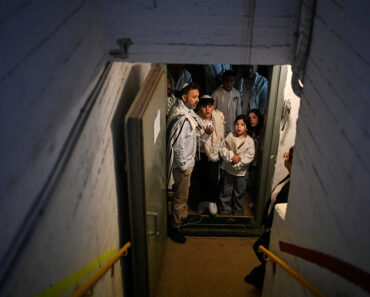
In the early hours of Monday, families and friends quickly made plans for what they should do and tried to understand what exactly was happening, as the number of people displaced from affected areas in Lebanon grew.
The Lebanese government quickly condemned Hezbollah’s decision to bomb Israel without consulting the state. Without naming the militant group, Lebanese Prime Minister Nawaf Salam said he “will not allow the country to be dragged into new adventures.”
“The firing of rockets from southern Lebanon is an irresponsible and suspicious act that endangers the security of Lebanon and provides Israel with pretexts to continue its aggression,” Salam said in a post on X.
For weeks, Lebanese officials had rushed to prevent Hezbollah from joining any potential war in Iran, while Israel relayed messages to its Lebanese counterparts that any attack would trigger a wide-ranging response against the entire country.