Hours after Israel and the United States launched attacks on Iran on Saturday, Tehran launched retaliatory attacks on Israeli and US military assets located in several Gulf countries.
Since then Iran has struck targets in Israel and US military assets in Bahrain, Saudi Arabia, Qatar, Iraq and the United Arab Emirates (UAE).
While Iran’s attacks initially focused on US military assets, Gulf states said Tehran had expanded the attacks to target civilian infrastructure, including hotels, airports and energy facilities.
What sites has Iran hit in the Gulf countries?
US military assets
On Saturday, Bahrain said a missile attack targeted the headquarters of the US Navy’s 5th Fleet in the capital, Manama.
The Ali al-Salem air base came under attack by several ballistic missiles, all of which were intercepted by Kuwaiti air defense systems, Kuwait’s Ministry of Defense said.
In Qatar, the Ministry of Defense says it has “prevented” attacks on the country in accordance with a “pre-approved security plan” that intercepts “all missiles” before they reach the country’s territory. On Saturday, Iran targeted Al Udeid Air Base, which hosts US forces, the government said.
In the last four days of the conflict, attacks on Gulf states have intensified and governments in the region say they have intercepted large numbers of Iranian missiles and drones.
Bahrain says its air defense systems have destroyed 73 missiles and 91 drones launched by Iran since the start of the latest conflict.
A spokesman for the UAE Ministry of Defense said that 186 missiles were launched and 172 missiles were destroyed. A missile landed on UAE territory. Additionally, 812 Iranian drones were monitored and 755 of them were intercepted.
Qatar’s defense ministry said three cruise missiles had been detected and intercepted since Saturday. Additionally, 101 ballistic missiles were detected and 98 intercepted. Thirty-nine drones were detected and 24 intercepted. On Monday, the Qatari Defense Ministry said in a statement that the air force shot down two Iranian SU-24 fighter jets.
US Embassies
Early on Tuesday, there was a “limited fire” at the US embassy in the Saudi capital, Riyadh, after it was struck by two drones. The attack caused “minor material damage” to the compound, the Saudi Defense Ministry said in a statement.
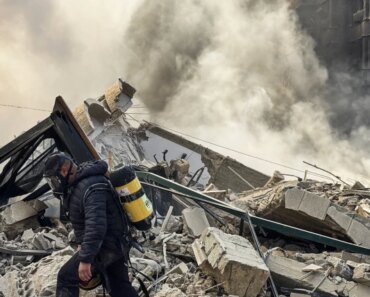
Black smoke was seen rising over Riyadh’s diplomatic quarter, which houses foreign missions, after the attack, Reuters news agency reported.
The Ministry of Foreign Affairs in Kuwait released a statement on Tuesday saying that Iran’s treacherous attack targeted the US Embassy building in Kuwait. This comes a day after videos emerged of smoke billowing from near the embassy in Kuwait City.
The statement called the attack “a clear violation of all international norms and laws, including the 1949 Geneva Conventions and the 1961 Vienna Convention on Diplomatic Relations, which exempt diplomatic buildings and their personnel even in cases of armed conflict.”
On Monday, three US jets crashed in Kuwait. The US military blamed the crash on “friendly fire”, but a Kuwaiti statement did not give a cause for the incident.
The US Embassy in Kuwait suspended operations on Tuesday, citing “ongoing regional tensions” until further notice.
Energy infrastructure
Qatar Energy, Qatar’s state-run energy firm and the world’s largest liquefied natural gas (LNG) producer, announced on Monday that it has suspended LNG production following Iranian attacks on its operating facilities in Ras Laffan and Mesaieed, Qatar.
Iranian officials have publicly denied targeting Qatar Energy.
Saudi Arabia suspended operations at its largest domestic oil refinery, the Ras Tanura plant, after a fire broke out in a firefighting unit caused by debris from the interception of two Iranian drones.
Iran’s Tasnim News Agency quoted an unnamed Iranian military source as saying: “The attack on Aramco was an Israeli false flag operation,” adding that Israel’s aim was to “distract the minds of regional countries from the crimes of attacking civilian sites in Iran.”
“Iran has clearly announced that it will target all American and Israeli interests, installations and facilities in the region and has attacked many of them so far, but Aramco facilities have not been among the targets of Iranian attacks so far,” the source told the agency.
Tasnim quoted the source as saying: “According to information provided to us by intelligence sources, the UAE port of Fujairah is also one of the next targets of the Israelis’ false flag operation and this regime intends to attack it.”
Airports
Airports in Abu Dhabi and Dubai in the UAE and in Erbil, the capital of Iraq’s autonomous Kurdish region, were targeted. Officials have blamed Iran for the strikes, although Tehran has not publicly claimed responsibility for the attacks on those facilities.
Erbil International Airport was targeted twice on Saturday, an Al Jazeera correspondent reported, with a drone attempting to target the airport and being intercepted and shot down by air defense units.
Qatari Foreign Ministry spokesman Majid Al-Ansari told a news conference on Tuesday that there had been attempts to attack Hamad International Airport, but they had all failed.
At Abu Dhabi’s Zayed International Airport, at least one person was killed and seven others injured in what the facility’s authority called an “incident”.
Dubai’s media office told XPost that part of Dubai International Airport “suffered minor damage in the incident”, without specifying what the incident was or who was behind it.
The region’s airspace, the world’s most populous, has been closed in the wake of the conflict, stranding tens of thousands of passengers. Around 20,000 passengers were stranded in the UAE, while around 8,000 people were stuck in transit in Qatar as airspace was closed.
Qatar Airways, Emirates and Etihad, which together operate more than 1,000 flights daily, have suspended operations. Emirates announced a limited resumption of flights on Monday, but normal operations have not yet begun.
Hotels and residences
Bahrain’s interior ministry said on Saturday that several residential buildings were damaged in Manama, with civil defense engaged in firefighting and rescue operations in the affected areas, X reported.
On Saturday, Iran fired 137 missiles and 209 drones across the UAE, its defense ministry said, sending fire and smoke reaching the Dubai landmarks of the Palm Jumeirah and Burj Al Arab.
Videos circulating on social media showed smoke billowing from the entrance of the five-star luxury hotel Fairmont The Palm in the Palm Jumeirah area.
Qatar’s foreign ministry spokesman Al-Ansari said on Tuesday that Iran’s targets were not just military, but all areas of the country. He did not go into detail about which parts of Qatar were specifically targeted.
Al-Ansari said that all red lines had been crossed; From north to south in Qatar, Al Jazeera’s Laura Khan reports from Doha, Qatar.
Iranian Foreign Minister Abbas Araghi said Tehran targeted a hotel complex in Bahrain because it hosted US troops.
“We are not targeting our brothers or neighbors in the Persian Gulf. But we are targeting US targets and this is clear,” Araghchi said on Tuesday.
“We started by attacking their military bases and they evacuated their military bases and moved to hotels and created human shields for themselves. We will try to target military personnel, infrastructure and facilities that help the US and its forces to launch operations against Iran.”
Why is Iran targeting civilian infrastructure in the Gulf?
Luciano Zakara, an Iran and Gulf analyst at Qatar University, told Al Jazeera that the reason the Iranians are resorting to hitting civilian infrastructure in neighboring countries is to “demonstrate their military capabilities”.
“Iran is retaliating to all the attacks, not in one place, but about 10 at once,” he said.
“Another thing is the political message they want to give is that if Iran is attacked, the impact will be global,” Zakkara said, adding that the main message is that the economy of the entire region will be affected, not just Iran.
“And the US, the region or energy consumers will not be able to continue this way,” he said.
“But at this point, they (Iran) don’t care that much considering they’ve been under sanctions for a long time. So it won’t affect the Iranian economy that much. And the oil price going up – even though they export very little – means they’re still surviving.”
(Tags to be translated)News