South Korea has begun laying the groundwork for a new tracking system designed to tax profits from cryptocurrency investments.
Crypto AI tracking system
According to The Korea Times, the National Tax Service (NTS) announced on Thursday that they are moving forward with an artificially managed system to track crypto investment income as they prepare to tax profits from virtual assets starting in January 2027.
2 million dollar project
To achieve this, NTS has issued a tender for what they call a “Comprehensive Virtual Asset Transaction Analysis System”. There, they detailed that the project has a budget of about ₩3 billion ($2 million) and that system design will begin in April. The trial operation of the system should begin in November, after passing several tests, and be ready for full operation between November and December.
The notice has been uploaded to the online tendering system run by the Public Procurement Service, the agency responsible for procuring goods and services for the government and related agencies. The winning contractor is expected to be selected and signed this month.
A new era of crypto control
With this new system, NTS plans to collect data from internal exchanges, blockchain analysis and existing tax databases, using AI and machine learning to detect unusual patterns and potential tax evasion.
This latest update follows last January’s unveiling of a new “control tower” unit created as part of the National Tax Administration’s 2026 Action Plan to coordinate all virtual asset tax enforcement and monitor offshore flows.
According to Korean tax filings, retail investors will be taxed on annual crypto profits above a set threshold (e.g. ₩2.5 million), while institutions will be given clearer but stricter rules on holding major coins, except for stablecoins.
Korea under crypto control
Although the Korean government has repeatedly delayed the full taxation of crypto-income, it is now building one of the more complex tax structures for virtual assets, including real-time monitoring and cross-border cooperation.
The Korean government has recently come under fire for embarrassing crypto scandals such as the loss of crypto-held assets and the accidental leak of wallet data by NTS itself. It seems that the repetition of these security breaches and incidents of mismanagement have created political pressure to update systems, tighten controls and show that crypto profits can be taxed as reliably as traditional assets.
What should traders do?
Once the system is activated, Korean businessmen must anticipate that high-value transactions will be tracked across exchanges and borders, and aggressive tax avoidance strategies, especially the offshore route, will become much more risky.
It is safe to say that the South Korean model could become a template for other high-tax and accepting jurisdictions, making it more difficult to treat crypto as an off-grid asset class.
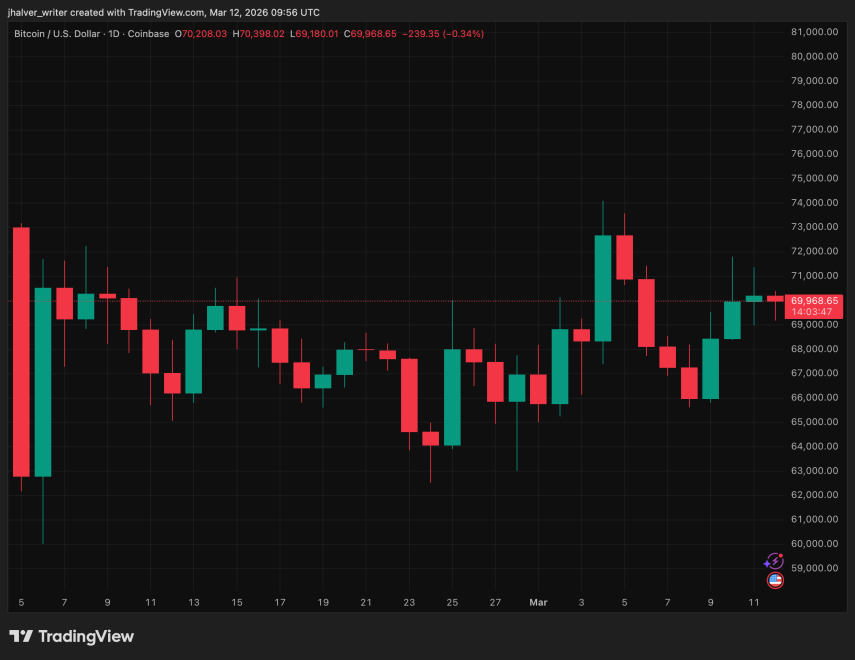
BTC’s price trends to the downside on the daily chart. Source: BTCUSD on Tradingview
Cover image from Perplexity, BTCUSD chart from Tradingview
Editing process because bitcoinist is committed to delivering thoroughly researched, accurate and unbiased content. We adhere to strict sourcing standards and every page is rigorously reviewed by a team of top technology experts and experienced editors. This process ensures the integrity, relevance and value of our content to our readers.