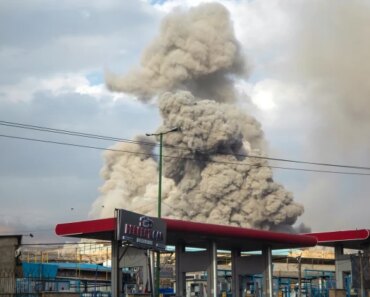
The US-Israel war against Iran has been condemned as illegal in much of the global south, and China has said it was unacceptable to “blatantly kill the leader of a sovereign state.”
Many countries objected that negotiations between the United States and Iran over their nuclear program and missile capabilities did not have a chance to succeed before Washington and Israel began bombing, and analysts often viewed the war in terms of a colonial-style exercise of power.
Pakistani Prime Minister Shehbaz Sharif offered his condolences over the assassination of Iranian Supreme Leader Ayatollah Ali Khamenei and said international law prohibits attacking heads of state. South African President Cyril Ramaphosa questioned the “preventive” justification provided for the war, saying that self-defense was only permitted in response to an armed invasion and that “there can be no military solution to fundamentally political problems.”
Brazil said it had serious concerns, adding that “the attacks occurred in the middle of a negotiation process between the parties, which is the only viable path to peace.”
Turkish President Recep Tayyip Erdoğan deplored the attacks, which he said were “instigated” by Israeli Prime Minister Benjamin Netanyahu. Omani Foreign Minister Badr Albusaidi, who had said on the eve of the attack that a deal was possible, said: “I urge the United States not to get caught up anymore. This is not their war.” Oman shot down two drones, while another crashed near its port of Salalah on Tuesday, state media said.
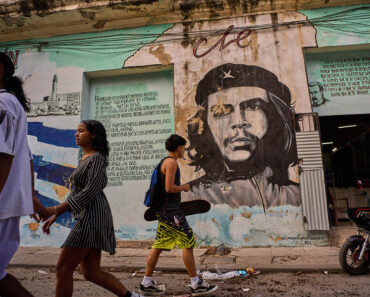
Cuba, whose regime is under substantial pressure from Donald Trump, said: “Once again, the United States and Israel threaten and seriously endanger regional and international peace, stability and security.” Malaysia, condemning the attack, said “disputes must be resolved through dialogue and diplomacy.”
Indonesia, one of the few countries to announce troops for the international security force planned by Trump’s Peace Board for Gaza, said it “deeply regrets” the failure of negotiations with Iran, while its president offered to travel to Tehran to reopen dialogue. The Indonesian Ulema Council, an organization of the country’s Muslim clerics, urged its government to withdraw from the Peace Board in protest.
Many other developing nations also criticized Iran’s attacks on its Gulf neighbors.
Analysts said the conflict must be understood in the context of past wars of regime change in Iraq and Libya, Israel’s impunity for its war in Gaza since 2023 and colonialism, pointing to a speech by US Secretary of State Marco Rubio last month where he appeared to glorify past Western conquests of developing nations.
Siphamandla Zondi, a professor of politics at the University of Johannesburg, said that in the West wars were seen as having a moral purpose, while in the global South conflicts were seen as evil and a failure to behave like adults. He said the United States and Israel had cajoled some countries through the Abraham Accords into diplomatically recognizing Israel and had used force against others.
“This is a war of domination and subordination, therefore it has imperialist overtones and motives,” Zondi said. “It makes the world unsafe for all of us.”
Commentators said Europe had shown a double standard, stridently defending international law when it came to Trump’s attempts to annex Greenland, but silent in the case of this war.
Amitav Acharya, author of The Once and Future Global Order, said that in the past the United States had sought influence and legitimacy. Now, the United States acted solely through coercion, even as Chinese soft power was winning, with Beijing offering investments to developing countries. He said Russia would also benefit, as Iran and other Trump foreign policy shocks diverted attention from Ukraine.
“Many countries in the global south are going to look for a coalition of powers to confront the United States, since the United States is seen as something very aggressive, very imperial,” Acharya said.
Some commentators emphasized that criticism of the war did not mean support for the Iranian regime.
“I condemn the Iranian theocratic regime for its dictatorial and repressive nature, but these ongoing attacks are a violation of international law,” said Heraldo Muñoz, former Chilean foreign minister. “The reasons are more of an internal nature in the United States, on the part of an American president who feels empowered by the successful military extraction of Maduro from Venezuela.”
The Trump administration sought neither approval from the U.N. security council (as Washington attempted for the Iraq war in 2003) nor even approval from elected representatives at home, analysts said.
Oliver Stuenkel, a professor of international relations at the Fundação Getulio Vargas (FGV) in São Paulo, said there was fear in Latin America that, emboldened by his actions in Venezuela and Iran, Trump would try to attack Cuba.
“There is a deep sense that international law is being eroded more systematically, and I think that has profound consequences for many countries in the global south, which are militarily weak and vulnerable, have rich natural resources and have long relied on international rules and norms,” Stuenkel said.
Maleeha Lodhi, Pakistan’s former ambassador to the United States, said the United States was negotiating with Iran in bad faith, as it did last year, using the talks as a smokescreen to complete preparations for the attack.
“Who can trust the Trump administration now? It acts unilaterally, in complete defiance of international law and any diplomatic norms,” Lodhi said. “This will come back to haunt you.”