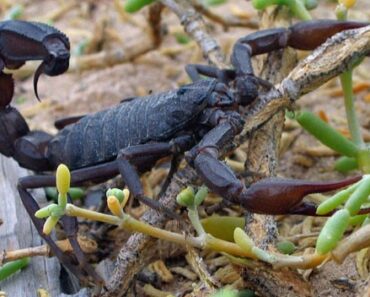
Identification and characterization of antimicrobial peptides derived from the venom gland transcriptome of the scorpion Superstitionia donensis
Abstract
From the monotypic family Superstitioniidae, the scorpion Superstitionia donensis presents a high diversity of transcripts encoding non-disulfide-bridged peptides (NDBPs). In this study, five peptide sequences derived from a previous venom gland transcriptomic analysis were selected based on sequence similarity and physicochemical properties associated with previous antimicrobial peptides. An additional peptide was designed to evaluate the effect of changes in selected physicochemical properties on its hemolytic and antimicrobial activity. The selected peptides were synthesized using Merrifield Solid-Phase peptide synthesis and evaluated for antimicrobial activity against Gram-negative and Gram-positive bacteria, belonging to the ESKAPE group and yeasts from Candida and Cryptococcus genera, as well as for hemolytic and cytotoxic activity in mammalian cells. Some peptides showed antimicrobial activity against selected microbial strains, incl Escherichia coli, Enterococcus faecium, Staphylococcus aureus, Candida krusei, and Candida tropicalis, while limited or no activity was observed against Klebsiella pneumoniae, Pseudomonas aeruginosaand Candida glabrata. In particular, treatment with some selected peptides improved the survival of Galleria mellonella larvae infected with S. aureuswhich supports their functionality in vivoPeptide toxicity was also evaluated in human erythrocytes and two human cell lines, showing that some peptides with antimicrobial activity also showed hemolytic effects; however, they showed low cytotoxicity to cell lines at antimicrobial concentrations. Despite the observed hemolytic activity, the relatively low cytotoxicity against human cell lines suggests potential for improvement through structural refinement. These results show that S. donensis NDBPs exhibit antimicrobial activity and hemolytic efficacy, and their sequences can serve as templates for further modification. Furthermore, the findings reveal that antimicrobial potency and cytotoxicity are influenced by sequence similarity, net charge and hydrophobicity. Nevertheless, the physicochemical property values required to identify an optimal antimicrobial peptide remain poorly defined, as several parameters show overlap between high- and low-performing candidates, highlighting a key challenge for their therapeutic development.
Miranda-Espino, R., Gurrola-Briones, G., Chavez-Jacobo, VM, Possani, LD, & Cid-Uribe, J. (2026). Identification and characterization of antimicrobial peptides derived from the venom gland transcriptome of the scorpion Superstitionia donensis. Toxicon109064. https://doi.org/10.1016/j.toxicon.2026.109064