Earlier today, the United States and Israel launched strikes against Iran, hitting targets across the country. In their televised speeches, US President Donald Trump and Israeli Prime Minister Benjamin Netanyahu made it clear that they were after regime change, not military pressure to secure a deal.
The attack and Iran’s swift response underscored how precarious diplomacy is. The outbreak of war followed the announcement of significant “progress” in talks by mediators, with talks set to resume next week. Apparently, diplomacy was never intended to succeed and was merely used to disguise war plans.
From the timing of the attack, it was clear that Washington and Tel Aviv had already made up their minds weeks earlier. Israeli media reported that the operation was coordinated with Washington to come before the holiday of Purim, which commemorates the biblical story of the Jewish people being saved from mass slaughter in ancient Persia.
While both Trump and Netanyahu are clear after declaring “victory,” it’s unclear whether they can pull it off.
Targeting the Iranian leadership
Israel and the US claim to be focused on taking civilian and military leadership and military installations. Perhaps they hope to bring the war to a speedy end.
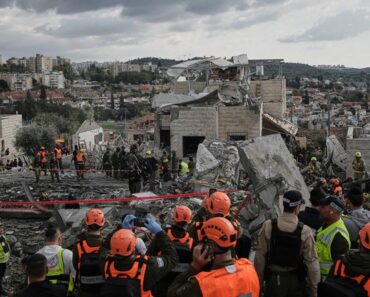
Israel claims it has achieved “very high success” in removing Iran’s leadership, with Supreme Leader Ayatollah Ali Khamenei and President Massoud Pezeshkian among the targets. Photos of a major strike on Khamenei’s secure compound have already emerged. Israeli media reported that the commander of Iran’s Islamic Revolutionary Guard Corps, General Mohammad Pakpour, the Supreme Leader’s adviser, Ali Shamkhani, and Iran’s Defense Minister, Amir Nasirzadeh, were killed.
Israel is clearly trying to reassure its citizens that it has the ability to reach deep into Iran’s top leaders.
But there has been no confirmation of the leadership’s death so far from Tehran. Iranian media claimed that Khamenei and Pezheshkian were safe, and reported that at least 80 people were killed in an airstrike on a girls’ school in the city of Minab.
Unlike last June’s 12-day war, when Iran’s retaliation was slow and measured, this time, Iran’s armed forces retaliated immediately. Ballistic missiles were fired at US bases in Iraq, Qatar, Bahrain, UAE and Saudi Arabia and the Israeli cities of Haifa, Tel Aviv and Eilat.
The speed of Iran’s retaliation suggests that it anticipated these attacks and prepared its retaliation plans. The question now is whether Iran will overcome US resolve in the face of domestic and international pressure.
Domestic risks
Trump launched a war on Iran amid little enthusiasm among Americans for another foreign conflict. A recent poll by YouGov and The Economist indicates that only 27 percent of the US public supports the US using military force against Iran. Another poll conducted by the University of Maryland recorded even lower approval: 21 percent.
The war has significant domestic political ramifications for Trump. As the operation progresses, if Iran fails to capitulate, the US president will become embroiled in a protracted conflict with escalation and look vulnerable if he backs out.
As the midterm elections approach, the battle for Trump’s presidency will be a litmus test. If the conflict does not go as the president envisions, it will reflect poorly on the Republican Party in the polls. If the GOP loses control of Congress to Democrats, it will prevent Trump from pursuing his political agenda. If Democrats gain control of Congress, more impeachment pressure could be placed on Trump.
What is victory?
No analyst thinks this war is short. Unlike the 12-day war that led to the ceasefire, this conflict already looks wider and deeper. Iran’s readiness to retaliate across the region suggests it is ready to wage a protracted war rather than compromise.
The problem facing Washington and Tel Aviv is how to keep pressure on Tehran without creating uncontrolled instability in the region. Another problem they have is that they have made regime change their ultimate goal.
In his speech announcing the attack on Iran, the US president indicated that the US military would stick to air operations and not deploy troops on the ground. He put the responsibility of overthrowing the Iranian government in the hands of the Iranian people, “the time of your freedom is near” and called for rebellion.
The call comes two months after Iran witnessed unprecedented mass protests across the country. However, Iranian authorities launched a brutal campaign of repression, killing thousands. At this time, a similar mass protest wave is unlikely. The legacy of repression weighs heavily on society and Iran is resilient.
Meanwhile, leadership “beheading strikes” by the US and Israel may continue, but even if successful, they will not produce regime change.
Ultimately, Trump’s generals may suggest that a protracted conflict is unsustainable, echoing the lessons of the 12-Day War. For Trump, an unwinnable war invites a familiar exit strategy: declaring victory on Truth Social and changing the narrative.
The challenge then is how to negotiate a ceasefire. After twice straying from the smokescreen of negotiations, Tehran could use this double betrayal to solidify its position. If the administration survives, the U.S. could use frustration for renewed negotiations to extract concessions. In that sense, a diplomatic collapse today could set the stage for Iran to negotiate tomorrow from a position of strength.
The views expressed in this article are the author’s own and do not reflect the editorial position of Al Jazeera.
(tags to translate) Opinions