The heat normally flows from hot to cold
klyaksun/Shutterstock
A forgotten cup of coffee will gradually cool down as heat flows into the cooler surrounding air, but in the quantum realm it seems that this experience can be turned on its head. As a result, we may need to update the second law of thermodynamics, a fundamental principle of physics that states that heat energy always flows from hot to cold.
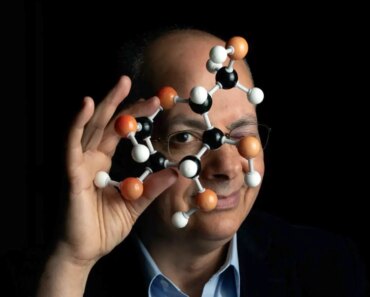
Dawei Lu of the Southern University of Science and Technology in China and his colleagues have apparently broken this law with a molecule of crotonic acid, which contains atoms of carbon, hydrogen and oxygen. The researchers used the nuclei of four of the carbon atoms as qubits, which are the basic building blocks of quantum computers and can store quantum information. When used in calculations, researchers normally control the quantum states of the qubits with bursts of electromagnetic radiation, but in this case the team exploited this control to cause heat to flow from a colder, lower-temperature qubit toward a warmer one instead.
This would never spontaneously happen to anything in our macroscopic world, like a cup of coffee, as it would require additional energy to fuel the backward flow. But in the quantum setting, other forms of fuel are available – in this case, a form of quantum information called “coherence”. “By injecting and controlling this quantum information, we can reverse the direction of the heat flow,” says Lu. “We were excited.”
That the laws of thermodynamics break down in the quantum realm is perhaps not surprising, as they were laid down in the 19th century, about 100 years before the formalization of quantum physics. To fix this problem, Lu and his colleagues calculated each qubit’s “apparent temperature,” which is a modification of conventional temperature that accounts for some of an object’s quantum properties, such as coherence, and saw the second law of thermodynamics satisfied again and heat flow from a higher apparent temperature to a lower one.
Roberto Serra of the Federal University of ABC in Brazil says that quantum properties such as coherence can be considered a type of thermodynamic resource analogous to how, for example, heat is a resource used to make a steam engine work. He says that when these quantum, microscopic resources are manipulated, thermodynamic laws can apparently be broken. “But the normal laws of thermodynamics were developed considering that we do not have access to these microscopic states. This is only an apparent violation because we have to write new laws considering that we do have this access,” says Serra.
The researchers now want to turn their heat reversal experiment into a more practical protocol for controlling heat among qubits, says Lu. In addition to uncovering fundamental connections between quantum information and heat, finding new practical ways to cool qubits could improve quantum computers. This could be of great importance to the burgeoning quantum computing industry, since even conventional computers can ultimately only work as well as they can avoid heating, says Serra.
Topics:
- quantum computing/
- quantum physics