500 hours of new video are uploaded to YouTube every 60 seconds. This is just a website. The feature-length movie playing in theaters was shot entirely on an iPhone. When onboarding at a new company, you may watch an introductory video about the company culture. Graphic designers should improve and become proficient in motion design. In short, everything is changing. Nothing is static. Exercise is key.
In February 2026, the 174-year-old Victoria and Albert Museum acquired the first-ever YouTube video for its permanent collection. The feat was a bit more complicated than this sentence suggests, with the V&A working with the video site to reconstruct the viewing page from 2005, as the relevant online archives only go back to 2006. This short video, shot casually at the zoo by co-founder Jawed Karim, is so important to the museum for reasons no different than many other precious physical objects. The clip represents the first minutes of the new world, moments before and after in modern society and our ubiquity in capturing and sharing video content.
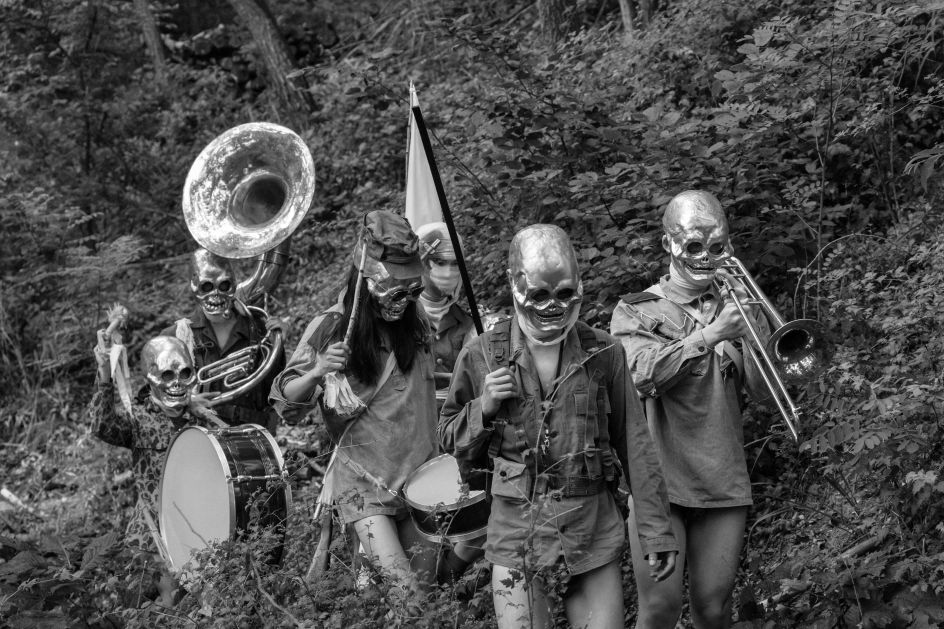
Still from “Citizen Forest”, 2016, Chan-kyong Park © 2026
South Korea, as we know or imagine it today, is a young country, its democracy less than forty years old. Not surprisingly, with the widespread manufacturing of electronics in East Asian industrial hubs such as South Korea, Japan, Taiwan, and China, the production of video equipment and the country’s newfound freedoms sparked widespread enthusiasm for the hardware. In many ways, they are at the forefront of addressing concerns arising from collective memory, mass migration, challenging traditions, the gig economy and contemporary working life, and a more existential interest in the body and technology.
Korean curator Je Yun Moon’s invitation to collaborate with Italy’s MASI Lugano came from the institution’s Francesca Benini. One of the first issues to be addressed is how to reduce a large, fragmented, and not necessarily interconnected group of filmmakers to a manageable size while still representing the breadth of content being created in the country. An early decision was made not to include a name that may be more familiar to Western gallery-goers: Nam June Paik, the godfather of Korean video art. While his legacy is represented by the blue-chip mega-gallery Gagosian, and his works can be found at the Tate Modern and the Pompidou, in this exhibition all of the artists selected are still alive and working.
One of the next questions was what to call the exhibition. Know! It is undoubtedly reductive – it reduces the complexity and multi-layered nature of a country and its people. It’s also current and unapologetically inclusive. The abbreviation of the letter K and the immediacy of the word now sum up the works on display well. It should encourage a wider audience to attend the show, who are more familiar with K-pop, Demon Hunters, BTS and BLACKPINK.
Another set of parameters to use is the site itself. MASI Lugano is located on the shores of glacial Lake Lugano, a beautiful and wealthy region in southern Switzerland on the border with Italy. Although the gallery building is only a decade old, its bright floor-to-ceiling picture windows hardly serve as a conduit for displaying video art. Therefore, most of the exhibition takes place in the basement, with the final works displayed in the first-floor foyer.
Centered around a black-curtained screening space, the exhibition begins and ends in a more typical display format. First, you walk into the Citizen Forest of Tan Khanh Park. It is the longest (26 minutes), oldest (2016) and widest (three parallel concurrent overhead video projectors) work in the exhibition. The film is presented in black and white, has a slow pace, touches on shamanism and alludes to historical events. As a viewer, you are transported back and forth between the forest landscape and its bizarrely costumed inhabitants in a trance-like manner.
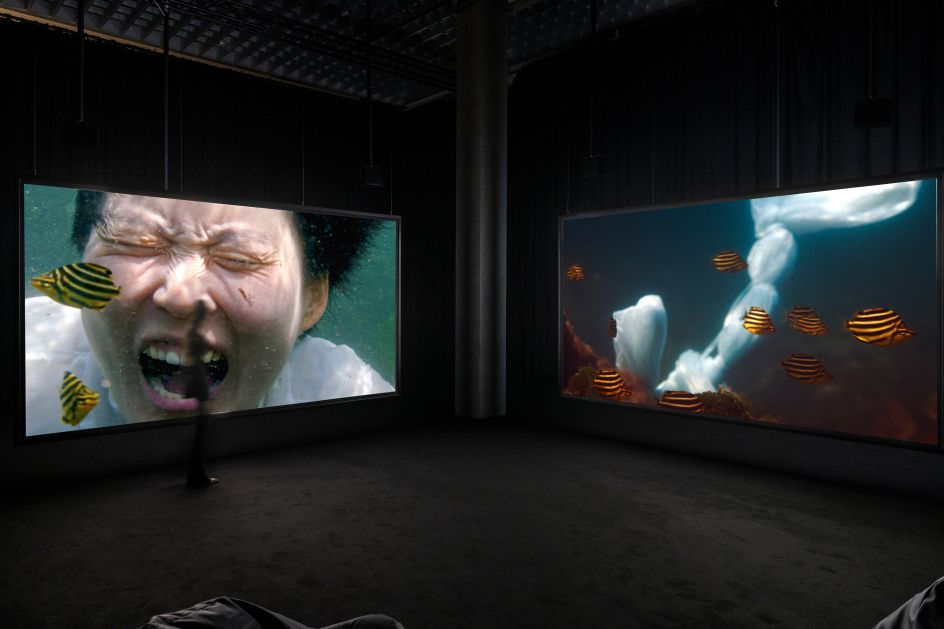
K-NOW!, Korean Video Art Today” MASI Lugano, Switzerland. Photo © MASI Lugano, Photography by Luca Meneghel © Jane Jin Kaisen 2026
At the end of the exhibition, Jane Kinkson’s Offer, 2023 and Wreckage, 2024 are screened together at right angles. These are more overtly disturbing because of their references to drowning and real-life massacres—some are shot underwater, akin to Bill Viola’s slow-motion shots. The exhibition received resonance and response from many Western artists and filmmakers. As you might expect, art is rarely created in a vacuum. Much of it hints at other ideas or is similar in execution, just as these works in turn inspire others.
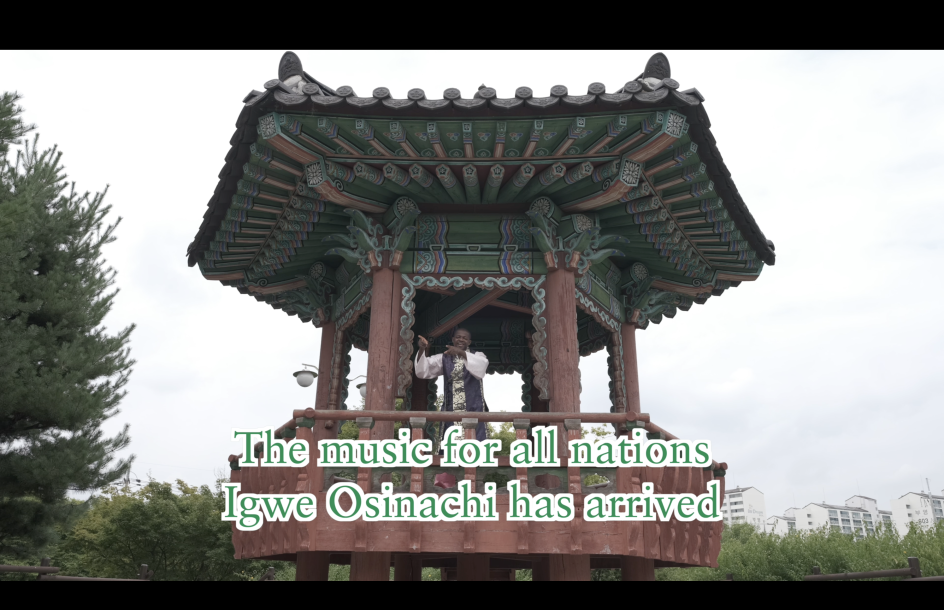
Stills from Made in Korea, 2021, by Onejoon Che © 2026
Humor is used by Onejoon Che and Nigerian musician Igwe Osinachi. It may be little known outside their respective communities, but large numbers of Africans immigrated to South Korea in the 2000s, driven by energy and educational exchanges. The music video “Made in Korea, 2021” looks at the expat with a smile on his face, listening to a common beat through headphones hanging below the screen.
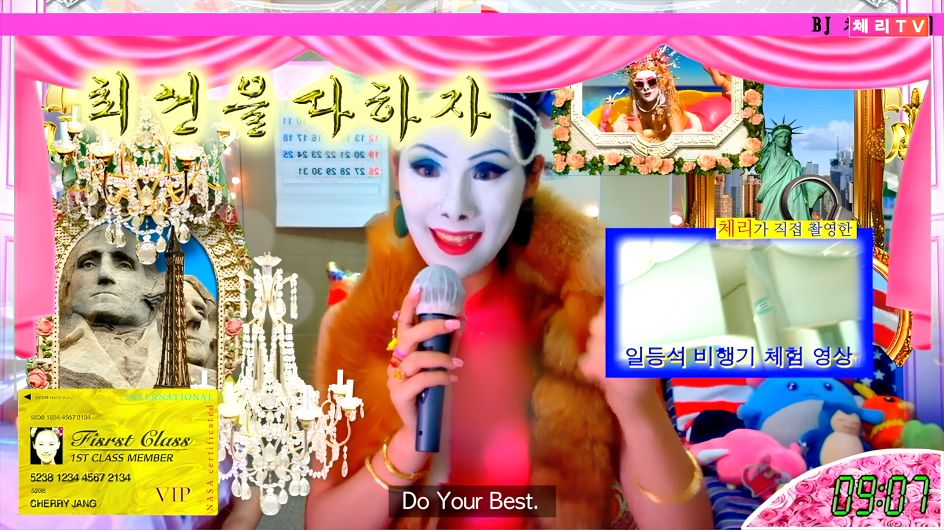
or from
A second wall-mounted plasma screen showcases the exaggerated social-climbing propaganda of fictional streamer character Cherry Jang (a Gisaeng-like creation by artist Sungsil Ryu). For those not planning on traveling to the museum, there is even the opportunity to become a “(First Class) Citizen” online (https://firstclassstore.org/). The satire is sharp and engaging, and the video’s running time is short enough to keep you hooked and wanting more.
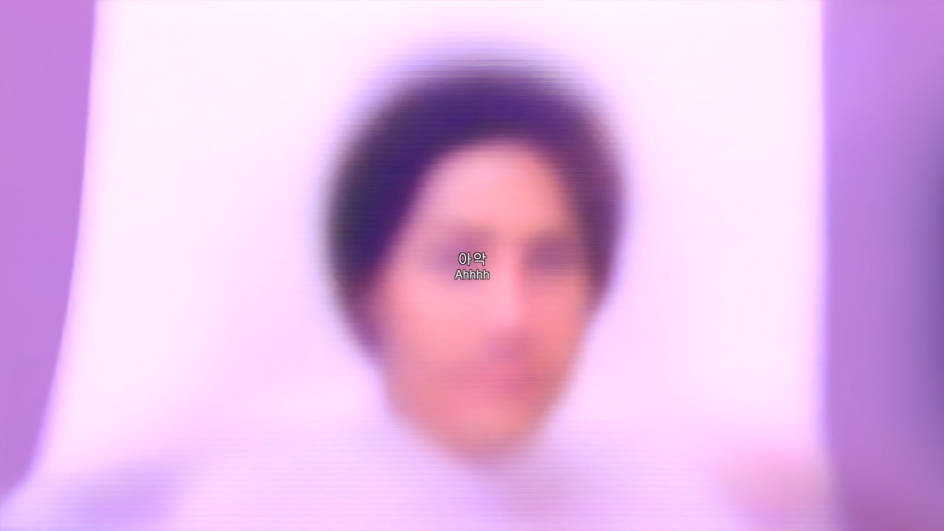
“ROLA ROLLS” stills, 2024, 업체eobchae © 2026
The group 업체eobchae (Nahee Kim, Cheonseok Oh and Hwi Hwang) offers something completely different in ROLA ROLLS, 2024. It’s a nightmarish narrative that moves from vague and suggestive massage table scenes to hybrid car-human operations, complete with a soundtrack of anguished patients. Body horror is demonstrated through a single geometric sculpture, with AI-generated mood boards depicting disfigurement and mutation. It is more extreme than Julia Ducournau’s Palme d’Or winner Titane, and viewers are advised to watch with caution.
Jin Heechuan used virtual reality in his 2021 work “Ghost1990”. It is an uncertain work that, like much of his work, can be considered both dystopian and utopian. Participants inhabit the gym’s digital environment rather than watching it. Nonetheless, rather than prescribing how his videos should be read, the artist is interested in raising more questions about reality and how we experience it, especially in this age of massive recordings and endless streaming.
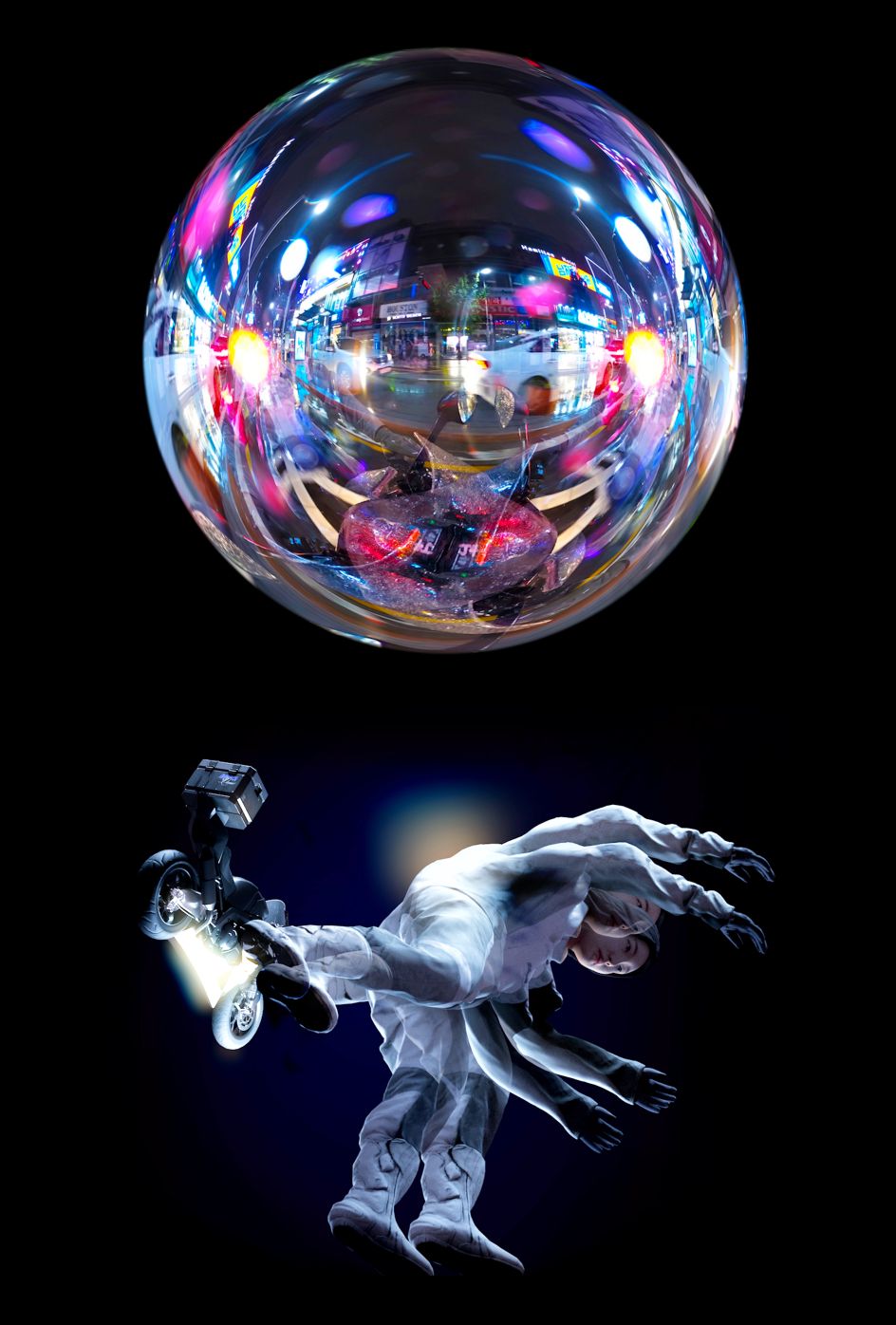
Still from “Delivery Dancer’s Sphere”, 2022, by Ayoung Kim © 2026
The most visually arresting piece follows a fast-food delivery driver as she traverses Seoul’s Michael Mann-esque nighttime cityscape, only to take an interdimensional shortcut and meet her doppelgänger illuminated by neon and LED lights. Ayoung Kim’s Delivery Dancer’s Sphere (2022) is a single-channel video installation installed in the center of the exhibition’s open area, the same size as the wall.
The artist talks about how film retains too many rules, and showing the work in video form in the context of a gallery makes it more accessible. Her experimentalism flows through the screen, and her speculative fiction is science fiction rooted in reality, inspired by the isolation of COVID-19 lockdowns and reliance on app-based delivery services. While many of us stand still, she meditates on these still-moving, unknown carriers.
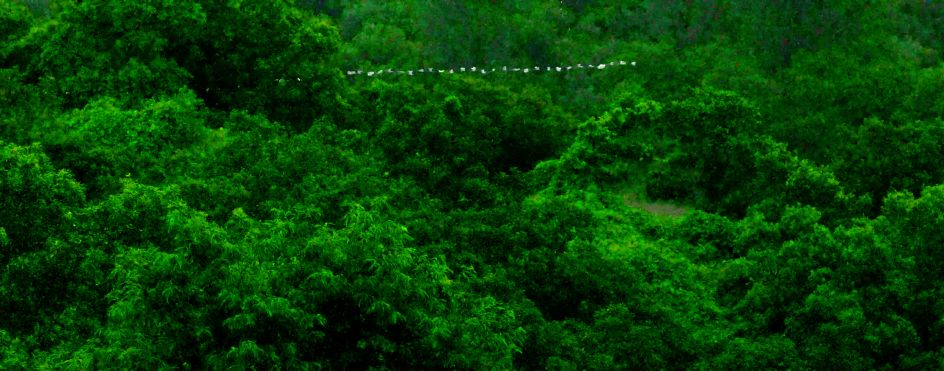
Green screen stills, 2021, by Sojung Jun © 2026
Finally, on the ground floor, Sojung Jun presents Green Screen, 2021, designed for public spaces. The large, densely forested scene depicted is actually the demilitarized zone between South and North Korea. An area devoid of human activity or Cold War intervention has since become an ecological site of high diversity. The film’s deliberate glitches hint at something that doesn’t quite fit the context. This location is a part of history that still exists today but remains unresolved.
Video is a loaded and outdated term. The long-lost memory of renting tapes from Blockbuster is nothing but Generation X nostalgia. Moving images are inseparable from who we are, what we do and how we consume. Even a basic billboard or bus stop poster, which has remained unchanged for a long time, is now a series of animated messages that play on a loop. Ironically, this snapshot of Korean video art is a tantalizing taste of the broader, more widespread use of film and moving images.