Tehran’s retaliatory attacks on US assets in the Gulf region continue for a third day as fears of a protracted conflict grow.
Published March 2, 2026
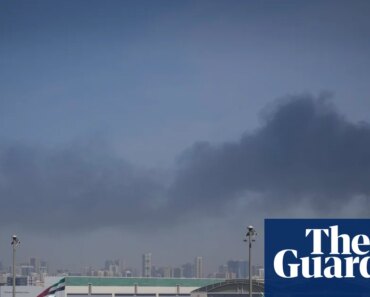
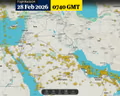
Loud explosions were heard in Dubai, in the United Arab Emirates, and in Doha, the capital of Qatar, for the third consecutive day of Iranian retaliatory attacks against neighboring Gulf states in response to continued attacks by the United States and Israel against Iran.
Loud booms and sirens were also heard in Kuwait early on Monday morning, and a witness cited by the Reuters news agency said smoke was seen rising near the US embassy.
Recommended stories
list of 4 itemsend of list
Kuwaiti air defenses intercepted most of the drones near the neighborhoods of Rumaithiya and Salwa, Kuwait’s state news agency reported, citing the director general of civil defense.
Tehran said it would attack US military assets in the region after US-Israeli attacks on Iran continued for a third day on Monday.
Iran has affected a number of civil and commercial areas in Gulf cities, widening the conflict’s impact on major regional aviation and trade hubs.
Meanwhile, Bahrain’s Interior Ministry said it had activated airstrike alerts and urged residents to head to the nearest safe location.
He said the Shaikh Khalifa bin Salman Bridge linking the capital, Manama, with nearby cities was closed and urged “residents to use main roads only when necessary.”
At least one person has died in Kuwait, three in the United Arab Emirates and 16 people have been injured in Qatar.
Meanwhile, at least 201 people have been killed in Iran in US-Israeli attacks, with 747 injured, while at least nine have been killed and 121 wounded in Israel.
Iran “attacks US targets”
The United States, Bahrain, Jordan, Kuwait, Qatar, Saudi Arabia and the United Arab Emirates issued a joint statement on Sunday condemning Iranian attacks across the region and affirming their right to self-defense.
The Gulf countries “will take all necessary measures to defend their security and stability and protect their territories, citizens and residents, including the option of responding to aggression,” according to the statement issued after a meeting.
However, Iranian Foreign Minister Abbas Araghchi stressed on Sunday that Tehran does not seek confrontation with its Gulf neighbors, telling Al Jazeera that Tehran “does not have any problem with countries on the other side of the Persian Gulf,” referring to the Gulf, also known as the Arabian Gulf.
Iran maintains “friendly and good-neighborly relations with all of them,” which it is determined to continue, he added.
“What we are doing is, in fact, an act of self-defense and retaliation for American aggression against us,” Araghchi said.
“We are not attacking our brothers in the Persian Gulf, we are not attacking our neighbors, but we are attacking American targets,” he added.