Israeli bombing of Iran’s oil infrastructure will have major long-term environmental repercussions, experts warned, as observers admitted they were struggling to keep track of environmental disasters emerging from the widening war.
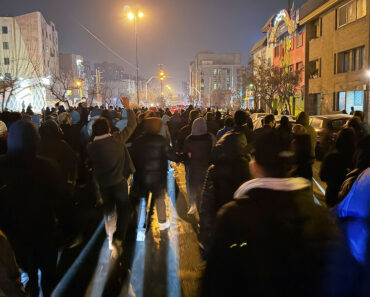
Even as Iranians filled the streets to commemorate the appointment of a new supreme leader, the Shahran oil depot, northeast of Tehran, and the Shahr-e fuel depot, to the south, were still burning on Monday, two days after they were bombed by Israeli warplanes.
Immediately after the attacks, Iran’s environmental agency and the Iranian Red Crescent Society warned Tehran residents to stay home, warning that toxic chemicals spread by airstrikes on five fossil fuel facilities around the city could cause acid rain and damage skin and lungs.
On Monday, the head of the World Health Organization, Tedros Adhanom Ghebreyesus, said: “Damage to oil facilities in Iran risks contaminating food, water and air, dangers that can have serious health impacts, especially on children, the elderly and people with pre-existing medical conditions.”
Iran’s deputy health minister Ali Jafarian told Al Jazeera that soil and water supplies around Tehran were already beginning to be contaminated by the fallout from the weekend’s explosions.
The black rain that fell on Tehran in the hours after the bombings was a mix of soot and fine particles from the explosions with rain from a storm already moving through the region, according to Dr. Akshay Deoras, a research scientist at the University of Reading.
“Air strikes on oil deposits released soot, smoke, oil particles, sulfur compounds and probably heavy metals and inorganic materials from buildings, while a low-pressure weather system, which normally sweeps over Iran and western Asia at this time of year, created favorable conditions for rain,” Deoras said.
“In terms of atmospheric chemistry, oil fires produce sulfur and nitrogen compounds that could form acids if they dissolve in rainwater.
“Human health risks come from inhaling or touching smoke and particles. Immediate impacts can include headaches, eye and skin irritation, and difficulty breathing, especially for people with asthma, lung diseases, older adults, young children, and people with disabilities.”
Tehrans on Sunday reported difficulty breathing, as well as headaches and burning sensations in the eyes and throat. But the serious effects of the black cloud that spread across the city could be just the beginning, according to Professor Andrea Sella, professor of inorganic chemistry at University College London.
“The explosions will have exposed the local population to all sorts of undesirable and toxic chemical species, a problem that is well known to accompany war,” he said, explaining that the crude oil will have contained a variety of elements, including metals, which “would also be spread indiscriminately.”
“There will be a veritable cocktail of chemistry that will include significant amounts of aromatic compounds that are known to interact with DNA and have been linked to cancer. Whether or not this manifests will depend largely on how long and severe each individual’s exposure is.
“And on top of this, once the containment provided by the tanks and pipes is destroyed, the material will flow everywhere leaving a mess of harmful material that permeates the ground and covers everything else. There is the potential for contamination of drinking water supplies.”
Despite US efforts to distance itself from the attacks, there are growing fears that the attack could trigger a cycle of retaliation after a spokesman for the Iranian Revolutionary Guard Corps warned that it could take “similar actions (against oil infrastructure) in the region.”
On Monday, Bahrain’s state energy company Bapco Energies declared force majeure on its operations after Iran attacked the country’s only oil refinery and Saudi Arabia reported intercepting four Iranian drones targeting its Shaybah oil field.
Those attacks followed drone attacks last week against the world’s largest natural gas export plant in Qatar, the Saudi refinery in Ras Tanura, fuel storage centers in Oman and the United Arab Emirates and multiple oil tankers in the Persian Gulf, each posing a potential environmental catastrophe.
Doug Weir, director of the Conflict and Environment Observatory, said his organization’s efforts to track incidents of environmental damage caused by fighting in the Persian Gulf were becoming increasingly difficult.
“We are now aware of hundreds of environmentally problematic incidents in Iran and the region, but the ongoing conflict, internet restrictions and delays in the availability of satellite imagery mean this figure is an understatement,” Weir said.
“Recomposing the environmental footprint of the war and its potential impacts on people and ecosystems will be an enormous task, and it becomes more complex every day the war continues.”
“After the early days of attacking military sites, we are now seeing an expansion into civilian and dual-use facilities, leading to a widening of the range of environmental and public health risks associated with military actions.”