Brussels — European Union leaders are holding a summit in Brussels on Thursday to discuss the Iran war, energy prices, migration and Hungary’s huge debt to war-torn Ukraine.
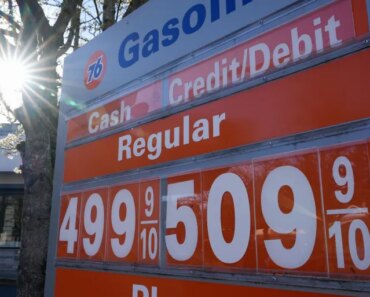
Many of those leaders have balked at U.S. President Donald Trump’s plea to send military assets to secure the Strait of Hormuz, a key waterway for the global flow of oil, gas and fertilizers. Rising energy prices and fears of a new refugee crisis due to war in Europe have pushed leaders to make the Middle East one of the top priorities at the summit.
The European Commission, the EU’s executive branch, has floated the idea of a “toolbox” of measures to lower energy prices for leaders to discuss because no policy will work in the 27-nation bloc’s myriad markets to blunt economic shocks from the war, said a senior European diplomat who was not authorized to be publicly named.
The summit will focus on the long-standing crisis between Hungarian Prime Minister Viktor Orbán and other EU countries.
The last EU summit was held in a Belgian castle in December, where leaders including Orban offered Ukraine a 90 billion-euro ($104 billion) loan to help bridge a budget deficit in the country as it battles a grinding war with Russia.
But Orban backtracked a month later, after the Druzhba oil pipeline was disabled in January after what Ukrainian officials said was a Russian drone strike. The pro-Russian leader, who has held office in Hungary since 2010, has been waging an aggressive media campaign to villainize both Brussels and Kyiv as he seeks re-election next month.
“Without oil, there is no money,” Orban said in a social media post on Tuesday.
To secure much-needed loans for Ukraine, EU leaders and diplomats will lobby Orbán and Slovakian Prime Minister Robert Fico, whose government has taken a pro-Russia stance.
On Tuesday, European Commission President Ursula von der Leyen allowed the EU to pay for the repair of the Druzhba pipeline and the development of alternative energy routes to Hungary and Slovakia.
Ukrainian President Volodymyr Zelensky said any interruption to the loan would be “absolutely unfair” and that there was “no alternative” to those funds as he faced a severe budget crisis due to the war that began on February 24, 2022.
“There may be alternatives in terms of financial mechanisms, but there is no alternative to strengthening our army,” Zelenksi said on Wednesday.
German Chancellor Friedrich Merz told lawmakers in Berlin on Wednesday that the EU must quickly reach an agreement on a 20th package of sanctions against Russia and debt.
He said he would “press for it” in Brussels and that “we should not consider a country in the European Union currently establishing this blockade in Europe for domestic political reasons and because of the election campaign being conducted there.”
In urging more sanctions, Merz said, “The needs of the moment call for us to step up the pressure on Moscow — together with the US and European partners.”
___
Karel Janicek in Prague, Geir Moulson in Berlin and Ilya Novikov in Kyiv, Ukraine contributed to this report.
(tags to translate) Sanctions and Sanctions(T)Iran War(T)Politics(T)Business(T)World News(T)General News(T)Article(T)131208772