Your limits when exercising can really be in your head
Cavan Pictures/Alamy
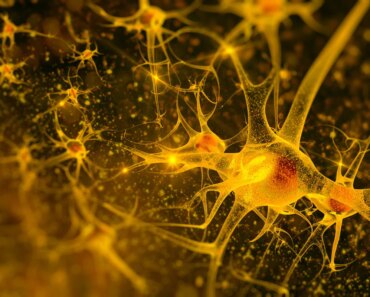
Scientists have identified neurons in mice that help build endurance after running. They suspect that similar cells exist in humans, which could be targeted with drugs or other therapies to enhance the effects of exercise.
We have known for decades that the brain changes with physical activity. Nevertheless, the researchers thought that these effects are different from those that occur elsewhere in the body, such as muscles that grow stronger, says Nicholas Betley of the University of Pennsylvania. The latest findings suggest otherwise – the brain changes “are what coordinate all the other things”, he says.
To better understand how exercise affects the brain, Betley and his colleagues monitored neuronal activity in mice before, during and after treadmill exercise. They zeroed in on cells in the ventromedial hypothalamus, as previous research has shown that impaired development in this brain region prevents fitness improvements in rodents. The same probably applies to humans, because the region’s structure and function tend to be consistent across mammals, says Betley.
The team found that after the mice ran, activity increased in a group of neurons with a receptor called SF1, which plays a role in brain development and metabolism. Moreover, the proportion of these cells activated by exercise grew with each additional day of running. On day eight, running activated about 53 percent of the neurons compared to less than 32 percent on day one. “So, just as your muscles build when you exercise them, your brain activity builds,” says Betley.
Next, the researchers used optogenetics – a technique that activates or inhibits neuronal activity with light – to turn off these neurons in a separate group of mice. The animals exercised on a treadmill five days a week for three weeks. After each session, the neurons were inhibited for one hour. At the end of each week, the mice completed an endurance test, running to the point of exhaustion.
Over the course of the experiment, the mice increased the distance they ran on these tests by about 400 meters on average, but this was about half the improvement seen in another group of mice whose neurons were left intact.
It is not clear what the role of these neurons is, but it may be related to fuel utilization, says team member Morgan Kindel, also at the University of Pennsylvania. During endurance activities, the body refuels itself with fat, as carbohydrate stores are depleted more quickly. But inhibiting these neurons in the mice caused them to “start using carbohydrates much earlier in the course of the race,” says Kindel. “Then they kind of run out of fuel.” The team found that inhibiting these neurons prevents the release of a protein called PGC-1 alpha in muscles, which helps cells use fuel more efficiently. These neurons also release a substance that increases blood sugar and replenishes energy stores, which aids muscle recovery.
Optogenetics requires invasive brain surgery, so it is not possible in humans. But it may be possible to develop other interventions that can act on these neurons, says Betley. “I really think that if we could find a way—a salt, a supplement—to activate these neurons, you could increase endurance,” Betley says.
When the researchers repeated the experiment, increasing rather than inhibiting the activity of these neurons, they found just that: the mice developed Herculean endurance, running more than twice the distance of the control mice.
A similar intervention could particularly benefit people who have difficulty exercising, such as older adults or those who have had a stroke, says Betley.
But there are many obstacles in the way. First, we don’t know for sure whether these findings translate to humans. There is also the question of potential side effects, says Thomas Burris at the University of Florida. These neurons seem to regulate energy uptake in muscles, so stimulating them too much can lead to a dangerous drop in blood sugar, he says.
Even if we can safely activate these neurons in humans, it won’t be a silver bullet for good health, says Betley. “All kinds of great things happen when you exercise—you’re less depressed, less anxious. There are cognitive improvements, cardiovascular improvements, muscle improvements,” he says. “I don’t think that activation of (these) neurons is necessarily going to be the bottleneck through which all the good things happen.”
Topics: