Dozens of MPs have called for the government to formally apologize for Britain’s actions during the administration of Palestine in the first half of the 20th century.
In September, the Britain Owes Palestine campaign group submitted a 400-page legal petition to the government, but has yet to receive a response.
Latest politics: Reeves rows with petrol retailers as oil prices rise
Prominent British KCs Ben Emerson and Danny Friedman have written a substantial document which provides details of illegal actions and war crimes committed during the British occupation between 1917 and 1948.
It says Britain unlawfully failed to recognize Arab self-determination, lacked the proper legal authority for the Balfour Declaration and subsequent order, and committed war crimes and crimes against humanity, including murder, torture, arbitrary detention and mass house demolitions.
Alongside the appeal, 45 MPs and peers from all parties signed an open letter calling on the British government to formally apologise, as they say the UK must face up to its historic role and responsibility to support peace efforts today.
Palestine 1917-1948
In 1917, the Balfour Declaration was signed as the British pledged support for a “national home for the Jewish people”. Palestine.
From 1920, the League of Nations (the precursor to the UN) formally issued a mandate to Britain (known as the British Mandate for Palestine), which required it to facilitate Jewish immigration and self-rule in the territory – which created conflicting promises for both the Jewish people and the Palestinians.
There were periodic violent uprisings and in 1948, following the failure of the 1947 UN Partition Plan, Britain handed over responsibility to the UN and withdrew, resulting in the establishment of the State of Israel.
MP: Britain has violated international laws
Lib Dem MP Layla Moran, the first British MP of Palestinian origin, said: “In occupying Palestine, Britain broke a series of international laws to which it was bound at the time.
“The consequences of those actions have profoundly shaped the conflict we see today, but successive governments have refused to acknowledge the document or issue a formal apology.
“If Britain is serious about promoting peace in Gaza today, it must start by facing up to its historical role, recognizing the damage caused and taking meaningful responsibility for it.”
Read more:
More than 1,000 Councilors Sign Palestine Solidarity Pledge
The recognition of Palestine by the UK, France and Canada has serious implications
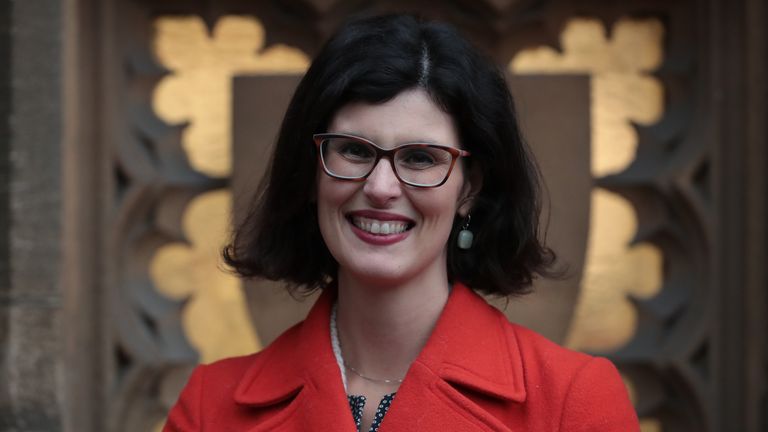
Liberal Democrat MP Layla Moran is the UK’s first Palestinian-born MP
An apology would make sense for the Palestinians
Victor Kattan, a legal expert who helped write the petition, told Sky News: “Our main request is for an official public apology from the Prime Minister and a conversation about redress.
“This plan preceded the government’s recognition of Palestine last year, and it is a good step, but without an apology, it does not address the past.
“An apology is very meaningful to the Palestinian people, a form of catharsis that recognizes someone’s pain and suffering, even if it is in the past.”
Professor Catton, assistant professor of public international law at the University of Nottingham, said he was not asking for direct payments as part of the reparations, but that the period was part of the national curriculum in schools and would appreciate it being explained in museums.
A memorial is something he appreciates, he said.
Palestinian philanthropist Munib al-Masri, 91, is leading a petition with shrapnel still in his body after he was shot by British soldiers as a boy.
He said: “What Britain did in Palestine in 1948 has not ended. The policies and violence of that period helped create the catastrophic conditions we live in today. An official apology is an acknowledgment of that history and the damage it causes.”
The Foreign Office said it does not routinely respond to applications.