Iran may be using a Chinese navigation satellite system to attack Israeli and US military assets in the Middle East, intelligence experts say.
Former French foreign intelligence director Alain Juillet told French independent podcast Tocsin this week that Iran was likely given access to China’s BeiDou satellite navigation system because its targeting has become much more precise since the 12-Day War with Israel in June.
“One of the surprises of this war is that the Iranian missiles are more precise compared to the war that took place eight months ago, which raises many questions about the guidance systems of these missiles,” Juillet, who served as intelligence director of the General Directorate of Foreign Security from 2002 to 2003, told Tocsin.
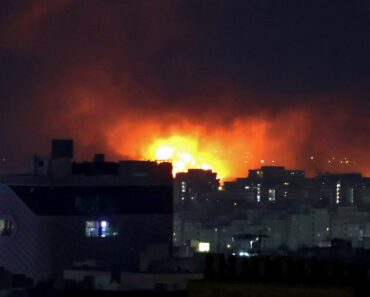
In response to the US-Israeli attacks that began on February 28 and the assassination of senior Iranian figures, including Supreme Leader Ali Khamenei, Iran has launched hundreds of ballistic missiles and drones toward Israel, some hitting ground targets.
Although Israel has intercepted many of these incoming missiles, several have breached its defenses, causing significant damage and casualties, including hits in central Tel Aviv.
While the United States can block or deny access to the US government-owned Global Positioning System (GPS), which Iran’s military previously relied on, it can’t do much to interfere with China’s BeiDou system if that is what Iran is using. Iran has not confirmed or commented on the matter.
Here’s what we know about BeiDou and whether its potential use by Iran could mark the end of the US monopoly on real-time battlefield satellite intelligence.
What is BeiDou Navigation Satellite System (BDS)?
China launched its satellite navigation system, billed as a rival to GPS, in 2020. Chinese President Xi Jinping officially commissioned the system at a ceremony in July 2020 at the Great Hall of the People in Beijing.
China began developing its own satellite navigation system after the 1996 Taiwan crisis because it feared Washington might restrict access to GPS in the future.
According to the Chinese government’s BeiDou website, the system’s goal is to “serve the world and benefit humanity.”
Crucially, China’s system uses many more satellites than other navigation systems. According to data collected by Al Jazeera’s AJ Labs data team, while the US GPS system has 24 satellites providing it with data, the Chinese system relies on 45. The other two major global navigation systems are Russia’s GLONASS and the European Union’s Galileo system, each of which has 24 satellites.
BeiDou’s website says the system is made up of three segments: a space segment, a ground segment, and a “user” segment.
“The BDS ground segment consists of several ground stations, including master control stations, time synchronization/uplink stations, monitoring stations, as well as inter-satellite link operation and management facilities,” the website says.
“The BDS user segment consists of various types of basic BDS products, systems and services, as well as those compatible with other navigation systems, including basic products such as chips, modules and antennas, terminals, application systems and application services.”
Could Iran be using BeiDou?
Iran has not confirmed this. It is also unclear whether it would be possible to systematically switch military operations to a different satellite navigation system in such a short space of time since last year’s June war.
After that conflict, Iran’s Ministry of Information and Communications Technology stated that Iran uses “all existing capabilities in the world and does not depend on a single source of technology.”
However, Juillet told Tocsin that a switch to China’s BeiDou system is a realistic explanation for how Iran has improved its targeting accuracy so much since last year.
“There is talk of replacing the GPS system with a Chinese system, which explains the precision of the Iranian missiles… Important objectives have been achieved.”
How could using BeiDou improve targeting accuracy?
The BeiDou system could be used to guide Iran’s ballistic missiles with much greater precision than before. The Chinese navigation system is understood to have a “margin of error” of less than 1 meter (3.3 feet), meaning it is very accurate. It can also automatically correct targets’ directions if they move, analysts said.
Additionally, it will likely help Iran circumvent Western jamming systems used by Israel during the 12-Day War last year. They successfully diverted Iranian drones and missiles, which used GPS signals to navigate, in 2025. Jamming techniques include tricking incoming drones with false coordinates. The BeiDou system can filter out such interference.
Military analyst Patricia Marins told bne news outlet IntelliNews this week: “Unlike civilian-grade GPS signals that ground to a halt in 2025, BDS-3’s military-grade B3A signal is essentially uninterrupted.”
The system uses “complex frequency hopping and navigation message authentication (NMA), which prevents ‘spoofing,’” he added.
BeiDou also has a short message communication tool that allows operators to communicate with drones or missiles up to 2,000 kilometers (1,240 miles) away while in flight. This means they can potentially be redirected after launch, Marins said.

How many ballistic missiles does Iran have?
While the exact size of Iran’s ballistic missile arsenal is unknown, it is considered one of the largest and most advanced in the region. Ballistic missiles can travel distances ranging from a few hundred kilometers to more than 10,000 kilometers (6,200 miles) across continents.
Juillet told the Tocsin podcast that while the Israeli and US air forces claimed to have destroyed all identifiable targets in Iran, the exact number and distribution of Iranian missiles is unknown.
“Iran is three times the size of France and the missiles are mounted on trucks scattered throughout the country. How can these trucks be tracked over such a vast area?”
He added that Iran is likely deploying its missiles more “sensiblely” than in the 12-Day War, in anticipation that the current war could be prolonged.
Meanwhile, on the American side there is concern that its stockpile of expensive interceptor missiles could be depleted by shooting down cheap Iranian Shahed drones before Iran has to use many of its ballistic missiles.
For this reason, US President Donald Trump’s administration has asked Ukraine, where Russia uses Iranian-made Shahed drones, to share the interceptor technology it has developed and mass produced.