Researchers in China have tested a next-generation solid-state battery capable of pushing electric vehicles far beyond current range limits: potentially more than 620 miles (1,000 kilometers) per charge, and even further in future versions.
Researchers at Nankai University, Tianjin, developed a high-energy, solid-state battery system that they claim has already been installed in a real vehicle and tested for long-distance driving, institution officials said in a statement.
The technology has an energy density exceeding 500 watt-hours per kilogram – a 30% increase over today’s leading lithium-ion batteries at 300 Wh/kg – according to the statement. Higher density batteries mean more energy (and range) for less weight, and in a smaller form factor.
Although details about the specific car the battery was tested in are few, subsequent reporting indicates that it was a prototype developed by China FAW Group’s battery manufacturing subsidiary, China Automotive New Energy Battery (CANEB).
Solid-state batteries improve on their traditional counterparts in several ways, including safety, the researchers said. The liquid electrolytes in lithium-ion batteries are flammable, while solid electrolytes are non-flammable and less prone to catastrophic failure. Solid electrolytes can also provide longer life due to a reduction in dendrite growth – metal spikes that cause short circuits – as well as degradation from liquid chemistry.
While still in the development phase, some solid-state battery materials may also allow faster charging, due to the higher ionic conductivity of the solid electrolyte.
The new battery relies on a lithium-rich manganese cathode and a hybrid solid-liquid electrolyte system. The hybrid design combines the advantages of the solid-state architecture with a “super-wetting” composite electrolyte, which is intended to improve ionic conductivity and safety.
Superwetting refers to the electrolyte that spreads over and penetrates the surfaces and pores of battery materials, maximizing the contact between itself and active materials so that ions can move more efficiently. The battery also features lithium anode technology designed to reduce manufacturing costs by simplifying the manufacturing process.
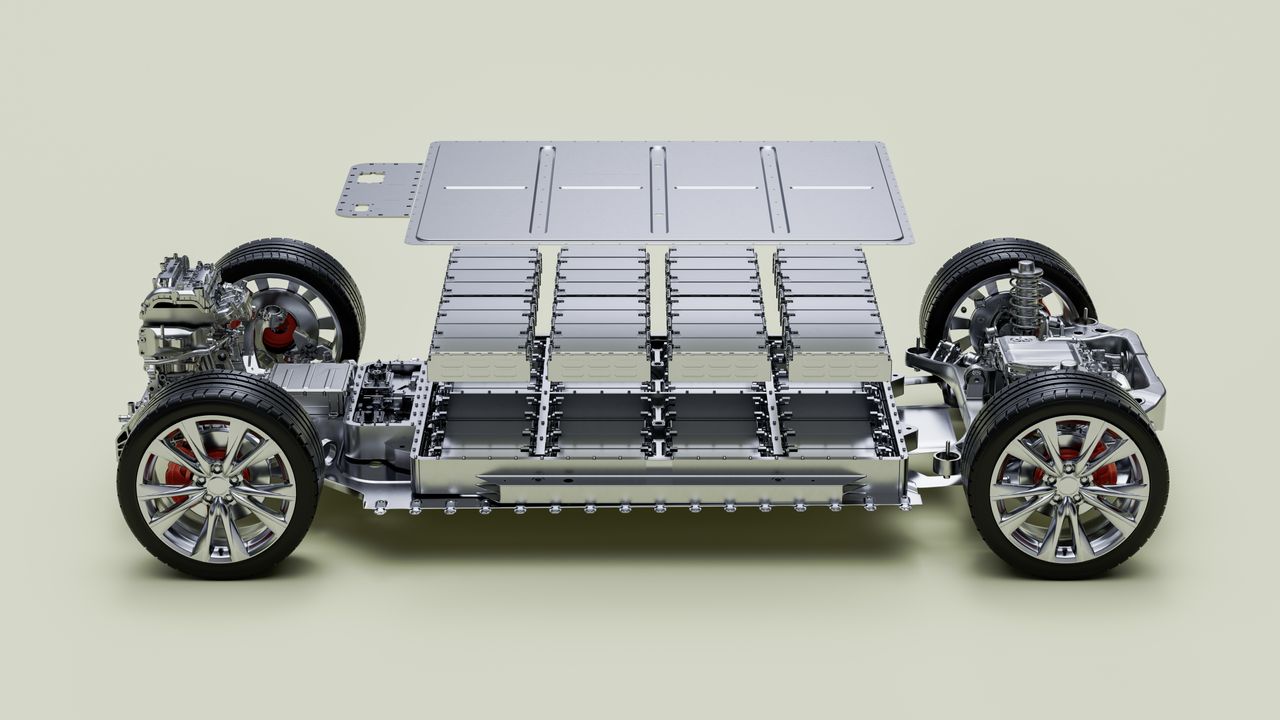
The current battery pack has a total capacity of 142 kilowatt-hours (the pack’s total stored energy) and an energy density of 288 Wh/kg at system level instead of 500 Wh/kg density taken in isolation – taking into account cooling systems, cabling, structural support and safety equipment. This drop in density is normal and consistent with how EV batteries are reported across the industry.
Developers say upcoming iterations could exceed 340 Wh/kg at pack level and 200 kWh total capacity, pushing the driving range past 1,600 km. The demonstrations are expected to begin sometime this year, according to the statement.
A range of 1,000 miles would be a significant increase over the range of even the most advanced electric cars currently available. According to a report from EV.comthe median range for electric cars produced in 2024 was 455 km, with top models reaching a peak of 825 km. That top series is owned by Lucid Air and has not yet been exceeded in 2026.
The results from solid-state batteries come from a collaboration between university and industry and have not yet been independently verified in peer-reviewed research. That said, the work highlights how solid-state batteries are rapidly moving from lab experiments to real-world testing, and could reshape the range, safety and performance of electric cars.