Nicolai Tangen, Chief Executive Officer of NBIM, at the Norges Bank Climate Conference in Oslo, Norway on October 21, 2025.
Naina Helen Jama | Bloomberg | Getty Images
European markets are facing a crisis and must act together to fix it, the head of the world’s biggest individual investor has said.
Speaking to CNBC’s Charlotte Reed at the Euronext annual conference in Paris, France, Nicolai Tangen, CEO of Norges Bank Investment Management (NBIM), called on Europe to “get our act together” when it comes to unifying the continent’s capital markets.
“Capital markets, we really need to get our act together. The winner takes all,” he said.
“People tend to go where liquidity is high, where valuations are high, and so it’s really important to sort this out.”
Speaking after his speech at the conference Tuesday morning, Tangen said that over the past decade, NBIM’s equity portfolio has shifted significantly in favor of US stocks. During that period, European stocks went from 41% to 21% of the portfolio, while US stocks jumped from 37% to about 55% of the equity portfolio.
About 40% of NBIM’s investments are in US equities, with its most valuable holdings including a 1.3% stake in Nvidia, a 1.2% stake in Apple and a 1.3% stake in Microsoft.
NBIM manages Norway’s sovereign wealth fund, which was established in the 1990s to invest revenues from the country’s oil and gas industry. The fund is an investor in more than 7,200 companies across 60 countries, with a stake in 1.5% of the world’s publicly listed stocks.
The fund is the largest in the world, currently valued at more than $2 trillion.
NBIM invests in fixed income, real estate and renewable energy infrastructure.
Tangen told CNBC that the changes in NBIM’s equity holdings over the past 10 years have been an “extraordinary change” and that Europe is lagging behind when it comes to technology and innovation.
“It’s because of the strong position of US companies in AI that we don’t have strong companies in Europe in that field,” he said.
In 2025, sovereign wealth funds will post an annual profit of 2.36 trillion kroner, or $246.9 billion, much of which can be attributed to the strength of the tech sector.
“I think what Europe can do, of course, is get better at applying AI, and in terms of technology diffusion, there are some signs that Europe is doing well,” Tangen said.

“It’s urgent to do this,” Tangen said of reforming European markets. “We cannot have such a fragmented capital market in Europe. We don’t get liquidity, we don’t get market depth.”
Tangen said Europe needed to consolidate and implement more unified rules to facilitate cross-border trade or risk falling “further behind”.
Market watchers and regional authorities have spoken of the urgent need to overhaul European capital markets.
In January, IMF Managing Director Kristalina Georgieva called on European leaders to finalize the Capital Markets Union, complete the Energy Union, make it easier for employers to secure workers across the EU and invest in research and innovation.
In his speech earlier in the day, Tangen said NBIM is an investor with “skin in the game” with its European headquarters and a 2.3% stake in all listed European companies.
He outlined a “wish list” of changes: harmonizing financial and corporate laws across the region, rethinking competition and innovation and “fixing the plumbing” to keep capital flowing better through the system.
“Are European capital markets in crisis?” asked the audience. “Perhaps, but in that case, we must not waste a good crisis. We know what must be done. And it must be done, or we will lose. We will fall. It is time to act.”
‘Surprised’ by market reaction to Iran war
In his CNBC interview, Tangen said his team was surprised by the stability of capital markets amid the ongoing US-Iran war.
NBIM was asked how concerned it was about the potential impact of elevated Oil prices On the global economy and equity markets, Tangen said he was “of course worried about this.”
“It’s an additional risk, and an additional factor that we have to take into consideration as we look at our various scenarios,” he said. “We’re not in the business of predicting oil prices, but we do see a higher oil price as having an inflationary effect, and that’s an additional negative when it comes to the market.”
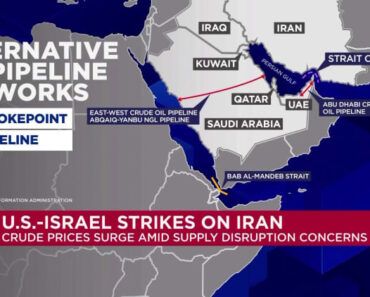
International markets have been volatile since the US and Israel launched strikes on Iran on February 28, raising fears of an energy shock that could create global inflationary pressures as oil prices rise.
The MSCI World Index – which includes mid- and large-cap stocks in developed markets – is down 3.6% since the war began.
But Tangen argued that “markets have remained remarkably stable” amid ongoing conflict in the Middle East and pressure on energy costs. Asked if the markets were getting too complacent, he said it was hard to say.
“They’ve been very stable and we’re surprised that they haven’t really reacted much, because when we analyzed the situation and looked at some of the threats to the markets … we expected a lot of what we were seeing to have a more negative impact on the market,” Tangen told CNBC.
His comments came shortly after the war broke out when Goldman Sachs CEO David Solomon told an Australian conference that he was surprised by the “harmful” market reaction to the strikes “given the magnitude” of the developments.
(tags to translate)Markets