The conflict in West Asia entered its sixth day on Thursday (March 5) with fighting expanding to new fronts and drawing in regions beyond the immediate.
For the first time since the attacks began, Azerbaijan reported drone strikes near an airport that injured four civilians. Attacks continued between Iran and Israel overnight, with Qatar, Lebanon, the United Arab Emirates and others in the region caught in the crossfire. Emergency and rescue operations continued at impact sites in central Israel after earlier missile attacks.
Iran has also threatened global shipping through the Strait of Hormuz, raising concerns about disruptions to one of the world’s most important shipping corridors for shipping oil.
Meanwhile, in India, five days after the assassination of Iran’s Supreme Leader Ayatollah Ali Khamenei, Indian Foreign Secretary Vikram Misri on Thursday offered his condolences at the Iranian embassy in New Delhi.
Here are five key takeaways from day 6 of the conflict:
1) India responds to Iranian warship’s distress call
The Indian Navy sent its aircraft and ships to augment search and rescue efforts for the IRIS Dena, which was hit by a US torpedo on Wednesday while on its return journey to Iran after participating in exercise MILAN and the International Fleet Review in Visakhapatnam.
According to a Navy statement, the Navy launched its SAR efforts beginning with a P8I long-range maritime patrol aircraft at 10:00 a.m. on Wednesday to augment Sri Lanka-led search efforts.
Story continues below this ad.
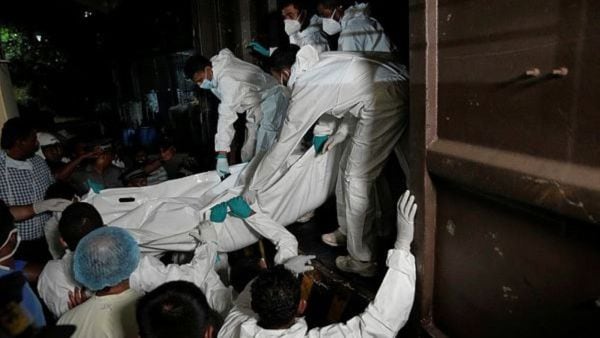 Health workers unload the bodies of Iranian sailors in Galle, Sri Lanka (AP Photo)
Meanwhile, a second Iranian warship heads toward Sri Lanka on Thursday, just a day after the attack that killed 87 people. Colombo said it is considering its response after the ship attempted to enter Sri Lankan waters.
Sri Lankan authorities said the ship had requested emergency assistance and was waiting near the maritime border, outside the country’s territorial waters.
2) First attack reported in Azerbaijan
Drone attacks damaged an airport terminal building near the Iran-Azerbaijan border and injured four people, Azerbaijani authorities said. Officials described it as the first attack on the country since the conflict began.
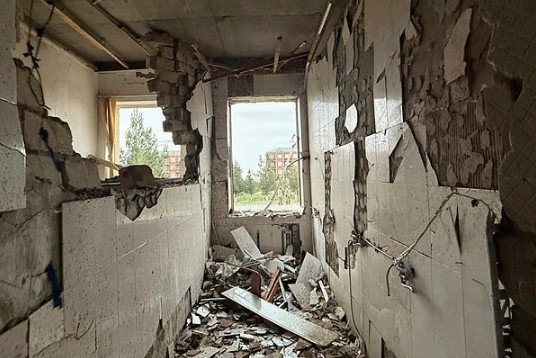 This image shows damage to a school in Julfa following what Azerbaijan’s foreign minister said was a drone attack carried out by Iran. (AP Photo)
After the attack, Azerbaijan’s Foreign Ministry said in a statement that Iranian drones attacked its enclave of Nakhchivan and damaged an airport building. President Ilham Aliyev accused Iran of carrying out “a baseless act of terrorism and aggression” and said his military had been ordered to prepare and implement retaliatory measures.
Story continues below this ad.
The general staff of Iran’s armed forces denied launching a drone into the territory of Azerbaijan.
3) US Senate blocks attempt to limit Trump’s war powers
Republicans in the US Senate rejected a resolution that would have required congressional approval to continue US military action against Iran.
The Senate voted 53-47 against the bipartisan War Powers resolution. The House of Representatives is scheduled to vote on a similar measure in a couple of days.
Senior U.S. officials said the United States would begin striking targets deeper inside Iran and described the operation as still in its initial phase.
Story continues below this ad.
4) UK will send 4 more Typhoon fighter jets to Qatar
British Prime Minister Keir Starmer said on Thursday that four additional Typhoon fighter jets would be sent to Qatar as the Middle East conflict escalates, insisting the UK has the right defense plan.
This comes after US President Donald Trump criticized Starmer for not providing enough support for his attacks on Iran.
Starmer told a news conference that Britain had the right plan and had already been deploying military equipment across the region before the start of the war.
“My goal is to provide calm, level-headed leadership in the national interest,” Starmer said. “That means deploying our military and diplomatic force to protect our people, and it means having the strength to stand firm on our values and our principles, regardless of pressure to do otherwise.”
Story continues below this ad.
On India’s position in the conflict, Prime Minister Modi said on Thursday that “no problem can be resolved through military conflict alone” and that New Delhi will continue to support the rapid end to conflicts and all efforts to achieve peace, whether in West Asia or Ukraine.
5) Stock market and oil prices
Stocks fell again on Wall Street on Thursday as oil prices rose further due to the war with Iran. The S&P 500 fell 0.6% in morning trading, following a frenetic start to the week that saw financial markets around the world turn sharply. The Dow Jones Industrial Average was down 645 points, or 1.3%, as of 10:45 a.m. ET, and the Nasdaq Composite was trading 0.3% lower. Financial markets are once again following the lead of oil prices.
Oil prices extended their rally on Thursday, with Brent up 3% and WTI up 4%. Both are up 16% since the war began on Saturday.
The European gas benchmark price rose around 3% on Thursday. It has increased almost 60% so far this week.
Story continues below this ad.
Russian President Vladimir Putin said his country could stop gas supplies to Europe right now, amid rising energy prices due to the Iran crisis.
Qatar, which provides 20% of the world’s LNG supply, halted gas production earlier this week due to the conflict. Other major producers, such as the United States and Australia, have little spare capacity to offset this loss of supply, according to Reuters.